Community Corner
Controlling Hydrilla In The Croton River: Plan for 2019
The fight continues to prevent this invasive water plant from destroying the river. Come to the meeting Tuesday


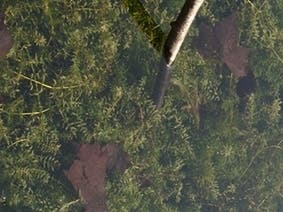
CROTON-ON-HUDSON, NY — Join Croton officials and the NYS Dept. of Environmental Conservation Tuesday as they discuss this year's plan to control hydrilla in the Croton River.
Hydrilla is native to Australia, Asia and Africa and is believed to have made its way to the U.S. as an aquarium plant. It grows and spreads rapidly and is one of the most difficult aquatic invasive plants to control and eradicate in the United States. Its dense mats of vegetation can interfere with boating, swimming, and fishing, as well as severe consequences for aquatic ecosystems.
Hydrilla is often spread by boaters, as hydrilla fragments can cling to boats and trailers. Very small fragments of hydrilla can start new populations.
Find out what's happening in Ossining-Croton-On-Hudsonfor free with the latest updates from Patch.
It was discovered in the Croton River in 2013. The state treated the infestation in 2017 and 2018 by putting the aquatic herbicide Sonar Genesis, also known as fluridone, into the river just below the New Croton Dam and at Black Rock Park.
The meeting will start at 7:30 p.m. Tuesday in the Georgianna Grant Meeting Room of the Stanley H. Kellerhouse Municipal Building, 1 Van Wyck Street.
Find out what's happening in Ossining-Croton-On-Hudsonfor free with the latest updates from Patch.
For those unable to attend the meeting, it will be livestreamed on the village's website and cable channel 78.
Information on the project thus far can be found on the Village's website.
How You Can Help
- Inspect and remove plant fragments and mud from boats, trailers, and equipment before and after each use.
- Dispose of all debris in trash cans or above the waterline on dry land. Note: tubers and turions can easily be transported in sediment.
- Clean and dry your equipment thoroughly before visiting other waterbodies.
- Do not dispose of unwanted aquarium plants in waterbodies, ditches, or canals.
- Monitor recently acquired aquatic plants because hydrilla tubers can be transported in the attached soil/growing material.
- Learn how to identify hydrilla and report infestations to DEC at isinfo@dec.ny.gov or (518) 402-9405
Get more local news delivered straight to your inbox. Sign up for free Patch newsletters and alerts.