Community Corner
Maryknoll Sister Wins Human Rights Award
The organization teaches people to defend their rights under Peruvian international law and provides legal defense for rights violations.

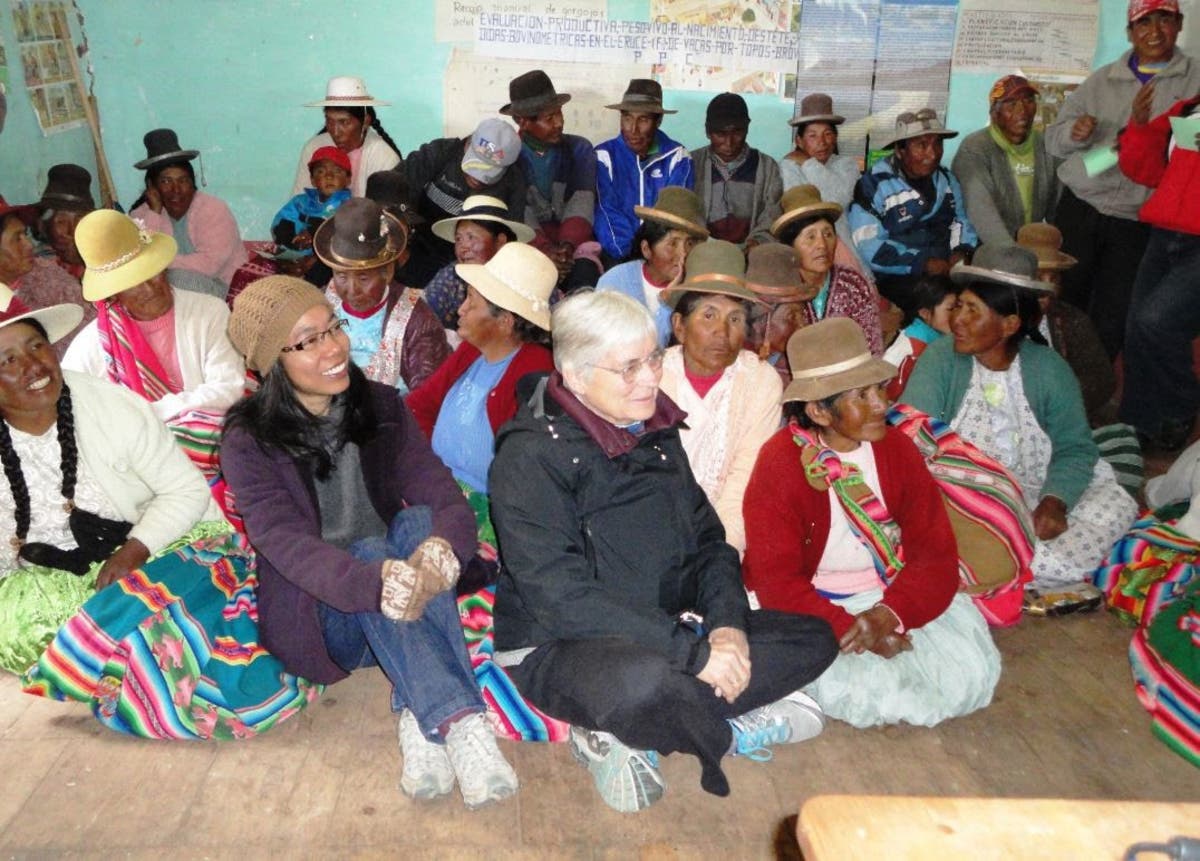
From Maryknoll Sisters: Maryknoll Sister, Sr. Patricia Ryan, M.M. from Queens, NY co-founded a Peruvian human rights organization which has won the Letelier-Moffitt Human Rights Award for its work with indigenous farmers in the Andes Mountains of Peru. The organization is based in Puno and is known by its Spanish initials as DHUMA, it teaches people to defend their rights under Peruvian international law and provides legal defense in cases of rights violations.
The Letelier-Moffitt Award is sponsored by the Washington, D.C.-based Institute for Policy Studies. On Thursday October 4th, Sr. Patricia and her team will be accepting the award on behalf of DHUMA. The Institute for Policy Studies said DHUMA was chosen this year because of its "promotion of indigenous culture, autonomy and self-determination.".
DHUMA, founded in 2007 by Sister Patricia and others who formerly worked in the human rights office of the Catholic Prelature of Juli in Peru's Puno region, recently won a ruling that indigenous communities must be informed before the government can grant mining concessions on their lands.
Find out what's happening in Ossining-Croton-On-Hudsonfor free with the latest updates from Patch.
Puno is one of the regions of Peru with the most conflicts over environmental issues related to mining concessions and industrial pollution that has contaminated pastures, rivers and streams. Sister Patricia has been on mission in Peru for 47 years fighting for the rights of the Peruvian people and with the help of DHUMA she is now seeing some progress.
Quechua and Aymara communities around Lake Titicaca generally "are not taken into consideration on issues that affect their rights or territory," says Sister Patricia.
Find out what's happening in Ossining-Croton-On-Hudsonfor free with the latest updates from Patch.
The area has numerous mining concessions on lands where indigenous families have lived for generations, raising sheep, llamas and alpacas, as well as crops such as potatoes and quinoa. Some mining concessions cover several hundred square miles, causing severe contamination to their water, land, livestock, and crops which leads to vast health issues for their people.
Peruvian law and international treaties require that indigenous people be consulted about projects that would affect their communal rights, such as the right to territory. However, the concessions were granted without consultation, says Sister Patricia. People often did not know about the mining concessions until surveyors arrived, she said, and they did not know about the laws they could use in their own defense.
"When people know that these are their rights, and that rights are not negotiable, they can speak to power," she says. "We help people empower themselves to know their rights and the rights of Mother Earth, which are one and the same, because their relationship with the earth is so intimate."
Two of the group's early cases are awaiting decisions from Peru's Constitutional Tribunal in Lima. A third, involving about a dozen communities, became a landmark in late 2016 when an appeals court ruled that the government must consult indigenous communities before granting mining concessions that affect their lands. In the past, consultation was required only when the company was ready to begin production.
Last year, a court ordered the government to cancel 13 mining concessions because the affected indigenous communities had not been consulted about them. The judge in that case had ruled against the indigenous communities earlier in similar cases. Sister Patricia attributes the change in attitude to DHUMA, which has provided judges and prosecutors education on laws and international treaties that protect indigenous communities rights.
DHUMA is also providing legal aid to five people who face charges for leading a large protest against a controversial mining project in 2011.
"The criminalization of protest has become a massive weapon of the state against people who are just trying to be heard," Sister Patricia said.
The government "could get rid of all the conflicts in the country if they only respected the rights of the people," she added.
Image via Maryknoll Sisters