Schools
Ossining High School Juniors Win Special Award at Intel ISEF
The students, who are in the Science Research Program, were recognized for their research project on eastern redback salamanders.
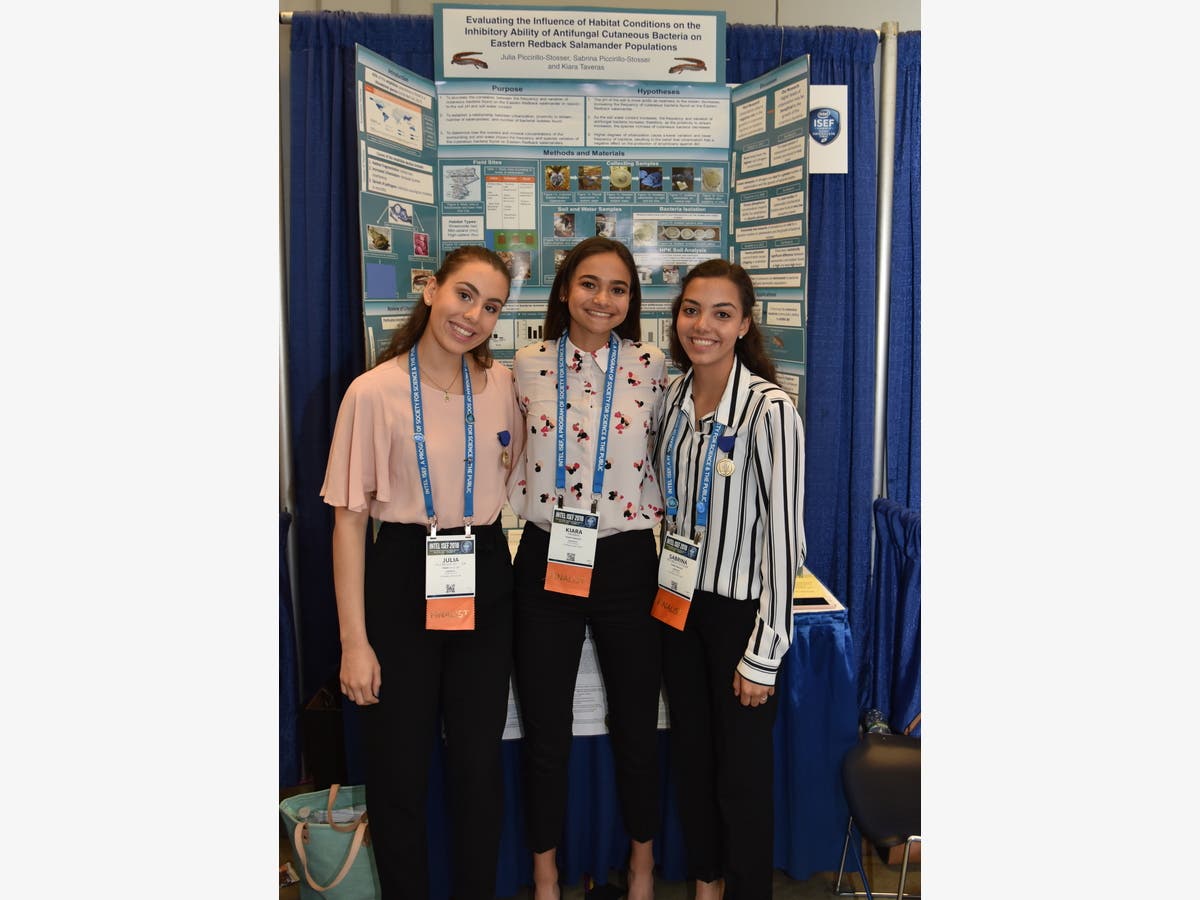
Three Ossining High School juniors received a special award at the Intel International Science and Engineering Fair for their research project on eastern redback salamanders.
Twins Julia and Sabrina Piccirillo-Stosser and Kiara Taveras were among the Grand Award winners at the competition, which took place May 13-19 in Pittsburgh. The team won a Third Award of $1,000 in the Animal Sciences category.
All the Grand Award winners earned the right to compete at Intel ISEF 2018 by winning a top prize at a local, regional, state or national science fair.
Find out what's happening in Ossining-Croton-On-Hudsonfor free with the latest updates from Patch.
Julia, Kiara and Sabrina’s project is titled “Elucidating the Influence of Habitat Fragmentation, Urbanization, and Environmental Factors on the Inhibitory Ability of Antifungal Cutaneous Bacteria Found on the Eastern Redback Population.”
Many amphibian species are endangered due to a fungal disease known as chytridiomycosis. Eastern redback salamanders, however, form an important symbiosis with the bacteria on their skin that promotes the production of metabolites against the fungus that causes the disease, according to the students.
Find out what's happening in Ossining-Croton-On-Hudsonfor free with the latest updates from Patch.
In order to better understand this symbiotic relationship, they investigated the impact of urbanization, proximity to stream, pH, soil water content, and soil chemistry of the habitat on the number of salamanders and bacterial communities in each habitat. They did their research at the Louis Calder Center at Fordham University, as well as 10 sampling sites in Westchester County and New York City.
“Surprisingly, we found that an increase in urbanization does not have a negative impact on the number of bacterial communities on the eastern redback salamander, as well as recognizing that the high nitrogen, phosphorous, and potassium concentrations of the soil at rural sites accounts for the significantly less bacterial communities found at rural locations,” the students wrote.
“In the future we plan to genotype our collected bacterial samples to determine which species have the antifungal properties,” they added.
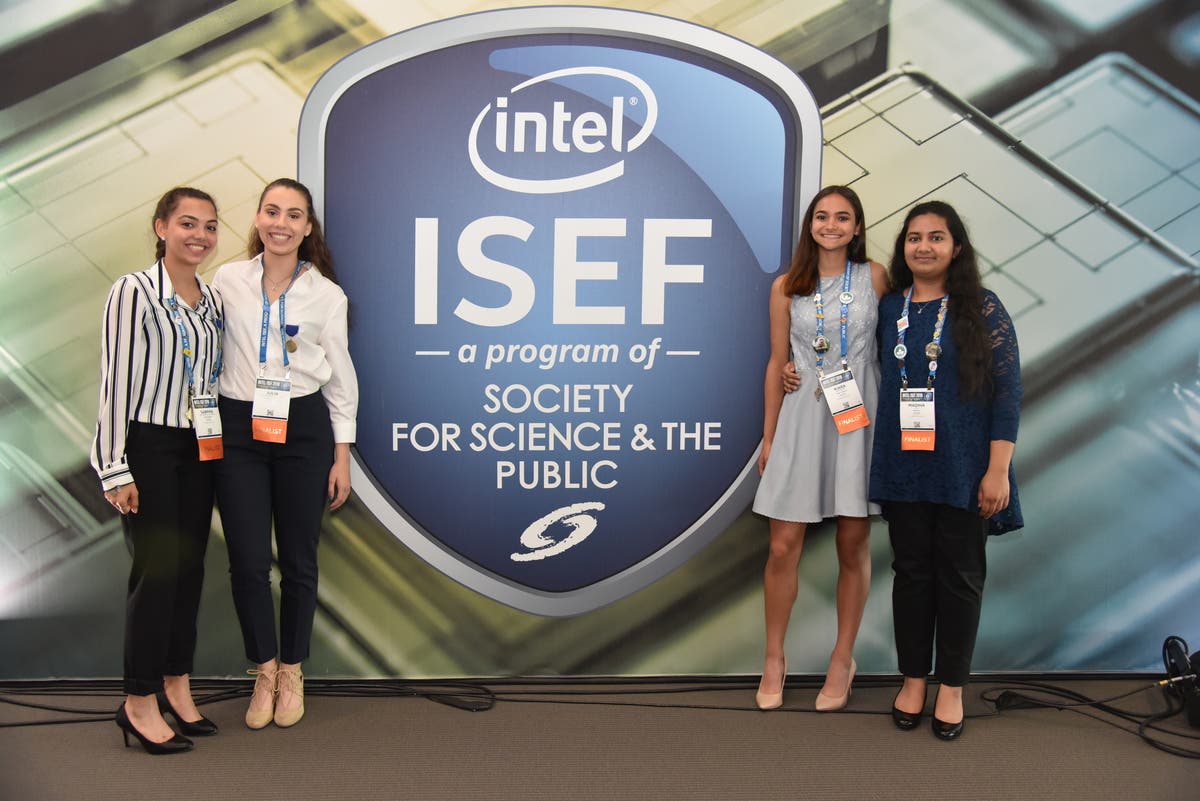
OHS student Madiha Zia was also a finalist at Intel ISEF. While she did not place, her biochemistry project deserves recognition, said Angelo Piccirillo, who co-teaches the Science Research Program with Valerie Holmes and is Julia and Sabrina's father. She conducted research on regulation of amyloid beta with Alzheimer’s disease implications at Columbia University, he said.
The Intel ISEF is a program of the Society for Science & the Public. About 1,800 students from more than 75 countries, regions and territories compete in Intel ISEF each year. Judges award an average of $4 million in prizes to the students with the best independent research projects.
(Photos: First: Grand Award winners Julia Piccirillo-Stosser, Kiara Taveras and Sabrina Piccirillo-Stosser; Second: OHS Intel finalists Sabrina Piccirillo-Stosser, Julia Piccirillo-Stosser, Kiara Taveras and Madiha Zia.)