Schools
Teachers Foster Love of Reading in Summer Academy
About 270 Ossining students who will be entering kindergarten through fifth grade this fall are part of the English Language Arts program.


It was approaching 11 a.m. on a recent summer day at Park School, and Michell Cambareri had to stop in the middle of reading Eve Bunting’s “Someday a Tree” to her students.
They would have to wait until the next day to find out why the grass surrounding the oak tree was yellow and its leaves were falling off prematurely.
The suspense was not easy for one of the students to handle. “Tomorrow, can you read it right when we get to the classroom?” he asked. When Ms. Cambareri said they would, he yelled “Yes!” and pumped a fist into the air.
Find out what's happening in Ossining-Croton-On-Hudsonfor free with the latest updates from Patch.
The children, who will be starting fourth grade in the fall, are part of the month-long Summer English Language Arts Academy at Park School. A total of 267 students who will be entering kindergarten through fifth grade are part of the half-day program, which targets children who can benefit from extra instruction. Above all, though, the academy seeks to instill in children a love of reading.
“We want students to have fun and we want reading to be fun,” said Hugo Osorio, a district psychologist who is one of the principals of the summer program.
Find out what's happening in Ossining-Croton-On-Hudsonfor free with the latest updates from Patch.
Using a Reader’s Workshop approach, teachers use conferring notes to develop mini-lessons that meet the needs of their students. Small guided-reading groups and independent reading allow students to work on specific skills and strategies.
There are sixteen teachers and several teaching assistants in the ELA Academy. In addition, a number of students from Ossining High School are volunteering, said kindergarten teacher Mary Catherine Hillman, who is the other principal.
Some of the authors students in other grades are reading and studying include popular writers like Mo Willems, Tomie DePaola and Ezra Jack Keats.
“Children will often go home with a book to read with their families,” Ms. Hillman said of the students.
The ELA Academy also gets parents involved. Families attended a “Breakfast and a Book” event one morning in July, and they will be invited to spend time in their children’s classroom on the last day of summer school in early August.
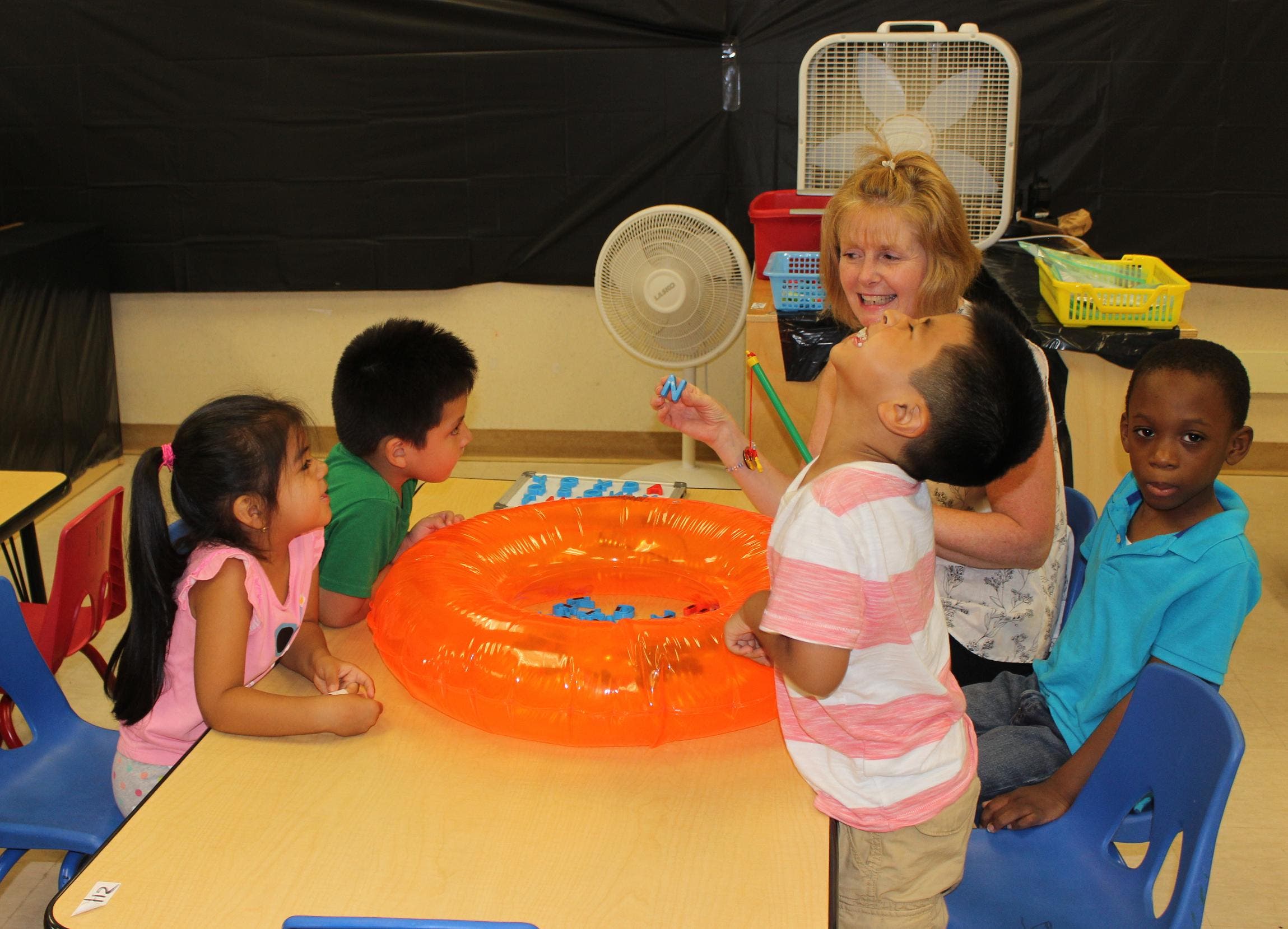
In the classroom of students entering kindergarten this fall, children were divided into small groups. At one table, four students gathered around an inflatable orange plastic tube and “fished” for letters of the alphabet that were inside. Another group used picture clues to help figure out words as they read a book about colors. This is the first year the academy has welcomed students who are going into kindergarten.
The ELA Academy goes deeper than just reading books. Children discuss “big ideas” and characters; compare books by the same author; and look for common themes among them. The books are discussed using cooperative learning strategies and targeted vocabulary instruction, as well as visuals. This allows students to have more targeted discussions, which encourages the children to be leaders of their own learning, the co-principals said.
After stopping in the middle of “Someday a Tree” at the end of class, Ms. Cambareri asked her students to ponder whether the problem in the story was about the tree, and to be prepared to discuss their responses the next day. “If you say yes to that question, I’m going to ask you for evidence. Why and how do you know?” she said.
Ms. Cambareri said she encourages children to “put themselves in the character’s shoes so that they can think about why events are occurring, how problems occur and how they are solved.
“Once kids can develop that understanding of a character, then comprehension just comes in,” she said. “It satisfies everything that we need for early learners.”