Schools
Two Ossining Seniors Are Finalists for National Science Award
They are among 10 students who will advance in competition for the Neuroscience Research Prize.
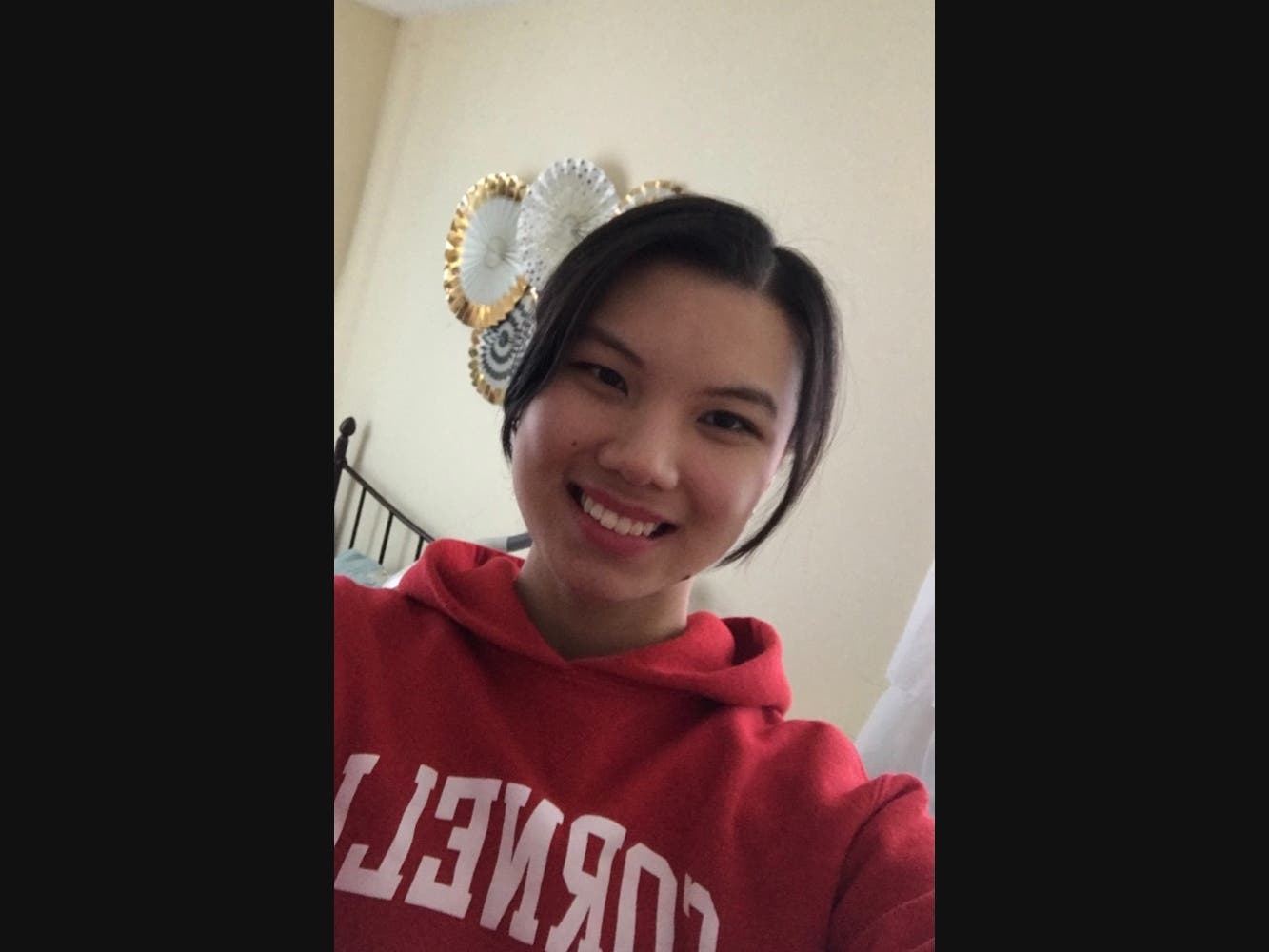

Two Ossining High School seniors in the Science Research Program are finalists for the 2020 American Academy of Neurology and Child Neurology Society’s Neuroscience Research Prize.
Meagan Ryan and Bonnie Lin are among 10 finalists for the award, which is designed to encourage high school students to research the brain and nervous system and recognize those with the potential to contribute to neuroscience. The organizations will announce four winners in January.
Meagan studied some of the changes that occur in the brain during long periods of withdrawal and relapse in cocaine addiction. She looked at the SWI/SNF remodeling complex – a group of proteins involved in gene expression and repairing damaged DNA – in mice with chronic cocaine addiction and long-term withdrawal. She learned that multiple proteins in the remodeling complex decreased after re-exposure to the drug, which suggests that they have a reduced function and involvement in the chromatin (chromosomal material) after a relapse.
Find out what's happening in Ossining-Croton-On-Hudsonfor free with the latest updates from Patch.
“What we found is that a lot of these changes suggest that it may be involved in the changes in the brain related to addiction and specifically relapse,” she said.
“We can target these changes for potential treatments, which would prevent or help with addiction treatment because finding treatment for addiction, especially cocaine, is difficult,” she added.
Find out what's happening in Ossining-Croton-On-Hudsonfor free with the latest updates from Patch.
Meagan’s mentor was Dr. Eric Nestler at the Icahn School of Medicine at Mount Sinai. He paired her with Dr. Philipp Mews, a post-doctoral student, for the research. She worked at Mount Sinai full time during the summer of 2019.
“It was one of the best experiences I’ve ever had,” she said. “I was able to learn so much from the people that were there and just in general being surrounded by an amazing group of professionals who were so willing to teach me and help me learn.”
Meagan plans to major in psychology in college. She would like to combine her interests in psychology and neuroscience for a career in criminal psychology. Her mother is a psychologist and her father is a middle school science teacher.
Outside of science research, Meagan has been on the varsity gymnastics team since 7th grade. She is a member of the Human Rights Club and has been in Girl Scouts since kindergarten. For her Gold Award, she is collecting test prep and review books for the SAT, Regents and other exams. She is making and painting collection boxes for the Ossining Public Library so people can drop books off to share with others. Each review book can cost $25 or $30.
“I think that people should be able to have access to them,” she said.
For her project with the Albert Einstein College of Medicine, Bonnie evaluated data on auditory processing in children 6 to 17 to see how their brain responded to simple words and sounds. The groups included kids with low-functioning autism, high-functioning autism, and children without autism. The data was collected using EEG, a tool that records brain waves. In analyzing it, Bonnie found that there was a general deficit in the amplitudes of the brain waves among members of both autism groups. But there was little difference between children with high-functioning and severe autism. They had expected to find underlying differences among all three groups, with brain waves for children with high-functioning autism similar to those without autism.
“These results also point to the existence of deficits in the processing of auditory information in autism regardless of its severity and intellectual abilities,” she wrote in a summary of her findings.
Bonnie initially wanted to research Rett syndrome, a rare genetic neurological disorder that is on the autism spectrum. Her mentor – Dr. Sophie Molholm – recommended that she work with the data that the college had collected on autism. She also worked in the lab with researcher Olga Sysoeva, who has since moved back to Russia.
Bonnie said is great knowing that all the work she put into the project over two summers is being recognized. “It’s very, very surreal feeling,” she said.
Outside of science research, Bonnie is a member of the Art Club, the Asian Cultural Exchange Club and the National Honor Society. She is vice president for the National Art Honor Society, promoting the highest standards in art scholarship, character and service by bringing art education to the attention of the school and community.
For eight years, Bonnie has taken private lessons in violin and piano. She has volunteered to play for the Maryknoll Sisters of Saint Dominic during their Friday morning teatime over the last seven summers, and she has played in school musicals. She volunteers as a peer tutor and is currently helping a fourth-grader with math and English.
Bonnie is applying to colleges and art schools for next year and is interested in becoming an interior designer. “I’ve always been into art and enjoyed making things with my hands, so interior design, I just stumbled upon it,” she said. “Science research has really helped me with my interpersonal skills and shown me the light at the end of perseverance and grit. It's because of this program that I am able to build my self-confidence and find my passions.”