Neighbor News
5 Ways Storytelling Makes You - And The World - Better
Storytelling is the fastest-growing form of entertainment-and its great for business

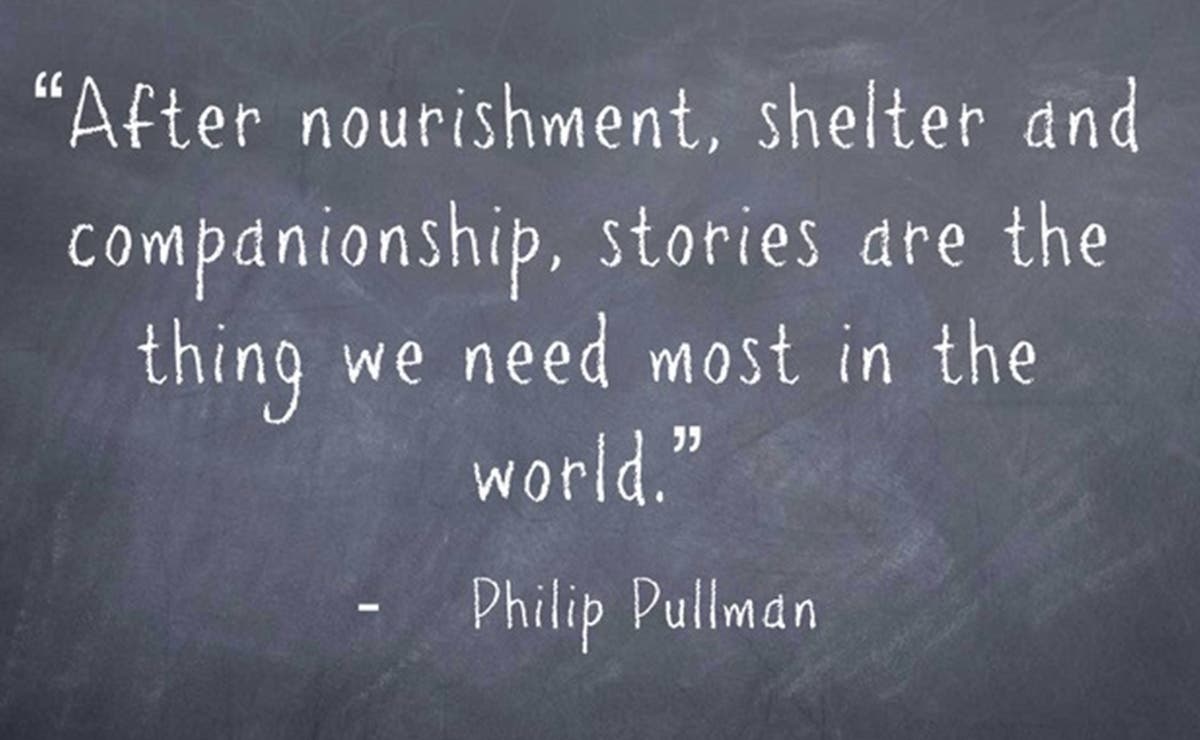
1. Through stories we can benefit from other peoples' experiences. "Stories the world over are almost always about people with problems," writes Jonathan Gottschall in The Storytelling Animal: How Stories Make Us Human. We can reap the benefits of engaging with an emotional journey without having to actually go through it ourselves. Stories free us from the limits of our own direct experience and open us up to worlds we might not otherwise know about.
2. Developing a story to share with others helps us gain perspective. Crafting our personal experiences into stories to be shared is a way to rethink problems, redefine pain and empower those we influence. The creative process of working with the details, language, imagery and tone that convey not just the events but the meaning of an experience produces shifts in our perception and attention. The skills to craft and share a story become tools of empowerment in every area of life, as we become more aware of and take an active role in the experiences that shape us. When we structure the elements of a story we include specific details and leave out others, sometimes consciously, sometimes not. In the process of piecing a story together, we can connect the dots between what we have gone through and who we are, which in turn has an impact on everyone in our field of influence.
Research that looked at inter-generational attachment between parents and children found that the way parents told their own stories was the most powerful predictor of whether children would be securely attached to them. It wasn't what happened to them as children, but how they came to make sense of what happened to them that predicted their emotional integration as adults and what kind of parents they'd be." Coming to terms with the past, with what has happened and shaped our lives, is in many ways the retelling of a story in a way that makes meaning out of pain. A story describes our transformation and in the telling, turns it into reality. When we tell our stories to others who are actively engaged and listening, our neurons fire together and forge deep bonds.
Find out what's happening in Port Jeffersonfor free with the latest updates from Patch.
3. Well-constructed stories make heroes of ordinary people and elevate any human struggle into an epic overcoming. "'The great heroes in our stories battle their way through fear and face awful challenges," states Kevin Allison, creator of the podcast and live storytelling show RISK!. "They look for the best in others and nurture intimacy with worthy teammates. They make sacrifices for what they truly believe in and they are willing to change. And most importantly, they fail at all those aims a lot, but are willing to admit it. Stories are how you attempt to make sense of where you've been, where you are and where you're going. Even those you keep to yourself. And we'd all do well to aim for handling what life throws at us with the courage and grace of the great heros in the classic stories. But when I started making a concerted effort to be a better storyteller, I began aiming to live a more "story-worthy" life. That is, I sought to live more heroically."
4. Stories are compelling ways to convey complex ideas. When physicist Brian Greene was asked to explain why the Higgs-Boson was a significant discovery he used the metaphor of a fish who is unaware he is moving through water, who does not feel he is interacting with some substance because it is the only world he knows. In the metaphor, human beings and all of living creation are that fish interacting with an unseen substance physicists call the "Higgs" field. We might not have the knowledge or even the intellect to grasp the complex mathematics and physics that led to the discovery of this field, but we can imagine a fish in water. We "get" the fundamental meaning of "Higgs" field and can then follow a narrative about it. Research shows that metaphors light up the sensory, emotional and and cognitive functions of the brain, making new information easier to remember and apply in real time. Stories are a powerfully important tool now, when so much of our lives depend on highly-sophisticated, science-driven technology that few of us really understand but about which all of us must make important decisions about how we are going to design our collective future.
Find out what's happening in Port Jeffersonfor free with the latest updates from Patch.
5. Live experiences that engage emotions and attention are important forms of connection in the digital age. It may be that in part, the attraction of creatively-crafted, personal accounts of true experiences lies in the real-time dynamic between teller and listener. It may also be that stories featuring individually-expressed but universally felt fears, failures and feats are an important response to the kinds of stresses we face in 21st century life. Most of us are carrying a computer around in our hand, and we can turn to it for an immediate "fix" of news, texts, emails, or escape from the world into a movie on our Netflix app. The immediacy and availability that our Iphones and every other device provide also place demands on our attention in an increasingly complex and fast-paced world. Listening to a human being share a creative take on a real experience in their life is a powerful brain-to-brain connection that technology can never replicate and is essential to our psychological and emotional well-being.
New Yorker contributer Nathan Englander views stories as a powerful form of influence. "When it comes to inspiring people to embrace some strange new change in behavior, storytelling isn’t just better than the other tools. It’s the only thing that works," he writes. "I’ve spent hours and hours with the Moth, listening to stories, retelling them to anyone who will listen, taking them apart in my head. And I can tell you why. I’ve been writing stories for most of my life, and there’s something about The Moth that serves me, personally, and serves my work. Each time I listen to a story told aloud, and feel that direct connection with the teller, I am reminded of what a story, well told, can do."