Health & Fitness
Meatless Monday Meets Earth Day
The more meat and animal products we eat, the more we pollute our home planet.

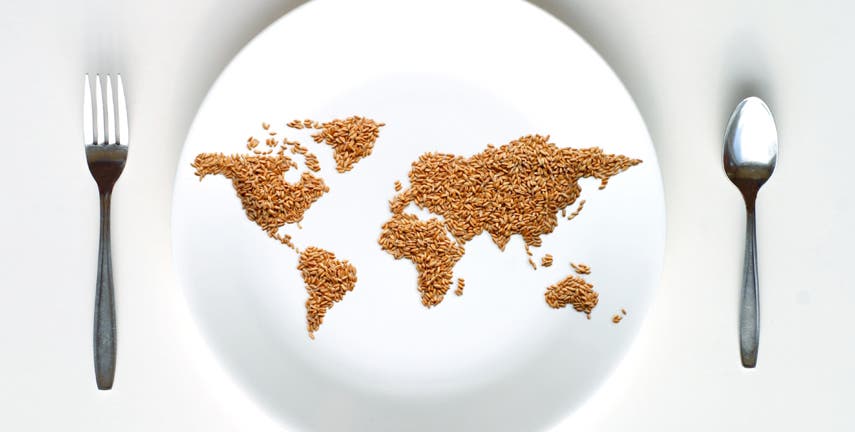
This Meatless Monday, we look forward to Earth Day, March 22. That’s because the more meat and animal products we eat, the more we pollute our home planet.
Supplying food for plant-based diets requires less land, energy and water than for meat-based diets--yet with the same nutritional value, according to a study in the American Journal of Clinical Nutrition.
A breakdown of the numbers, as detailed by the journal Ecosystems, reveals just how resource-intensive animal products can be. Raising cattle requires 20 times more water than raising cereals and grains for human consumption, for the same amount of calories. Producing milk, eggs and poultry requires about 1.5 times as much water compared to beans and other legumes, for the same amount of protein.
Find out what's happening in Port Washingtonfor free with the latest updates from Patch.
Water is vital to every life form on Earth--not only for drinking but also for hygiene and agriculture. Yet water is in short supply in many places. California, it its fourth year of drought, uses 90 percent of its water on agriculture, including more than half that goes toward livestock and dairy farms, says a Pacific Institute study.
Furthermore, livestock waste is a massive source of water pollution. A single dairy cow can produce 120 pounds of waste a day -- the equivalent of 20 to 40 people, says the US Environment Protection Agency (EPA). Factory farms typically store manure in artificial ponds and lagoons that can contaminate groundwater when improperly sealed. “Many [animal-feeding operations] lack necessary storm water runoff controls...that divert rain water and snow melt from the animal confinement area. Stored manure gets washed into nearby streams,” says the EPA.
Find out what's happening in Port Washingtonfor free with the latest updates from Patch.
Water supplies tainted by bacteria and parasites from animal waste have been the root of listeria and e. coli. outbreaks. A 2009 New York Timesarticle detailed how Morris County, Wisconsin’s agricultural runoff sickened residents. Similarly, poultry operations befouled water supplies for residents in Arkansas, Maryland and Oklahoma and more. In water-starved California, officials have found that agriculture and livestock polluted nearly 100,000 square miles of groundwater, according to the National Resources Defense Council.
Staying on this course will make water a scarcer and scarcer resource. Among its many other benefits, eating a plant-based diet can help to reverse that trend.