Health & Fitness
Heights or Hill: The People, Progress and Naming Prospects
Heights or Hill: A "Tour and Study" of Historical Landmarks in Prospect Heights with Robert L. Danforth is a blog dedicated to the history of a Brooklyn community.
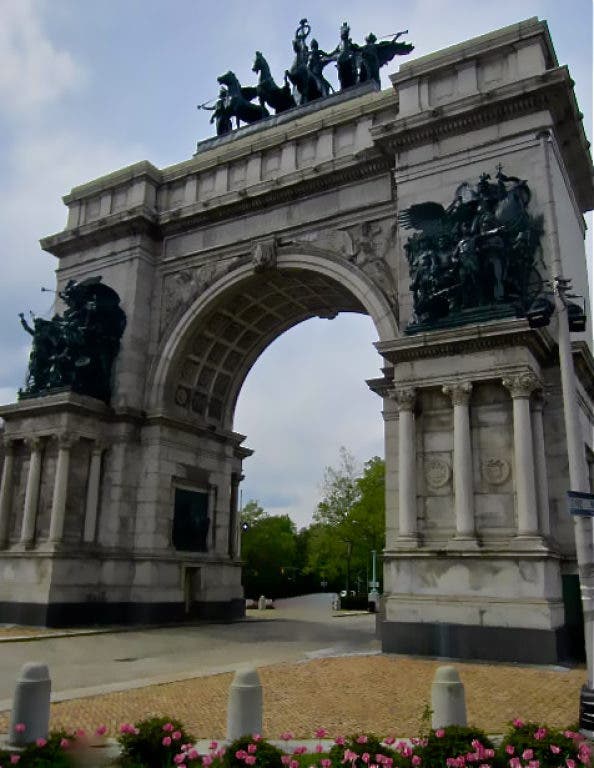


"A kind of key to the whole continent." - John Adams (1776) figuratively conveying that New York and her sister cities, not Boston as most believed, if captured by the British, may greatly weaken the chance for American independence.
The People
History may be based on facts, but it is subject to people’s opinion through analysis. History is a reconcilable record for the people and should be challenged at all costs when warranted. Our history may give us the only prospects for understanding who we are or why we come to be. History is not for the dead to celebrate, study or recognize. History is for us. History is in our hands.
Find out what's happening in Prospect Heights-Crown Heightsfor free with the latest updates from Patch.
Although, this writer hopes to engage Patch readers in the study of the Prospect Heights Historical Landmarks, first, I think it’s important to just look back. Reflecting on the history of New York between the 1850's and 1900 may together help us both envision Prospect Heights as it was before and during its development into a thriving, diverse residential community.
Find out what's happening in Prospect Heights-Crown Heightsfor free with the latest updates from Patch.
Progress
Today, many history enthusiasts, scholars, educators and their students regard the mid-late nineteenth century as a tumultuous time yet highly important and a pivotal point of change for New York State and furthermore the entire nation.
In the second half of the nineteenth century, there were many significant political, social and economical events—only a few will I mention here—which have helped to shape the constructs of law and practices, our government and even common acts of civility. During this time, a diasporic phenomenon would eventually open the gateway of Ellis Island into American borders. Great prospects were promised to millions of European immigrants like the Irish who desperately needed a new start after surviving the Great Famine (1845-1852).
But the people of New York fell victim to one powerful supporter of Ellis Island. His name was William M. Tweed. Tweed’s political trappings and corruption as the “Boss” of Tammany Hall (early 1850's - early 1870's) would duly give rise to the reform movement, Prohibition and Women's Suffrage during the Progressive Era (1890-1920).
Meanwhile the Pacific Railroad Acts of Congress (1882 and 1883) was creating wealth for many New Yorkers due to the progressive advantages of a new transcontinental railroad. The American People were first introduced to the concept of a “super rich industrialist,” many of them New Yorkers like John D. Rockefeller, J.P. Morgan and the Vanderbilt and Astor families included during the Gilded Age (1870-1893). The public called these mogul men “the Robber Barons”, but many would be inspired by their fortune found in Laissez-faire Capitalism.
Naming Prospects
Shakespeare once asked "what’s in a name?” However banal as it may sound, when a city adopts a name, in particular, the name holds a promise which never dulls. The special meaning of a any place may be rooted in the name. This is where I will start.
Think: Prospect.
Which came first, was it Prospect Park, Prospect Heights or Mount Prospect? Or it may have been Prospect Lefferts Gardens or Prospect Place which was the “Father of All Brooklyn Prospects.” Although of them all, as you may already know, the later is the most implausible. Even if you are a history enthusiast you may not know. I didn't. The first three make it tricky. Still there once was only one place in Brooklyn that sighted the name Prospect. Mount Prospect came first. All the others would quickly fall in line as an eponymous name like a family tree branching out; extending and multiplying as the name is passed down. History records that Prospect Park opened to the public in the 1860’s, well before most of Prospect Heights was developed or officially invoked (1889). The origins of Mount Prospect may be traced back to the Revolutionary War (1776). According to Wikipedia, Mount Prospect’s "peak elevation is 200 feet above sea level. It was a lookout point for the Continental Army and named for its sweeping views of Manhattan, New Jersey to the west and the Atlantic Ocean to the south”.
That is how naming Prospects came to be.
On a personal note, I have to imagine that many of you may already know some or all of what you’ve read here today. I’m not to trying educate per se, rather share what I'm learning. As for me, I am still learning. I am not historian, a scholar or even an expert on the subject of landmarks. However I am a history enthusiast, a writer with keen journalist sensibilities and honest ethical practices. Hey, what can I say? Hey, what can I say? I’m a history buff and I love to write. Oh yeah and did I mention...I live in Brooklyn.
Next Week: The Historical Landmarks: A "Tour and Study" of Brooklyn Architecture


