Health & Fitness
Hunting for the Perfect Sazerac on Vanderbilt Avenue
Two friends put bartenders at Cornelius and The Vanderbilt to the test.

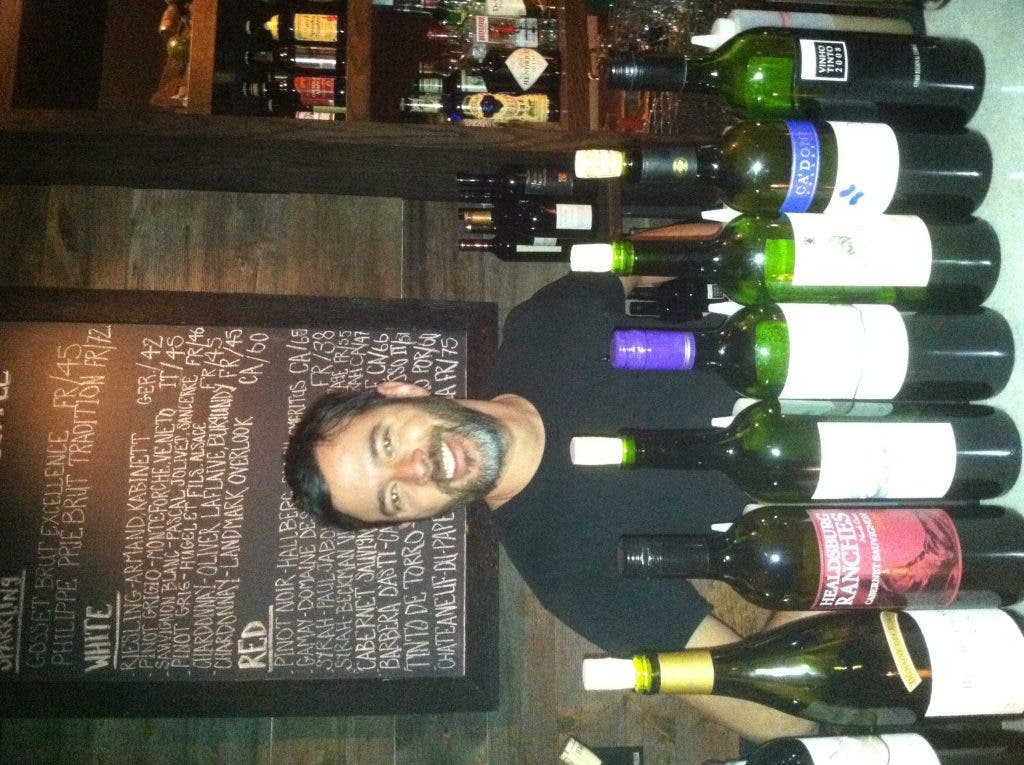


This blog post was co-written by Adam Rabiner and Alex Marshall.
Adam Rabiner: Alex what is so special about this cocktail, Sazerac,
that you have asked me to leave my warm home, mid-week no less, to
seek out. Quite frankly, after putting my two little kids to bed, I'd
rather collapse on my couch and watch CSI.
Alex Marshall: My friend, I'm giving you the chance to taste the
Methuselah of cocktails, which dates back to New Orleans in the 1880s,
and quite possibly much further. There are those who believe it was
the very first cocktail.
It is a grownup beverage containing Rye whiskey, Peychaud's bitters
(invented in New Orleans in 1830), and that illicit and sometimes
illegal substance, Absinthe. It is a potion, one that requires skill
and dexterity to put together, that goes beyond the mere set of
ingredients I have put here. There are sugar cubes to be mulled,
glasses to be limned, ice to be twirled.
Will we find a bartender who can make this drink? We may not. I have
certainly been marooned many times in establishments where the
gentleman or lady behind the long polished counter gave me blank,
unknowing looks when I said the word "Sazerac."
But, you and I will go forth into the night, and wander and search,
until we find an establishment that knows the true, the beautiful, and
the good thing, called the Sazerac.
Adam: I know just the place to begin, The Vanderbilt, where I have
seen yellow taxi cabs pull up and discharge finely clad
“Manhattanistas.” There we will challenge bartender Brian Floyd to
concoct this recipe you speak so highly of.
Alex: You're on. And perhaps afterward we can visit the nearby
Cornelius, also on Vanderbilt Avenue and just one block away, where
Matt Owens wields a mighty bar glass, I am told.
THE NEXT DAY . . .
Alex: Boy Adam, my head hurts this morning. Those Sazeracs pack a
wallop. It didn't help that we got caught in crossfire of dueling
bartenders, eager to prove their prowess on the field of Sazeracs.
I'll go over the details as I remember them, in case you're fuzzy.
First off, both Brian and Matt prepared the three basic ingredients,
Rye, Absinthe and bitters in the right quantities and in the right way
creating a frosty mixture, which thanks to the Peychaud's, took on the
color of a pink rose. Brian left the drinks alone for a good five
minutes before serving us so they could get fully cold. He would pour
no drink before its time, it seemed. Finally, he poured the libations
into the glasses limned with Absinthe, and then added a final touch: a
hefty spritz of lemon oil avoiding putting the rind itself into the
drink. Then we tasted.
Adam: We did indeed Alex. Brian, with his bare arms and exposed
tattoos, prepared our drinks with bravura and confidence. Far from
being intimidated by our order, he said that he had made ten of them
the day before. He told us he usually uses "Herbsaint," a substitute
American Absinthe made without wormwood and developed in the early 1930s when real Absinthe was illegal. That won him points for obscure ingredients.
Alex: I don't know about you Adam, but I thought it was truly the best
Sazerac I had ever tasted. The final spritz of lemon oil seemed
essential. It added a nice zest to the sweetness and licorice taste of
the drink, creating a cinnamon-like flavor. It was delicious. And
strong. I immediately felt it going to my head. I needed to order a
plate of chicken wings, whose fiery red sauce matched our drinks in
color and verve, to counter the effects.
Adam: Then we made our way over to Cornelius, a less formal
establishment, a bit more down home, but with a clearly serious and
knowledgeable bartender, as well. Matt, too, had tattoos but was
brawnier and less of a hipster. He was delighted to hear we wanted
Sazeracs, and declared that many, even those from New Orleans proper,
had proclaimed his the best ever. Alex, it was revealing to see our
two bartenders dance. To my amateur eyes, both nailed the
presentation, as well as the execution.
Alex: Yes indeed Adam. Although there is no reason a Sazerac could not
be served in a martini glass, there is something horrific about that
thought. Both of our bartenders used the correct glass, a short round
tumbler with perfectly straight and vertical sides known as an "Old-Fashioned Glass." Both used Overholt rye whiskey.
I did notice some differences in the drink itself. Matt put a sugar
cube and some Peychaud's bitters in a glass, and then did some serious
muscle work with a pestle, grinding the ingredients into a sweet
syrup, his powerful forearms looking like a moving piston, whereas I
think Brian over at The Vanderbilt had used simple syrup, a failing
in my view.
Also, Matt did not let the drinks sit for five minutes. Rather, he
swirled them around with a stirrer, and then poured.
Adam: Along those lines Alex, Matt chose to crown his Sazaracs with
the lemon twists and his glasses were probably an inch and a half
full, as opposed to three quarters of an inch at The Vanderbilt. The
greater volume may have been because I saw that Matt used the full
three ounces of Rye Whiskey—two jiggers—that the classic recipe calls
for. Brian may have used less.
Alex: You’re right Adam. Upon tasting Matt’s, I pronounced it less
flavorful than Brian's. Was this an informed judgment? It may not
have been. On later reflection, I thought I could grow to like Matt's
more, once I get acquainted with it. Brian had the advantage of having
his tasted first, when my palate was sharper.
Adam: Sadly at this point, Alex, the evening was coming to an end.
After three rounds of Sazeracs we ate an excellent goat cheese and ham
pizza and staggered home.
Alex: Adam it was a great night out. The Vanderbilt is a wonderful
place for special occasions. As a place to hang out regularly, I might
choose the Cornelius. Both had excellent Sazeracs. Although for me
Brian won the competition on this particular night, I wonder if I
might just give Matt's one more try.


