Community Corner
Meet the Zoo: Lena 'Horne-bill' and Billy Strayhorn
These curious birds like to play catch with grapes or twigs.
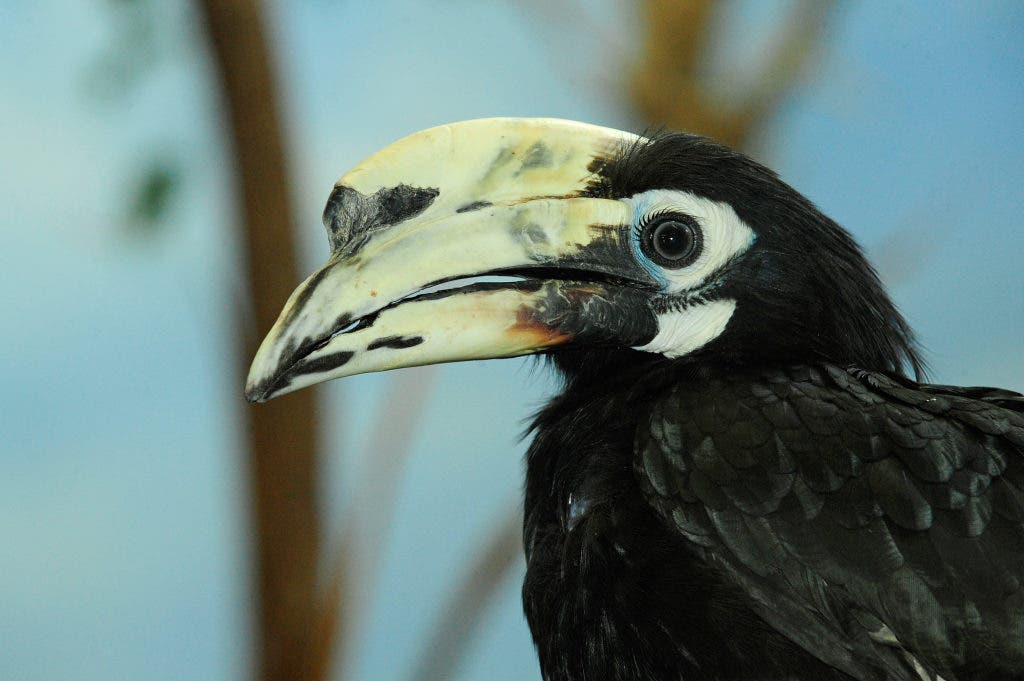
Most people look at this pair of birds at the Wildlife Conservation Society’s Prospect Park Zoo and think, “A-ha, a toucan.” They are absolutely wrong.
The zoo’s pair of young Oriental pied hornbills share some physical characteristics with the South American toucan, but they are in a class of their own.
Lena “Horne-bill” and Billy Strayhorn are named after two famous jazz artists, Lena Horne, the trailblazing Brooklyn-born singer, actress and civil rights activist, and her favorite song writer Billy Strayhorn. These two birds have personalities to match their namesakes.
Find out what's happening in Prospect Heights-Crown Heightsfor free with the latest updates from Patch.
They are both curious and seem to be interested in any activity around them, sometimes hopping close to the exhibit window to get a better look at visitors.
Their exhibit-mates provide a lot of interesting diversions. On the ground, Lena and Billy can watch the crested wood partridges wander around or look at the tiny Malayan mouse deer forage through the plants. Sharing their air space is a pair of yellow faced mynah birds who can often be heard squawking to each other and sometimes at Lena and Billy.
Find out what's happening in Prospect Heights-Crown Heightsfor free with the latest updates from Patch.
One of the highlights of their day, and certainly for any visitors who catch the “show,” is when a keeper enters the exhibit to conduct a training session with the birds. A game of “catch the grapes” is an enrichment technique used for these smart birds. It keeps them active and thinking as they watch for the toss and catch the grape – an amazing feat considering those large bills.
Besides the grape tossing sessions, visitors often see how well these birds manipulate things with their beaks. Billy especially likes to pick up tiny twigs and play his own little game of catch, juggling the twig in his beak and twirling it around with amazing dexterity.
Those big, heavy bills look clumsy but they are actually very important for fighting, preening and building nests as well as catching prey. One of the unique features of this particular bill is the casque, a hollow “bump” on top of their beak which gives these birds their name: horn-bill.


