Health & Fitness
Combat Plan for Hudson Valley in Range of 'Scarier' Zika Virus
New York has the 2nd highest number of reported cases so far, but those have all been brought in. What you need to know: VIDEO


As federal health officials are warning that the Zika virus is much "scarier" than initially thought, New Yorkers are learning that the mosquitoes that can transmit Zika may live in a much larger area than initially thought -- including into the Hudson Valley and all of Long Island.
New York already has the second highest number of reported cases of Zika in the country -- but all of those have been travelers who were bitten elsewhere.
The Centers for Disease Control and Prevention has posted new maps of the estimated range of Aedes aegypti mosquitoes on its website, showing that that the southern parts of New York and all of New Jersey could become home to the potentially dangerous insect.
Find out what's happening in Rivertownsfor free with the latest updates from Patch.
The Zika virus has been linked to birth defects, so pregnant women have been identified as a group that's particularly at risk.
“Everything we look at with this virus seems to be a bit scarier than we initially thought,” said Dr. Anne Schuchat, deputy director of the CDC, at a daily White House press briefing April 10.
Find out what's happening in Rivertownsfor free with the latest updates from Patch.
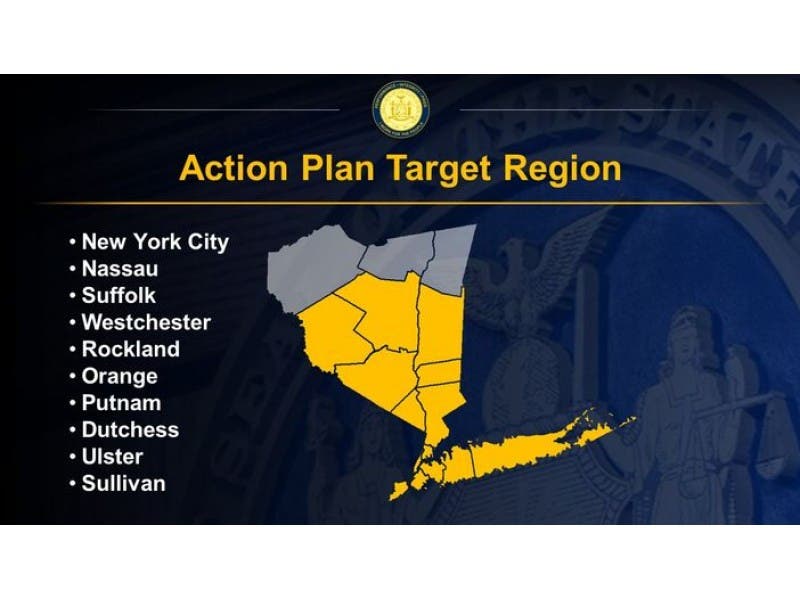
State officials have launched an action plan to combat transmission of the virus across New York, especially in the lower Hudson Valley -- primarily by using larvicide, repellant and condoms.
Mosquito season is April to September. The state's plan targets the virus at its source – Aedes mosquitoes – with enhanced trapping and testing throughout the entire downstate region.
So far the confirmed cases of Zika in the Hudson Valley have been in people who had recently returned from travel to one of the countries where the outbreak is spreading explosively, including the Caribbean and Latin America.
For mosquitoes to cause a Zika outbreak in the United States, the CDC says all of the following must happen:
- People infected with a virus (like Zika, dengue, or chikungunya) must enter the United States.
- An Aedes aegypti or Aedes albopictus mosquito in the United States bites an infected person during the first week of infection when the virus can be found in the person’s blood.
- The infected mosquito lives long enough for the virus to multiply and for the mosquito to bite another person.
- The cycle continues multiple times to start an outbreak.
The mosquitoes were once thought to be a threat to only the southern areas of the United States. The CDC's maps also show the mosquito's cousin, Aedes albopictus, reaching well into New York and much of New England. The map even shows the mosquito reaching as far north as the lower halves of Vermont and New Hampshire and the southern portion of Maine.
In general, travelers are strongly urged to protect themselves by preventing mosquito bites:
- Wear long-sleeved shirts and long pants.
- Use EPA-registered insect repellents containing DEET, picaridin, oil of lemon eucalyptus (OLE), or IR3535. Always use as directed.
- Insect repellents containing DEET, picaridin, and IR3535 are safe for pregnant and nursing women and children older than 2 months when used according to the product label. Oil of lemon eucalyptus products should not be used on children under 3 years of age.
- Use permethrin-treated clothing and gear (such as boots, pants, socks, and tents).
- Stay and sleep in screened-in or air-conditioned rooms.
The CDC warns pregnant women not to travel to areas with Zika:
Zika virus can be spread from a pregnant woman to her fetus and has been linked to a serious birth defect of the brain called microcephaly in babies of mothers who had Zika virus while pregnant. Other problems have been detected among fetuses and infants infected with Zika virus before birth, such as absent or poorly developed brain structures, defects of the eye, hearing deficits, and impaired growth. CDC recommends special precautions for pregnant women. Women who are pregnant should not travel to areas with Zika. If you must travel to one of these areas, talk to your healthcare provider first and strictly follow steps to prevent mosquito bites during your trip.
Get more local news delivered straight to your inbox. Sign up for free Patch newsletters and alerts.