Community Corner
Mares Eat Oats and Does Eat Oats and Goats Eat Poison Ivy
Gorundwork Hudson Valley sponsors workshop on how to arrest the spreading of invasive plants.

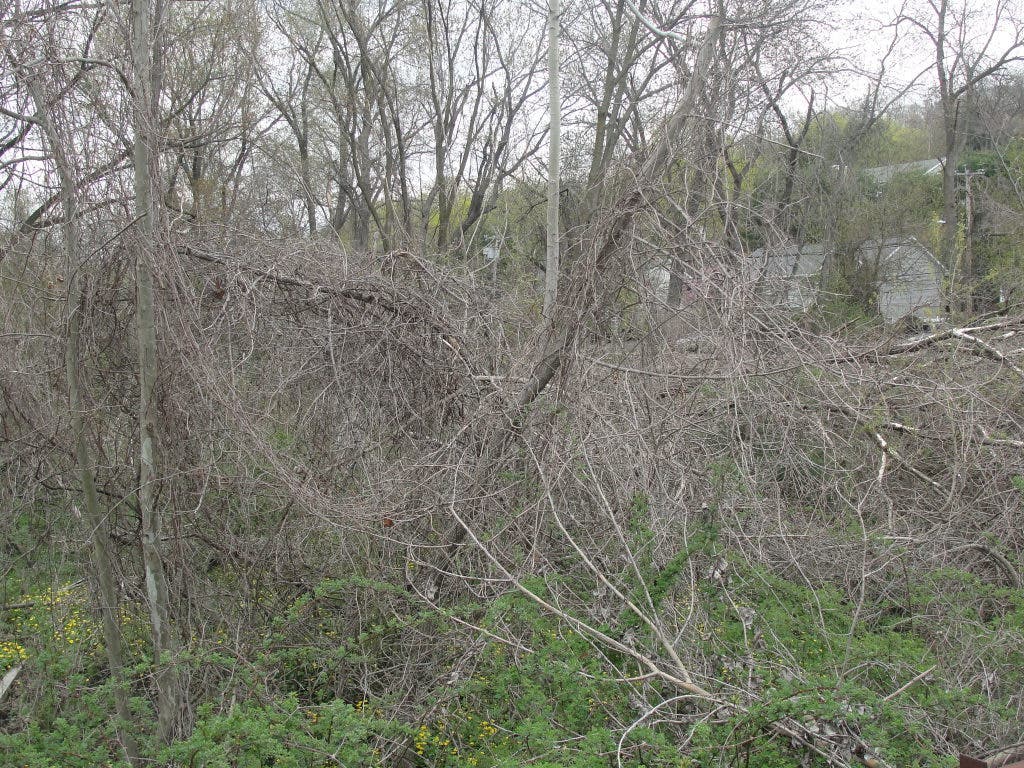


If you have ever driven down the Saw Mill Parkway, you have probably noticed the eerie entanglements of vines that make it all but impossible to see into the woods behind them. But besides being creepy and generally unattractive, environmentalists say they wreak havoc on the area's wildlife.
"Non-native plants spread like wildfire, choking the trees in their path," said Lynn Oliva, a River Associate for Groundwork Hudson Valley. "They are detrimental to the area's water quality and destroy animal habitats."
On Thursday, April 28, the Saw Mill River Coalition and the Greenburgh Nature Center will sponsor an Invasive Vine Action Workshop. The workshop will be held from 10 a.m. to 2 p.m. at Westchester Manor in Hastings.
Find out what's happening in Rivertownsfor free with the latest updates from Patch.
According to Oliva, the goal of the workshop is to bring stakeholders—including: The Department of Transportation—who oversees the parkway—government officials, environmentalists, landscapers, and community members—together to develop a long-term action plan to eradicate these vines that are killing our trees and destroying native habitats.
Experts at Groundwork Hudson Valley also stress that affected trees eventually fall, posing a safety hazard to all the people who drive along the parkway and who enjoy the South County Trailway. As part of the workshop, participants will visit the Targeted Watershed restoration site that the Coalition has been working on and learn from experts about new management approaches to invasive vines.
Find out what's happening in Rivertownsfor free with the latest updates from Patch.
For additional instruction (and entertainment), three goats from the Greenburgh Nature Center will make an appearance and display their eagerness to eat these invasive vines, munching away on nuisances such as poison ivy and thorny multi-flora rose. Strategic grazing using goats is a new weapon in the campaign to halt the spread of invasive species. (Oliva noted that eating poison ivy is not harmful to goats, as it would be to human beings.)
Presenters at Thursday's workshop include Ken Kleinpeter, director of farm and facilities at Glynwood Institute and a practitioner in the strategic grazing using goats; Robert Del Torto, a member of the Board of Directors of the Bronx River Parkway Conservancy and former head of volunteers for the Westchester County Parks Department; and Sven Hoeger, a local ecologist who works on habitat restoration projects throughout the metropolitan area.
"We have had an AmeriCorps crew out working on the Farragut Avenue Site for the last few weeks," Oliva said. "During the session out in the field, participants will certainly learn how to safely identify and remove invasive vines."
Groundwork Hudson Valley is an environmental justice non-profit that works with local communities to improve their physical and social environment; and The Saw Mill River Coalition—a Groundwork Hudson Valley program— is organizing this workshop in the fifth year of its "Free-a-Tree program," which is sponsored by the Department of Transportation and Westchester County Parks. Free-a-Tree rallies volunteers each month to cut vines and clean up the River. A key focus of the Coalition’s efforts is the Farragut Avenue site on the Saw Mill River in Hastings.
If you happen to stop while jogging or cycling next to the Farragut Avenue site—or you find yourself in traffic while driving on the parkway—you will undoubtedly notice the stark difference between the cleared area and all the forestland north and south of it.
According to Groundwork Hudson, hundreds of volunteers have cleared tons of invasive vines and planted over 150 native trees and shrubs at this location. This work was supported by a three-year EPA Targeted Watershed Grant, which is now coming to a close. While they believe great progress has been made through volunteer efforts, the spread of invasives to the larger Saw Mill River area is a problem much too large for a group of local volunteers.
To RSVP for Thursday's event, call (914) 375-2151, email Emily@groundworkhv.org or register online at http://invasivevineactionworkshop.eventbrite.com.
Get more local news delivered straight to your inbox. Sign up for free Patch newsletters and alerts.