Health & Fitness
The Lacuna (Next Up, Book Club)
A book review of The Lacuna, one of Barbara Kingsolver's best novels to date.
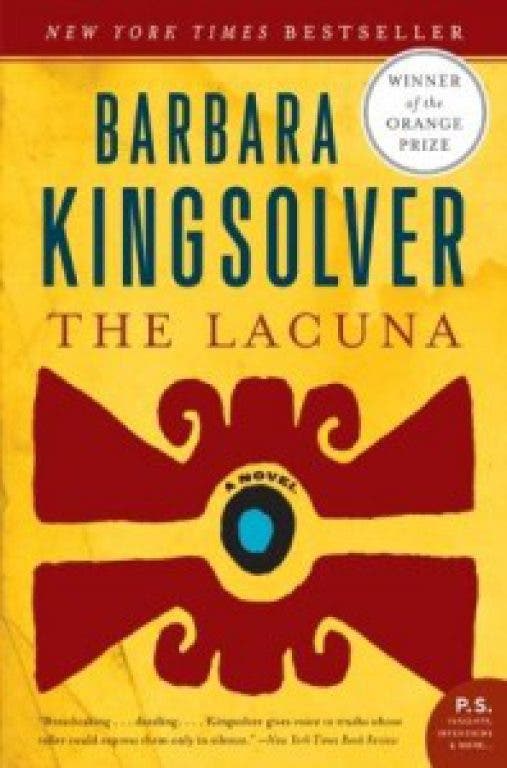
Barbara Kingsolver is one of my favorite authors of all time. I’ve read 10 of her 13 books, which include novels, her nonfiction book Animal, Vegetable, Miracle, books of short stories, and Small Wonder, a nonfiction book of essays.
I read The Lacuna shortly after its release in late 2009. About halfway through it I called my good friend and fellow English major nerd, Caroline (the lovely writer at A Wish Come Clear), and gushed about it. “It’s so good I wish we were still in college so I could write a paper about it,” I said.
Nerd much? Well, at least I’ve never denied it.
Find out what's happening in Sayville-Bayportfor free with the latest updates from Patch.
The Lacuna is out-and-out brilliant. It’s my favorite of Kingsolver’s novels, and its heft and depth put it up there with her well-known The Poisonwood Bible. Kingsolver has talked about how the novel centers on questions about the uneasy relationship of American politics with its writers and artists. She creates an imagined character, Harrison Shepherd, who lives in fully realized, historically accurate settings, growing up first in Mexico with his mother in the 1930s, then attending school in DC near his father in the 1940s.
Upon returning to Mexico, he becomes a plaster mixer for the painter Diego Rivera, then a cook for he and his wife Frieda Kahlo. He ultimately becomes cook and secretary to Lev Trotsky, in exile in Mexico. Shepherd is shaped by his relationships with these historically accurate giants in art and politics.
Find out what's happening in Sayville-Bayportfor free with the latest updates from Patch.
Shepherd returns to the US to escort some of Frida Kahlo’s paintings to the Met, and he decides to stay. Settling down in North Carolina in the 1940s and fifties, he pens a novel that becomes an overnight sensation. The uncomfortable object of public adoration, he is soon called before the House Committee on Un-American Activities and just as quickly becomes the object of public scorn.
A “lacuna” is a missing piece, and the book is chiefly concerned with the idea that the most important thing about a person is the thing you’ll never know about them–the secret they hide from all the world. Brilliantly, Kingsolver has ‘lost’ one of Shepherd’s diaries–the most important one, it seems. A lacuna also means a tunnel or a cave, and Kingsolver weaves all of these meanings throughout the book to create a whole that is truly astonishing.
For the record, when I started my MFA program last winter, the first book I wrote an essay about was The Lacuna.
Note: I’m leading a book club discussion of The Lacuna at on Tuesday, December 6. Sign up at the reference desk and get a copy of the book.