Community Corner
Smithtown, A History: The Historic District of Blydenburgh Park
Structures of a former milling complex exist today in Smithtown.



Last week I wrote about the historic Blydenburgh-Weld house located on the north side of Blydenburgh County Park. The house is just one of the structures that still exist of an extensive milling complex.
In 1798 Susannah and Isaac Blydenburgh acquired the land. The first thing created on the property was the 180 acre Stump Pond. Blydenburgh, with the help of his cousins Joshua Smith II and Caleb Smith II, created a dam at the headwaters of the Nissequogue River just north of the meeting of three streams.
After the dam was created, a grist mill and saw mill were constructed. The grist mill and the foundation of the saw mill still exist today. In 1827 a fulling mill was added to the complex; however this building no longer stands.
Find out what's happening in Smithtownfor free with the latest updates from Patch.
Richard Martin, Director of Historic Services for Suffolk County Parks Department, said the grist mill was expanded in the 1880s when roller millworks were installed. A third floor was needed to accommodate the new machinery.
The grist mill was the last of the mills to cease operating in 1922. Martin said, "It was pretty unique that it ran into the 20th century."
Find out what's happening in Smithtownfor free with the latest updates from Patch.
Between 1801 and 1803 a Miller's House was built by the mills' first operator Isaac Smith. On the outside, the visitor will see double porticos of neoclassical style. Inside the second floor hallway a rare technique of silver plaster was used and is the only example of this in the New York area.
Allen Drost, who leads tours of the district on Saturdays, pointed out the ingenious design of the Miller's House. He said being built into the side of the hill helped to insulate it and with it facing south, it could get maximum exposure to the sun.
In the late part of the 19th century an ice house was added to the complex. Today it contains a blacksmith forge that is still in working condition.
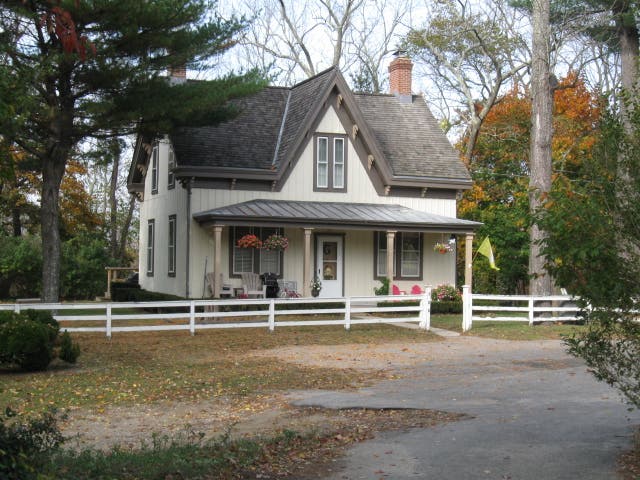
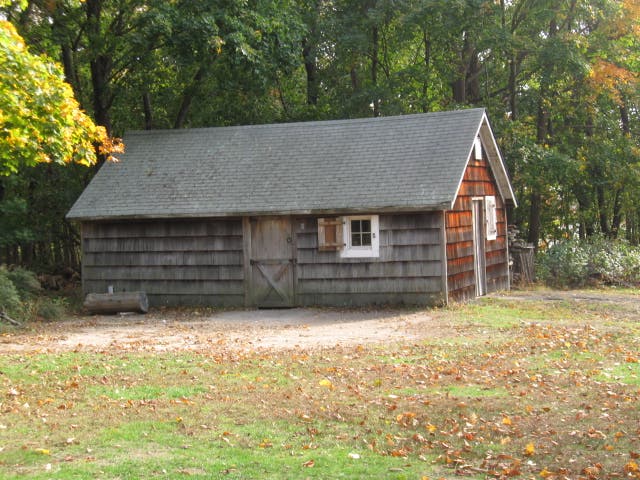
Visitors will also encounter a Gothic Revival Cottage built around 1870 near the Blydenburgh-Weld house and another small outer building. There are also rusted farm tools on the grounds that were saved from three barns that burned down.
The property was sold to David and Molly Weld in 1939, and in 1965 Suffolk County Department of Parks acquired the land. Called the Blydenburgh Historic District, it is dedicated to the Suffolk County Historic Trust and is listed on the National Register of Historic Places in Washington D.C.
Martin said besides the existing buildings being left intact, most of the landscape and roads are barely altered. He added, "It's a very rare thing especially on Long Island."