Politics & Government
East Hampton Asks East End Towns To Support Regional Fishing Industry Study
"I've probably got the hardest job around this table right now because I am begging." — Brad Loewen, East Hampton Fisheries Committee.


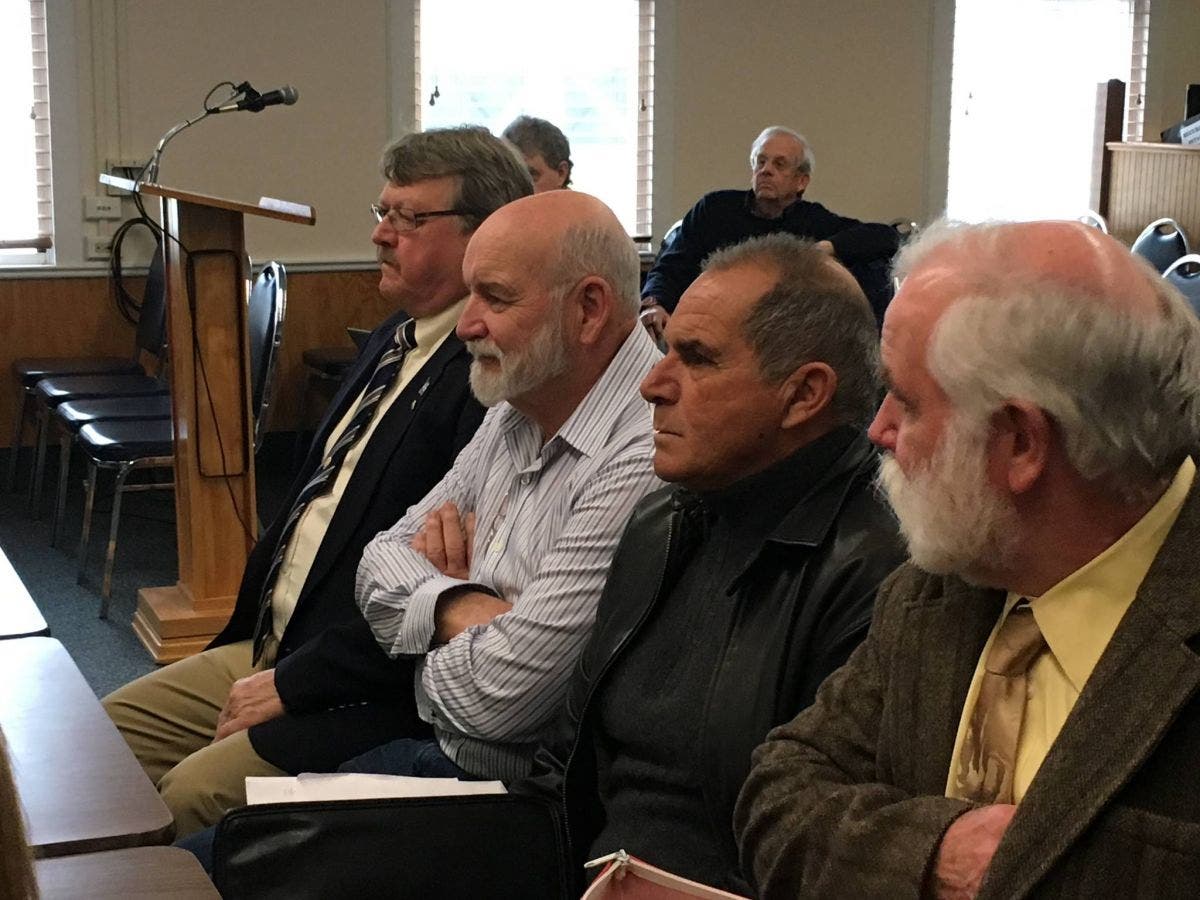
SOUTHAMPTON, NY — Local town officials, including the Southampton Town board, could soon team up with East Hampton for a regional study of the East End's fishing industry.
At Tuesday's Southold Town board work session, East Hampton Town Councilman Fred Overton, Brad Loewen, chair of the East Hampton fisheries committee, and Emerson Hasbrouck of Cornell Cooperative Extension discussed a plan for a socioeconomic study of the fishing industry not just in East Hampton, but on the entire East End.
The East Hampton representatives said they've already spoken to Southampton town officials and were asking Southold for support, as well, to help fund the regional study. Next up, they plan to speak to Greenport Village and Shelter Island officials, too.
Find out what's happening in Southamptonfor free with the latest updates from Patch.
According to Loewen, the commercial and recreational fishing industries, as well as aquaculture operations, are still critical to East Hampton and the entire East End.
But whenever representatives from East Hampton attend various fisheries meetings, questions arise regarding how East Hampton knows exactly how many people, families, and jobs are actually devoted to fishing in the area.
Find out what's happening in Southamptonfor free with the latest updates from Patch.
"We need proof of our value," Loewen said. "Proof that we are an industry."
In addition, taking the regional approach is a more effective way to approach federal and state agencies for grant funding and other issues, he said.
A comprehensive, socioeconomic study, done by qualified professionals with credentials will do that, he said.
But funding for that study is critical, and needed, he said. A total of $100,000 is needed for the study.
"I've probably got the hardest job around this table right now because I am begging," Loewen said.
After a state grant and East Hampton's contribution, there's still a $55,000 gap to fill, he said; he's looking for contributions from each of the five East End towns.
The study would be the first of its kind, he said.
"There's no socioeconomic study of the fishing industry in New York State. None," Loewen said.
Hasbrouck said the idea would be to craft a study similar to one done in Rhode Island, which helped the state to secure millions for infrastructure.
Justice Louisa Evans asked if Fishers Island, which has growing aquaculture interests, would be included; the group said the study would encompass the entirety of the five East End towns.
Evans asked what East Hampton hoped to "get out of" the study.
"We want to take a socioeconomic study and use it as a basis to inform," Loewen said. "We want to show who we are, with this many millions of dollars in jobs, families," he said.
The objective is to keep the industry vibrant — to keep jobs on the East End, he said. "If the industry begins to thrive again, there will be more jobs. Our kids will have a reason to stay here. The worst part about this is that none of our kids are coming back into the industry. We have to give them the ability to stay here and work on the water."
Southold, Loewen said, has suffered a blow in regard to its fishing industry.
"I truly believe that Southold Town has probably lost more in their fishing industry than any other town," he said. "The lobster industry has all but collapsed."
Southold Town Supervisor Scott Russell countered, "Perhaps the commercial industry isn't here like it used to be but we do have a robust and growing recreational fishing industry — and that counts." He added that lobstermen are still working on Fishers Island; he mentioned a growing oyster farm industry and an established Suffolk Project in Aquaculture Training program through Cornell Cooperative Extension. The aquaculture industry is also taking root in Southold Town, Russell said.
In East Hampton, Loewen said, "We still have a thriving offshore industry."
Councilwoman Jill Doherty asked if the information garnered could help fishermen apply for grants.
"The more information you have available when you apply for a grant, the more likely you are to get it. If you don’t have information, you're flailing in the dark," Loewen said.
Russell said point people could be chosen from both Southold and Greenport; the Southold Town Baymen's Association could also be brought to the proverbial table.
The goal, the East Hampton representatives said, is to gather scientific data. "We're hoping we can argue our value and worth to the community. We need something based on fact, something they can hold — a socioeconomic study," Loewen said.
Russell said the next steps would be to create an inter-municipal agreement, define the stakeholders, and determine specifics of the budget.
After the meeting, Russell expressed his support for the study: "I think it is an important initiative and a very good idea. To take a comprehensive multi-town look and study this important industry is essential to its future. I support it one hundred percent."
Get more local news delivered straight to your inbox. Sign up for free Patch newsletters and alerts.