Community Corner
New York In 'Crisis': State Ranks High In Opioid-Related Hospital Visits
Across the country, both opioid-related inpatient stays and ED visits have increased dramatically over the past 10 years.


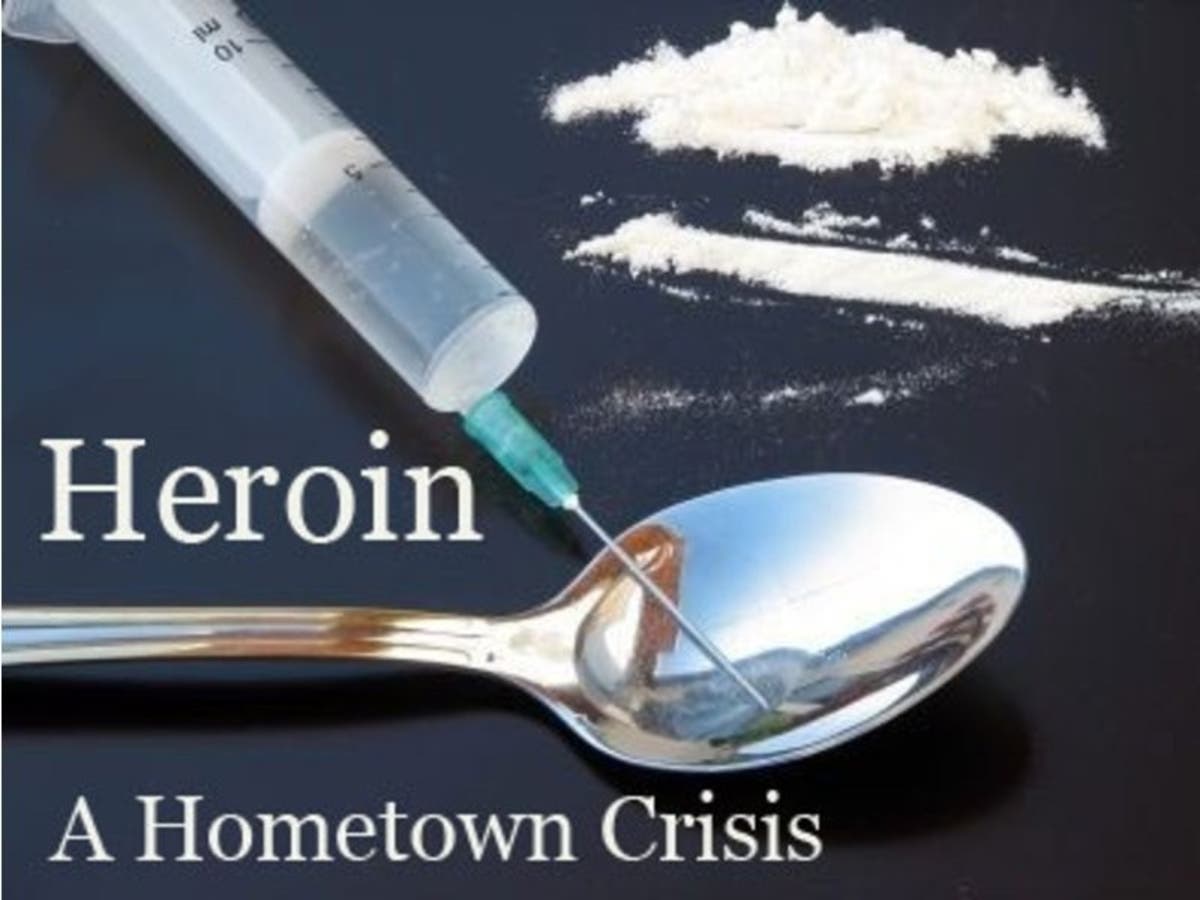
As the war on heroin and opioid addiction continues to rage in New York State — with Suffolk County leading the state in heroin overdoses, hospitalization involving opioids saw a dramatic increase locally and nationally between 2005 and 2014, both with regard to inpatient stays and opioid-related emergency department visits, according to new data released Tuesday by the Healthcare Cost and Utilization Project.
Opioid-related stays and emergency department visits are identified as all-listed diagnoses and included events associated with prescription opioids or illicit opioids like heroin.
New York has been hit hard by the opioid epidemic sweeping the nation.
Find out what's happening in Southamptonfor free with the latest updates from Patch.
New York ranked in the top 25 percent of opioid-related inpatient rates for males in ages 1 to 24, 25 to 44, and 45 to 64, the report indicates. New York also ranked in the top 25 percent of male opioid-related emergency room visits, the report said.
New York's statistics for opioid-related emergency department visit rates reflected 467.1 per 100,000 for males in opioid-related hospital stays, compared to 260.2 per 100,000 for females in 2014; with 118.7 per 100,000 for ages 1 to 24, 533.0 per 100,000 for ages 25 to 44, 555.7 per 100,000 for ages 45 to 64, and 213.9 per 100,000 for ages 65 and over, the report says.
Find out what's happening in Southamptonfor free with the latest updates from Patch.
According to the report, New York male patients had the highest rates of opioid-related hospital inpatient stays, only one of 11 states to reflect those statistics; in 2014, females had the highest rate of opioid-related hospital inpatient stays in the majority of states.
In New York, as in the rest of the country, males, in contrast, had a higher rate of opioid-related emergency room visits in three-quarters of states.
There was substantial variation in the age group that had the highest rate of opioid-related inpatient stays across states in 2014, the reports says. In 2014, the rate of opioid-related inpatient stays was highest among patients aged 25 to 44 years in 22 of 45 states, with an average across these states of 414.4 per 100,000 population.
In New York, the patient age group that had the highest rate of opioid-related in-patient stays was ages 45 to 64.
Also in New York, the age group with the highest rate of opioid-related emergency department visits in 2014 was ages 25 to 44, a number that was the same in all 30 states studied.
"This report once again confirms what we've been saying for several years," said Dr. Jeffrey Reynolds, president and chief executive officer of the Family and Children's Association in Mineola. "That here in New York and across the country, we have a crisis on our hands."
Each one of the emergency department visits probably cost thousands of dollars for taxpayers and "untold heartache for affected families," Reynolds said. "And the truth is that each of those visits could have been averted through good prevention and timely access to mental health care or addiction treatment in a less costly, more productive setting."
Many struggling with addiction face barriers to care, and the only time they receive any kind of care is in the midst of a medical emergency such as an overdose, Reynolds said.
In many cases, they are discharged prematurely and sent back through the revolving door in hours, he said.
"There are better ways to fight a crisis and it's not all that complicated," he said, pointing to evidence-based prevention, screening and treatment referrals in multiple settings and evidence based treatment of adequate duration given on demand. "Until we do those things, the numbers, the costs and the death toll will continue to mount."
A nation in crisis
The data presents information for the patient, sex and age groups with the highest opioid-related inpatient stay rates for 44 states and the District of Columbia for 2014. Patient sex and age groups with the highest opioid-related emergency department and visit rates are presented for 30 states that provided data in 2014.
Findings from the data show that between 2005 and 2014, opioid-related inpatient stays increased faster for females than males, but by 2014, the rate was virtually the same for both. In terms of emergency department visits, the increase in opioid-related visits was similar for males and females, and males consistently had a higher visit rate than females. For both sexes, the opioid-related emergency department visit rate increased faster than the inpatient stay rate.
Females in nearly three-fourths of the states had a higher rate of opioid-related inpatient states, while males had a higher rate of emergency department visits.
Opioid-related inpatient stays were highest among patients aged 25-44 and 45-64, while the highest rate of emergency department visits was in the age group of 25-44. For all age groups, except those aged 1-24 and 25-44, the rate of opioid-related inpatient stays was consistently higher than the rate of opioid-related emergency department visits. For all age groups, the rate of opioid-related emergency visits increased faster than the rate of opioid-related inpatient stays.
In all states in 2014, patients aged 25-44 had the highest opioid-related emergency department visits.
Massachusetts consistently ranked as having among the highest opioid-related inpatient stays across all patient sex and age groups. Meanwhile, Connecticut, Maryland and Washington ranked among the states that had the highest rates in all but one sex or age group. Some states had low inpatient stay rates for some age groups but high rates for other age groups. For example, in California inpatient stay rates for those in the age groups 1-24 and 25-44 was among the lowest but among the highest rates for patients aged 65 and older.
For opioid-related emergency department visits, Maryland consistently ranked as having among the highest rates across all patient sex and age groups. Massachusetts and Rhode Island ranked among the states with the highest rates in all but one sex or age group.
Connecticut and Massachusetts had among the highest rates of opioid-related emergency department for patients aged 1-24, 25-44 and 45-64 but among the states with the lowest rates for patients aged 65 and older.
New York ranks fifth highest in opioid overdoses
New York has consistently ranked high amongst states grappling with the deadly drug scourge.
In 2015, New York's number of opioid overdose deaths was the fifth highest in the country, according to new national data that depicts an ongoing battle that claims victims across all socioeconomic and demographic lines.
National numbers released in January by the Centers for Disease Control give a picture of how New York State compares to other states struggling against the same deadly epidemic.
According to the CDC, opioids — both prescription and illegal — were involved in 33,091 deaths in 2015, and opioid overdoses have quadrupled since 1999.
In New York, the number of drug overdose deaths in 2015 was 2,754, according to the CDC.
The CDC also reported that the statistically significant drug overdose death rate increase in New York indicated a 20.4 percent increase in 2015, compared to 2014.
Still, it was not the highest.
In 2015, the five states with the highest rates of death due to drug overdose were West Virginia (41.5 per 100,000), New Hampshire (34.3 per 100,000), Kentucky (29.9 per 100,000), Ohio (29.9 per 100,000) and Rhode Island (28.2 per 100,000).
Suffolk County in crisis
Statistics were released in 2016 that confirmed what so many devastated families already know to be heartbreakingly true: Suffolk County leads New York State in heroin-related overdose deaths by a wide margin.
Between 2009 and 2013, 337 heroin-related deaths were reported in Suffolk County.
The "New York State Opioid Poisoning, Overdose and Prevention," report prepared for Gov. Andrew Cuomo and the New York State Legislature was unveiled in 2016.
The report "provides an overview of opioid-related mortality and morbidity and other consequences of heroin and prescription opioid misuse across the state over the last five years," the document states.
New York State Assemb. Andew Raia, ranking member of the health committee, was joined by Suffolk County Legis. William 'Doc' Spencer, chairman of the health committee, and heroin and substance abuse experts at a press conference to discuss the data.
The report indicates that 337 people died from heroin overdoses in Suffolk County during a five-year period, more than in the Bronx, which recorded slightly over 200 such deaths, the second-highest rate in the same period. There were 128 heroin-related deaths in Nassau County.
The report also indicates that Suffolk County is plagued by cheap heroin coming into the United States, lawmakers said, with hospitals and outpatient treatment facilities swamped by an ever-escalating number of cases and Narcan saves rising dramatically.
According to the report, opioid-related emergency department visits increased 73 percent from 2010 to 2014.
The number of heroin-related deaths increased in 2013 to 637, and opioid analgesics related deaths rose to 952, increases of 163 percent and 30 percent from 2009, respectively, the report states.
In 2013, an average of two New Yorkers a day died of heroin-related overdoses, the report said. More than four times as many men died of one of these overdoses compared to women; whites died of heroin-related overdoses at a rate of nearly twice that of blacks, and almost 1.35 times that of Hispanics.
"The upward trend in heroin-related overdose fatalities among younger New Yorkers is particularly alarming," the report states. "Half the people who died were under age 35."
Numbers not surprising
“These numbers are absolutely devastating, but shouldn’t be a surprise to anyone," said Reynolds. "Treatment professionals and bereaved families have, for more than a decade now, been warning about the worsening crisis. There are still gaps in school-based prevention, waiting lists for treatment slots, insurance company barriers to care and too few resources designed to support those who do find a path to recovery."
Although Narcan saves are reported daily, Reynolds said education is critical: "The widespread distribution of naloxone has prevented many overdose fatalities, but too often, I’m seeing folks revived, brought to an emergency room only to be discharged within an hour and dead of a subsequent overdose within 24 hours. This is a huge missed opportunity and we need to make sure that those who are revived are properly counseled, their families are supported and we help them find a path into treatment."
He added, "If we truly want to turn a corner and see a drop in overdose fatalities, we need an all-out sustained push that involves everyone – schools, cops, health care professionals, treatment providers, families and entire communities. And we all have to agree than one overdose is too many.”
A mother's heartbreak
Penny Maffetone knows all too well the horror of heroin addiction: She lost her son, Michael, at 29 in 2012 when he overdosed in the family's Laurel bathroom.
"As a mom to one of the 337 heroin deaths in Suffolk County, it's the most devastating thing I have ever been through, losing my firstborn son to this horrible epidemic," she said." I'm just glad to see that it is talked about more now than it was four years ago. Maybe more people will reach out for help and another family will not have to feel as lost as we feel. I miss Michael more than words can ever describe."
Patch file photo.
Get more local news delivered straight to your inbox. Sign up for free Patch newsletters and alerts.