Community Corner
Shinnecock Indian Nation Votes in Support of Plans to Cultivate, Dispense Medical Marijuana on Southampton Land
All facilities will be tribally owned.


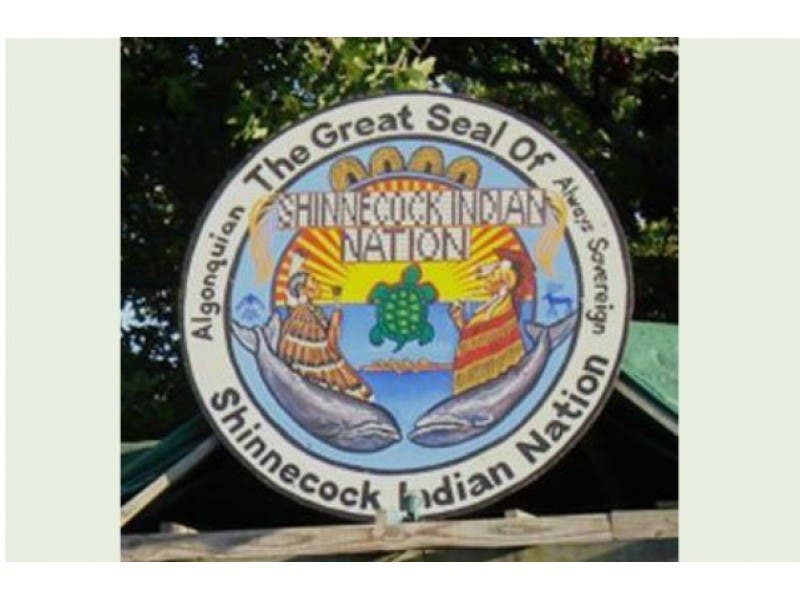
SOUTHAMPTON, NY- In a historic vote among its members this weekend, the Shinnecock Indian Nation voted in support of plans to construct a medical cannabis cultivation facility and dispensary on tribal land near Southampton.
Tribal members voted 71 percent to 29 percent to approve the project and pursue designation from the State of New York as a provider for patients in the state’s Medical Cannabis Program.
“As a people, we have always had a cultural appreciation for natural, holistic medicine and the difference it can make in the lives of those suffering most,” said Bryan Polite, Chairman of the Shinnecock Indian Nation. “The New York State Compassionate Care Act was a big step in the right direction for administering quality holistic medicine to people suffering from very serious illnesses.”
Find out what's happening in Southamptonfor free with the latest updates from Patch.
He added that cultivating and dispensing medical marijuana would be an opportunity to create jobs and promote ”true economic development to support tribal programs. We are encouraged by the enthusiastic support of our members and look forward to continuing our discussions with the State of New York to make this a reality.”
On January 1, New York became the 23rd state to allow the medical use of cannabis. The state approved five companies to produce it and 20 dispensaries to distribute it to roughly 125,000 New Yorkers diagnosed with a specific group of illnesses. Advocates have called for an expansion of the list of approved illnesses, while also saying there are not enough dispensaries to adequately serve patients, a release stated.
Find out what's happening in Southamptonfor free with the latest updates from Patch.
Shinnecock interest in the industry came after a December 2014 memo issued by the U.S. Department of Justice outlined their position on federal jurisdiction in states where cannabis —still a federally-illegal substance — has been approved for medical use.
Since then, at least 15 tribes across the U.S. have explored entering or have already entered the medical cannabis industry. Shinnecock leaders consulted with legal experts, industry officials and others before conducting several tribal meetings on the issue and then presenting the idea to its members for a vote.
Under the Shinnecock plan, all facilities will be tribally-owned. Industry consultants would be hired to provide the necessary training to tribal members to take leadership roles in the management and operation of the facilities. Revenues generated by the project would go toward tribal operations, including education, substance abuse programs, law enforcement and senior housing.
The Council of Trustees has outlined their plans with state assemblymen and officials with the New York Department of Health, as well as state and local law enforcement.
Of the news, Lance Gumbs, former Shinnecock Tribal Chairman and Tribal Ambassador for the Native American Financial Services Association. “No tribe yet has had success with it in Indian Country so it’s uncharted territory unlike gaming. Besides the hurdle of getting it passed within the tribe there are a number of hurdles out there from the state as well as the federal government that still need to be dealt with to make this a successful tribal operation. It has the potential to be a very successful business for the tribe and to go along way as one of the components to long term economic self-sufficiency for the tribe. But it has to be done right with all the necessary controls and the eight established requirements.
In December, the Shinnecock Indian Nation first announced it was considering possibly producing medical marijuana on the land in conjunction with state and federal laws.
“Since the Compassionate Care Act became law last year, our tribal leaders – like many others - have sought counsel from the U.S. Department of Justice and the State of New York on what this means for a sovereign nation like ours,” Tribal Trustee Chairman Bryan Polite said in a statement.
Last year, the Cole Memorandum was created as a guide for Indian tribes that want to produce medical marijuana in states where medical marijuana has been legalized.
According to the memo, some tribes have ”requested guidance” on the enforcement of the Controlled Substance Act (CSA) on tribal lands by the United States Attorneys’ offices.
The tribes would have to follow certain restrictions including distributing marijuana to minors; selling to criminal enterprises, gangs, and cartels; using state-authorized marijuana in the trafficking other illegal drugs or illegal activity; growing of marijuana on public lands; and preventing marijuana possession or use on federal property, among other restrictions according to the memo.
“The eight priorities in the Cole Memorandum will guide United States Attorneys’ marijuana enforcement efforts in Indian Country, including in the event that sovereign Indian Nations seek to legalize the cultivation or use of marijuana in Indian Country,” the memo reads.
The Shinnecock Nation has not yet reached a decision on whether or not to produce medical marijuana and will not make one without the “input and approval of the Shinnecock Indian Nation membership,” according to Polite.
Meanwhile, late last month, two Long Island medical marijuana dispensaries in Nassau and Suffolk Counties opened for business, one in Riverhead, the other, in Lake Success.
The Lake Success and Riverhead locations both opened Friday morning.
- Bloomfield Industries Inc. opened the Lake Success dispensary, located at 2001 Marcus Avenue, Suite N1.
- Columbia Care NY LLC opened the Riverhead dispensary, located at 1107 Old Country Road.
Columbia Care also opened locations in Plattsburgh and Rochester this week.
The full list of New York’s medical marijuana dispensaries can be found here.
Seven dispensaries opened on Jan. 7 in Onondaga, Erie, Albany, Ulster and Westchester Counties, and in Manhattan. The additional dispensing sites opened on a rolling basis throughout the month.
New York’s Medical Marijuana Program officially launched Jan. 7, just 18 months after Gov. Andrew Cuomo signed the Compassionate Care Act.
“Governor Cuomo gave us an extremely ambitious timeline to get the Medical Marijuana Program up and running, and I am pleased that we have met his goals,” New York State Health Commissioner Dr. Howard Zucker said in a press release. “Our program ensures the availability of pharmaceutical-grade medical marijuana products for certified patients and establishes strict regulatory controls to protect public health and safety.”
COO of Bloomfield Industries Colette Bellefleur said: “Bloomfield Industries has been working collaboratively with the NYS Department of Health to get our medicine approved and our facilities up and running safely and successfully. We look forward to delivering on the promise of the Compassionate Care Act for patients who are suffering throughout New York State.”
Columbia Care CEO Nicholas Vita said: “This week marks a milestone for Columbia Care and patients of New York. Over the past six months we have worked tirelessly to meet patient needs throughout the state and we look forward to continuing this work as the program develops. We are proud to offer the patients of New York access to the highest quality products in the United States and have taken great care to ensure that every location we open, in New York and elsewhere, offers a safe and positive experience patients can be proud of.”
Bloomfield and Columbia were among five companies that were originally issued registrations to manufacture and dispense medical marijuana.
Zucker said in July that the five chosen organizations “showed, through a rigorous and comprehensive evaluation process, they are best suited to produce and provide quality medical marijuana to eligible New Yorkers in need, and to comply with New York’s strict program requirements.”
Neither Bloomfield nor Columbia manufacture on Long Island. They manufacture in Queens and Rochester, respectively.
Those who qualify for medical marijuana can obtain prescriptions in the approved forms:
- Vaporization
- Oromucosal (orally administered in solid, semi-solid or liquid form)
- Sublingual administration (dissolvable under the tongue)
- Administration per tube
- Oral capsules
Anyone with a debilitating or life threatening-condition is eligible to use medical marijuana. According to the DOH, those who suffer from the following conditions qualify: cancer, HIV infection or AIDS, amyotrophic lateral sclerosis (ALS), Parkinson’s disease, multiple sclerosis, spinal cord injury with spasticity, epilepsy, inflammatory bowel disease, neuropathy, and Huntington’s disease. The associated or complicating conditions are cachexia or wasting syndrome, severe or chronic pain, severe nausea, seizures, or severe or persistent muscle spasms.
Learn more about the New York State Medical Marijuana Program here.
Get more local news delivered straight to your inbox. Sign up for free Patch newsletters and alerts.