Community Corner
Community Gardens Come to Tarrytown and Sleepy Hollow
Both communities this year launched their first community garden programs, aimed at bringing residents together and encouraging 'green' thinking.

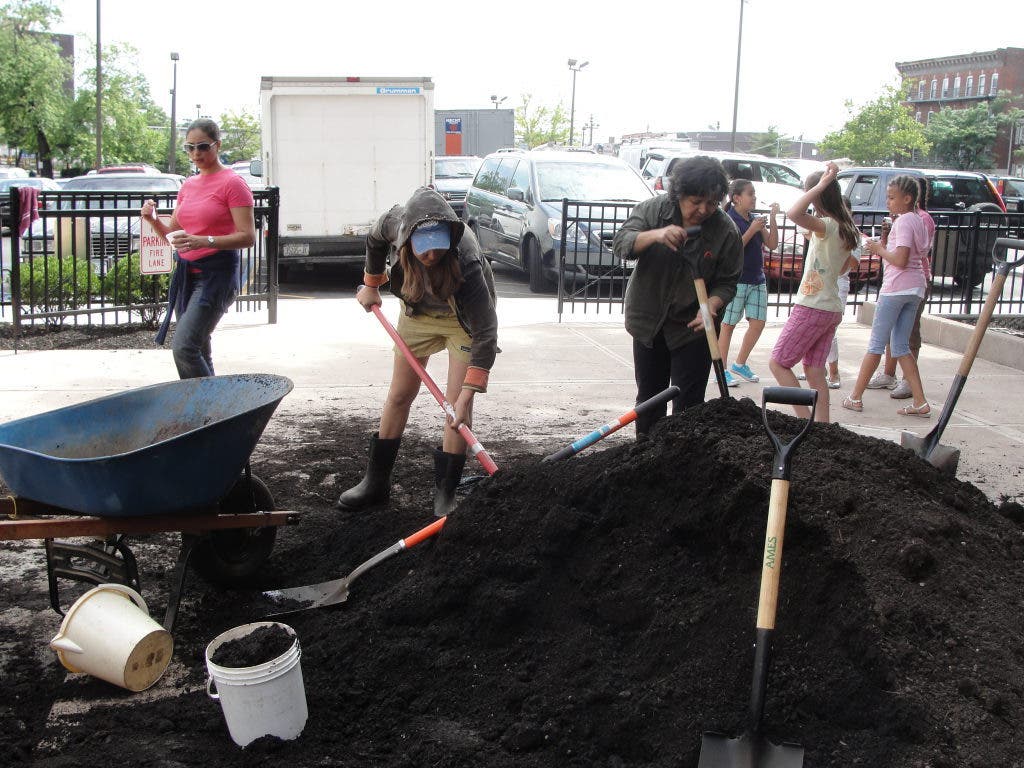


With summer in full swing, residents of Tarrytown and Sleepy Hollow are taking part in both villages' first community garden programs.
One of the most prominent gardens to date is the new Sleepy Hollow Community Garden which was constructed on a former parking lot behind the 100 College Avenue apartment complex.
The local residents involved (a mixture of teachers, social workers, community activists, residents and students) call themselves the Sleepy Hollow Community Garden Coalition. The SHCGC officially dedicated the 2,000 square foot garden on Sunday afternoon.
Find out what's happening in Tarrytown-Sleepy Hollowfor free with the latest updates from Patch.
"We felt like the time was right for us to create this garden," said Jan Maltby, one of the leads on the project.
The idea was started about five years ago with a push to bring lessons on sustainability and gardening into the school system. With the help of the school district, organizers were able to secure the greenhouse located at the top of Washington Irving School.
Find out what's happening in Tarrytown-Sleepy Hollowfor free with the latest updates from Patch.
"We started using it slowly, until two years ago when we started using it every day," said Liz Kaplan, another organizer on the project.
The garden is unique because it combines education at Washington Irving School, and community building in Sleepy Hollow. Four classes of fifth graders from WI help care for the sprouts in the school's greenhouse, tending to the daily upkeep and watering. The plants are then transplanted to the 100 College garden where residents care for the vegetables and can harvest from them, as they did on Sunday, carrying off leaf veggies and even a giant zucchini.
"The garden is so far ahead because about 50 percent of it started as seeds at WI," Maltby said.
Another reason for starting the garden, said Kaplan, was to increase awareness about the importance of a balanced diet. Maltby said that need became abundantly clear when the first vegetables were ready for eating at the WI greenhouse.
"We had kids in the greenhouse who said these were the first vegetables they had ever eaten," Maltby said.
A lot of donated help went into the garden. The Stone Barns Center for Food and Agriculture, located on Bedford Road in Pocantico Hills , provided the "rich" soil for the garden, while Westover Landscape Design supplied all the labor and design of the space. Village Justice Andres Valdespino provided all the legal work and the Village of Sleepy Hollow donated $5,000 through its downtown revitalization fund.
Maltby, herself a Sleepy Hollow resident, said one of the goals of the garden is to bring together older and younger residents. Students in area schools worked with some elderly residents to build beds and plant seeds, and kids who live in the College Avenue building recently showed up to lend a hand.
There are more gardens in the works for Sleepy Hollow, Maltby said, but they won't likely mirror the College Avenue garden which mixes education and community. Future plans are looking at gardens where families could sign up for plots to cultivate.
In Tarrytown, organizers of the gardens are taking that very same approach – residents can purchase plots for minimal fees and grow whatever they want. The goal being to bring members of the community together and foster an interest in localism in the face of climate change.
The garden program "initially started as part of a climate change initiative," said Carole Griffiths, chair of the Tarrytown Environmental Advisory Committee (TEAC). "We wanted to encourage people to buy local to cut down on emissions [from transporting produce across the country]."
There's already a garden in bloom at Franklin Courts, where five people have purchased plots, and TEAC is in talks to set up another garden within the next few weeks. At a general interest meeting last week, Griffiths said her group is ironing out a contract with the owner of a private apartment complex, but she didn't want to reveal the location prematurely. She also said that the $15 each member of the garden pays will go towards purchasing a storage shed for tools. Nine people have signed up for the new garden so far.
At a May 12 Board of Trustees meeting, Tarrytown Village Administrator Michael Blau said the biggest issue facing the village is the cost of fencing off the gardens to keep out people and animals.
"We did not budget for community gardens this year, and our parks money can't be used for that purpose," Blau said, adding that any grants for which the village applies wouldn't come through until this growing season is over.
He said the fences will cost about $5,000 each in materials and another $2,000 or so in labor. Griffiths said this week that she expects the the garden initiative will receive a grant from the Westchester Community Foundation, which will ensure at least one more garden goes into effect this summer.
Mayor Drew Fixell said that if demand surpasses supply for the new gardens popping up, the village can run a lottery to decide who gets a stake. But that seems like it will be unnecessary this year, though officials are hoping the fledgling gardens will catch on in years to come.
"We're actually not looking to promote it too much, because there's just not enough space this year," Griffiths said, but "we hope to have more gardens next year."
Griffiths also noted that the two villages will co-host an EcoFair on September 25, which will feature vendors, games, and talks about environmental issues, including community gardens.
Get more local news delivered straight to your inbox. Sign up for free Patch newsletters and alerts.