Neighbor News
Agave Spirits: premium sipping from south of the border
With all the options available in the expanding agave spirits market, how do you select the one that's right for you?
It’s a shame that such an impressive spirit should have such an embarrassing reputation in the States. Shunted to the corner with frat party binge drinking, or to the restaurants where frozen margarita mix blends all the character right out, it’s amazing tequila made it out alive. Somehow, over the past decade or so, quality agave spirits began making it over the border; they began finding welcoming shops and restaurants and reaching the glasses of enthusiastic aficionados. Suddenly (or so it seemed) it had the respect internationally that it had had among those who were distilling and enjoying the drink for generations.
To be called tequila, a spirit must be made from “Blue Agave” (Tequila Weber Azul Agave). No other agave types are permitted. The root bulb of this flower plant—yes flower, not cactus!—is shredded, roasted, converted to a wash, fermented, and distilled. This process—with very few exceptions—must occur in the state of Jalisco, on the west side of central Mexico.
In general, keep an eye out for bottles marked “100% Agave Tequila.” Tequilas missing this label (e.g. Cuervo) are permitted to be as little as 51% Agave, and rest is often cane sugar distillate (read: rum). These mixtos are understandably more affordable and perfectly fine for some uses, but they don’t really let the craft of tequila-making shine the way the Puro de Agave do.
Find out what's happening in Three Villagefor free with the latest updates from Patch.
Plata Tequila: For the best display of the characteristics of the Agave plant, choose Plata (Silver, or Blanco) Tequila. Since it sees no time in barrels, what you get is a young, fresh tequila that doesn’t have to compete with outside sources. Eventually you might be able differentiate between tequilas made from the Lowlands (more aromatic, earthy) and those from the Highlands (more rounded, fruity).
Reposado Tequila: To try the most popular type of tequila, choose a Reposado (“rested”) such as the Suerte Reposado. You’ll immediately notice the color difference here, since to be called reposado the tequila must spend at least 2 months ‘resting’ in the barrel. This mellows out the flavors a bit and imparts a touch of the quality of whatever it’s resting in (French oak, for instance, or bourbon barrels).
Find out what's happening in Three Villagefor free with the latest updates from Patch.
Añejo Tequila: If you really go for aged spirits (bourbon and scotch drinkers, heads up!), then try an Añejo (from año, Spanish for “year”) like the delicious Crotalo Añejo. These spend at least a year in oak—three or more and it’s Extra Añejo—and are a perfect example of how well agave spirits mature in the barrel. For the die-hard whiskey fan it can be a little jarring to taste whiskey characteristics in a non-grain/corn spirit, but just surrender to the experience. You’ll come around.
Mezcals: Now, Mexico makes six types of agave spirits altogether, but only two can be found with any regularity in the States: the aforementioned tequila, and mezcal, and the latter only very recently. Unlike Tequila, Mezcal can be made anywhere in Mexico (though most comes from the state of Oaxaca), and from any agave plant (not exclusively “Blue” Agave). This means mezcals vary more than tequila, simply due to the sheer number of agave-type-to-region variations. Less consistency, perhaps, but also so many more options for the modern makers of mezcal to experiment and explore. Mora’s features several mezcals, but our most recent addition is the Union Mezcal, rated 92 points by Wine Enthusiast.
Historically, part of the mezcal-making process involved not just roasting but smoking in large pits, as is still the case with much of the mezcal made today. This lends the spirit a smokiness; yet another factor which distinguishes it from tequila. It’s also another compelling reason for whiskey enthusiasts, and in particular scotch enthusiasts, to give agave spirits a go.
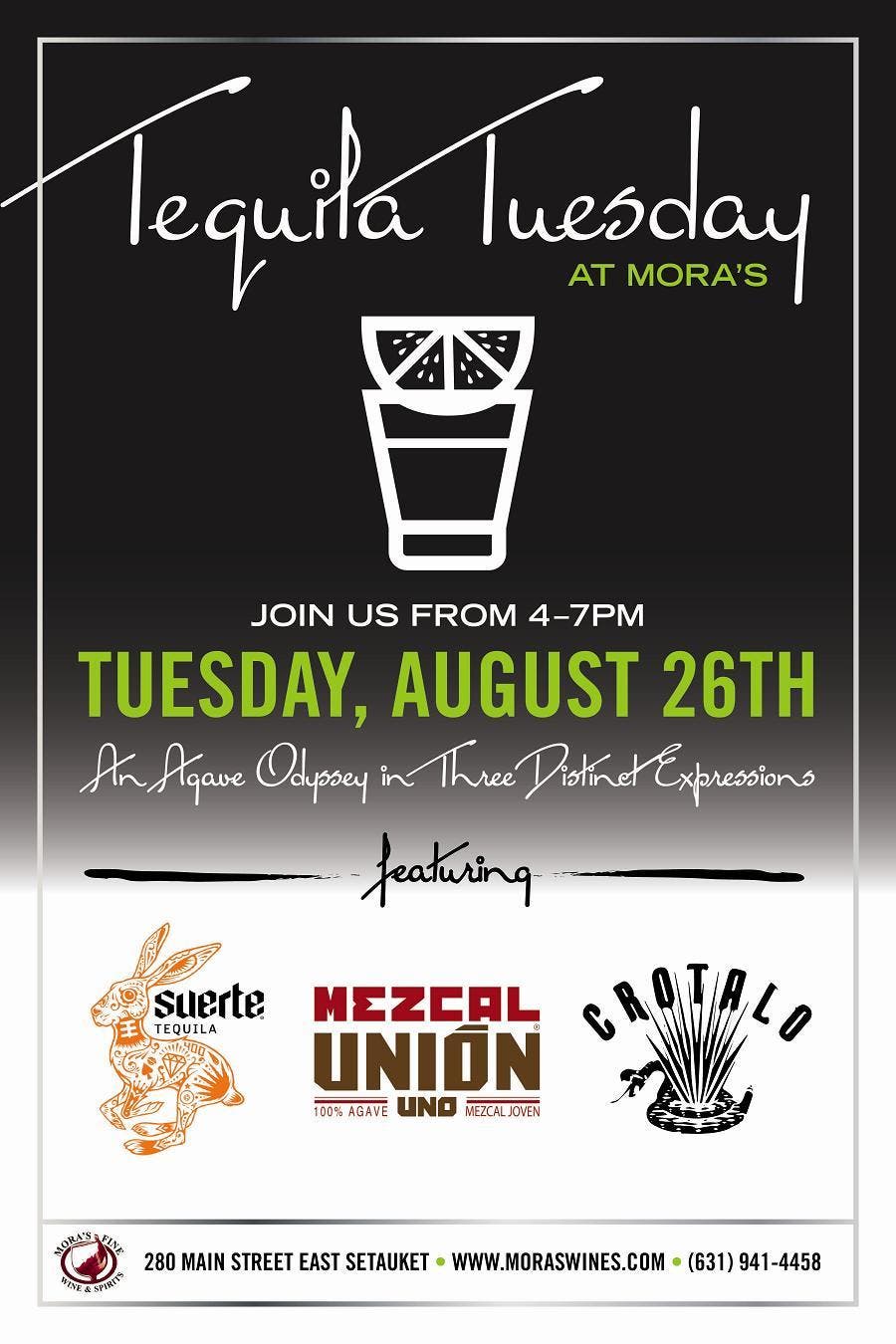
Tequila Tuesday is August 26th 2014 from 4 to 7 at Mora’s Fine Wine & Spirits
contributed: Nancee Moes