Neighbor News
Banning Plastic Bags; California Leads The Way, but Should Everyone Else Follow Suit?
A look at a groundbreaking new law designed to help preserve the environment
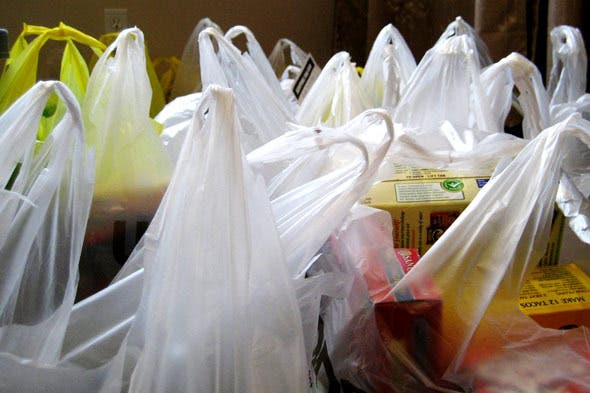
They’re one of the most omni-present items in the day-to-day lives of many Americans, and while they can be quite useful at times, they can also be incredibly harmful in terms of their environmental impact once their useful life is over and you’ve thrown them out. Yes, we’re talking about single-use plastic bags, the type we all accumulate in mass quantities almost every time we go to the supermarket or other similar location.
But while the negative affect plastic bags on the environment has been well-documented over the years, no one has really sat up and taken steps to curb the threat they pose...until now. On September 30 of this year, California Governor Jerry Brown signed a landmark bill into law – SB270, the first of its kind in the United States – making it illegal to businesses to offer plastic bags to their customers. American cities have successfully banned plastic in the past (among them, according to CNN, are San Francisco, Los Angeles, Seattle, Chicago, Portland, and Austin) but this marks the very first time an entire state has done so.
California retailers have until July 1, 2015 to phase out the use of plastic bags; replacing them will be extended use of paper (previously free, but now with a mandatory 10-cent minimum charge) or fabric in the form of reusable bags that shoppers can bring to the store themselves to avoid paying anything.
Find out what's happening in Three Villagefor free with the latest updates from Patch.
But is such a drastic measure really needed? Do single-use plastic bags really pose such a terrible risk to the community? Green Blog Yellow Pages Goes Green certainly seems to think so, stating that several other states have already gotten the ball rolling on their own similar bills.
“The California law, slated to begin taking effect in 2015, has been hailed as bellwether legislation that is likely to spur other states to follow suit in passing laws that prohibit plastic shopping bags,” they said. “Indeed, several states including Massachusetts, New Jersey and Rhode Island currently have bag-ban bills pending in their own legislatures.”
Find out what's happening in Three Villagefor free with the latest updates from Patch.
One only has to go as far as their own computer to find out the negative effects that plastic shopping bags can have upon the environment; CNN reports that the damage these bags can cause in great numbers can be devastating, and even worse, that damage can last for a lot longer than you might suspect.
“Proponents say plastic bags are only useful for a few minutes, but can pose a threat to wildlife for decades,” they said. “The ban is a victory for environmentalists who say the 13 million plastic bags that are handed out each year in the state end up in waterways and landfills where they don’t break down for decades, resulting in a torrent of plastic polluting beaches, parks and even the vast ocean itself.”
Reusit.com breaks down the terrible cost of mankind’s reliance on plastic bags for decades, and the cold, hard facts are simply hard to deny.
The U.S. goes through 100 billion plastic shopping bags annually at an estimated cost to retailers of $4 billion,” they said. “The extremely slow decomposition rate of plastic bags leaves them to drift on the ocean for untold years. According to Algalita Marine Research Foundation, these plastic bags cause the death of many marine animals (fish, sea turtles, etc.), every year when animals mistake them for food.”
However, there are opponents to this groundbreaking new law in California, and not surprisingly, a great deal of them come from those who had previously made money off of the sale of plastic bags to grocers and pharmacies. The Huffington Post noted that plastic bag manufacturers have aggressively pushed back through their trade group, the American Progressive Bag Alliance.
“If this law were allowed to go into effect, it would jeopardize thousands of California manufacturing jobs, hurt the environment and fleece consumers for billions so grocery store shareholders and their union partners can line their pockets,” said Lee Califf, executive director of the manufacturer trade group.
However, this was disputed by many California retailers themselves; Yellow Pages Goes Green notes that the plastic bag ban was welcomed not only by environmentalists, but by the California Grocers Association (CGA), an organization that represents grocery store owners.
“Grocers stand to save millions of dollars a year by not having to purchase plastic bags,” said CGA president Ronald Fong. “History was made today, and our environment and economy will be better for it.”
Some consumers in California are concerned over the proposed 10 cent fee on paper bags at retail, stating that it represents a new way to tax the working class; but, as stated above, this can be circumvented by using reusable fabric bags instead. However, even this solution is not without issues, as improper care of these bags can have unintended health consequences, according to CNBC.
“A separate 2011 report published by the International Association for Food Protection examined the possible health risk from reusable shopping bags after collecting bags at random from grocery store-goers in California and Arizona,” they said. “The report found shoppers rarely washed these bags, nearly all of which became a breeding ground for bacteria. Coliform bacteria, which indicates contamination by raw meat and uncooked food, was present in about half of the bags. E.coli, which indicates fecal contamination, was present in about 8 percent.”
So, if you do decide to duck the 10 cent paper bag fee by using your own bags, don’t forget to wash them! Your health, and just as importantly, the health of the environment, will be safeguarded in the process. California’s ban on single-use plastic bags will have far-reaching consequences, but it’s simply the first step of many that will result in a cleaner, saver environment for both you and generations to come.