Community Corner
Southern Pine Beetle Continues to be a Problem on East End
The beetle has been spotted in several areas in both Southampton and East Hampton.


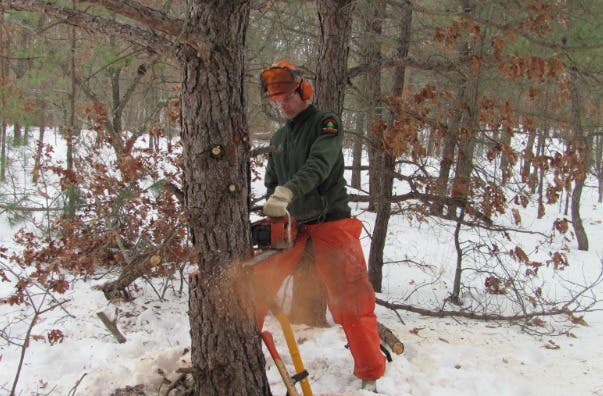
The Southern Pine Beetle, which is considered one of the most destructive forest pests in the U.S. and has been found in areas across Long Island past fall, continue to be a problem for East End residents.
The bug, which attacks all species of pine including pitch pine, has been discovered in dead and dying pine trees in sections of the Henry’s Hollow Pine Barrens State Forest in Hampton Bays according to the Department of Environmental Conservation (DEC).
Over the winter, the DEC began their efforts to cut down infected trees in the area, which ended in April. A total of 2,451 trees were cut down across the state and county combined 20-acre impacted parcel.
Find out what's happening in Westhampton-Hampton Baysfor free with the latest updates from Patch.
Since then, infestations have also been reported in areas of Southampton and East Hampton, according to a report in 27east.
“We’ve discovered instances of southern pine beetles as far east as Amagansett,” Robert Marsh, the director of natural resources for the New York State Department of Environmental Conservation, told 27east. “There’s nothing to stop them from spreading further east.”
Find out what's happening in Westhampton-Hampton Baysfor free with the latest updates from Patch.
Officials say that while infestations of the beetle has been found in areas east of Hampton Bays, they have been ‘scattered and relatively small’, according to the report.
“We have them here and there, but nothing like what Southampton has in Hampton Bays,” Marguerite Wolffsohn, East Hampton Town Planning Director, told 27east. “We have scattered pockets. I’ve seen them in Northwest and I’ve seen them in Stony Hill and in Amagansett.”
On Tuesday, local Assemblyman Fred Thiele released a letter he sent to DEC Commissioner Joe Martens stating that many local private landowners have reported active southern pine beetle infestations on their property.
“Dead or infected trees remain on property, not only posing a safety hazard, but also exacerbating the infestation,” Thiele writes in the letter. “Homeowners want to do the right thing, but removal of infected trees is an expensive undertaking, with which they need financial assistance.”
For private landowners, the DEC offers the Landowner Incentive Program (LIP), in order to protect the habitat of at-risk species on private lands, according to the DEC website.
The program partners the DEC and the U.S. Fish and Wildlife Service to encourage and financially assist landowner participation in habitat management.
Thiele suggests in his letter that the program, or one similar in purpose, should be established in New York State or on Long Island to help protect our pitch pines from the southern pine beetle.
“I fear that unless action is taken quickly, our Pine Barrens will remain susceptible,” he writes.
Photo: DEC website
More on Patch:
- ‘Transient Criminals’ Targeting Nassau Homes
- ’Billy Joel Boulevard’ May Come to a Town Near You
- Man Steals Keg From Port Jefferson Restaurant
- Police: Man Charged in 2 Suffolk Bank Robberies
- Police: Woman Stole Money From Church Collection Boxes
- ‘Best 100 Elementary Schools in New York’ List Released
- Police: Animal Hospital Employee Stole $50,000
Get more local news delivered straight to your inbox. Sign up for free Patch newsletters and alerts.