Schools
New Report on Lice has Local Districts Looking at Policies
Lakeland and Yorktown school districts have different protocols when it comes to lice.

Just in time for the new school year, the American Academy of Pediatrics has issued a report recommending that children with head lice be allowed to stay in school.
The report also calls into question policies that are practiced among some schools that require children to be "nit-free" before returning to the classroom, prompting some local educators to take a second look at their approach.
Lice vs. Nits
Find out what's happening in Yorktown-Somersfor free with the latest updates from Patch.
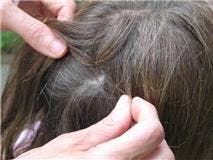
Nits, which are lice eggs or empty egg casings, should not be confused with live lice. The adult head louse is about the size of a sesame seed and is usually tan to grayish-white. Nits, on the other hand, are attached to the base of the hair shaft and are camouflaged with pigment to match the hair color of the infested person. Nits aren't necessarily a sign of live lice infestation, and can sometimes be confused with dandruff or other hair debris.
It's estimated that up to 12 million lice infestations occur in the United States each year, with prevalence most common among children between the ages of 3 to 12 and their families.
Find out what's happening in Yorktown-Somersfor free with the latest updates from Patch.
No Nits Policies
To help prevent the spread of lice infestation, some schools require that infected children stay home until they are free of nits. However, the AAP says that this practice is not necessary and "no nit" policies for return to school should be abandoned.
"A child should not be restricted from school attendance because of lice, because head lice have low contagion within the classroom," the report read. "Children with an active head lice infestation have likely had the infestation for one month or more by the time it's discovered, and poses little risk for infestation."
Yorktown and Lakeland Central School Districts Practices
The Lakeland and Yorktown school districts do not have formal policies regarding the issue, but both have standard practices and protocols that are followed when confronted with a case of possible lice infestation.
"Yorktown Schools have a consistent practice that includes a no-nit condition in order to return to school," Assistant Superintendent Florence O'Connor said.
But the policy may get a second look in the new school year.
"We've been following the recent literature on the topic, and will meet with the school nurses when school opens to review the literature and examine our practices in collaboration with our school physician," she said.
The Lakeland Central School District, on the other hand, currently does not have a "no-nit" policy. When a case of live lice comes to the school nurse in the district, the child is sent home until he or she is treated, Director of Communications James Van DeVelde said.
Lakeland protocols also call for the siblings and classroom of the affected child to be screened for signs of infestation. Further, the district works closely with the family of the affected child.
"We educate the family on treatment per the healthcare provider's advice, and our nurses work with the family and student." Van DeVelde said.
Lice Detection, Transmission and Treatment
In cases of head lice, itching may not develop until four to six weeks after infestation. A female head lice can live up to three to four weeks, and once mature, can lay up to 10 eggs a day.
Contrary to popular belief, lice don't hop or fly. Lice are primarily passed from one person to the other through direct head-to-head contact. However, it is possible to get lice from coming into contact with the person's belongings.
According to the AAP report, the "gold standard" for diagnosing head lice is to find a live louse on the head. However, because lice crawl fast and avoid light, this can be difficult to do, so it's recommended that a fine-toothed louse comb be used to facilitate diagnosis.
To treat live lice, the report recommends application of over-the-counter products such as one percent permethrin or pyrethrins. If the lice are resistant to these treatments, then other options, such as "wet-combing," benzyl alcohol 5 percent (for children 6 months of age or older), and malathion 0.5 percent (for children at least 2 years old) are available.