Neighbor News
LEST WE FORGET: 73RD ANNIVERSARY -- PEARL HARBOR -- SUNDAY, DECEMBER 7, 2014
The 21st Ward Veterans Association will be hosting Pearl Harbor Day services on Sunday, December 7, 2014 at 1 pm in Gorgas Park, Roxborough.
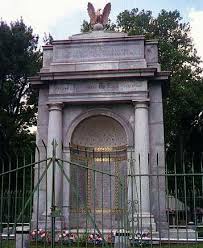
Please join us...in remembrance of Sunday, December 7, 1941.
PRESS RELEASE from Bruce F. Hoffman [brucefhoffman@msn.com]
The 21st Ward Veterans Association will be hosting Pearl Harbor Day services on Sunday, December 7, 2014. The service will commence at 1:00 pm at the Gorgas Park War Memorial. The Gorgas Park War Memorial is located at 6300 Ridge Avenue between Hermitage & Fountain Streets in the Roxborough section of Philadelphia.
The service will include the Pledge of Allegiance, invocation, remarks by a guest speaker, wreath placement honoring all veterans, rifle salute, taps, a benediction, and closing remarks.
Find out what's happening in Narberth-Bala Cynwydfor free with the latest updates from Patch.
This marks the 73rd anniversary of the Japanese attack on Pearl Harbor. This is the event that entered the United States into World War II.
The 21st Ward Veterans Association will continue to honor all veterans and the roles they have played to assure that America will remain free. Time does not erase history and this observance as 9-11-2001 remains a reminder that our American way of life is constantly in jeopardy from attack from our enemies.
Find out what's happening in Narberth-Bala Cynwydfor free with the latest updates from Patch.
The following is the Background on the Attack of Pearl Harbor as chronicled by Wikipedia.
The attack on Pearl Harbor (called Hawaii Operation or Operation AI[7][8] by the Japanese Imperial General Headquarters (Operation Z in planning)[9] and the Battle of Pearl Harbor[10]) was a surprise military strike conducted by the Imperial Japanese Navy against the United States naval base at Pearl Harbor, Hawaii, on the morning of December 7, 1941 (December 8 in Japan). The attack was intended as a preventive action in order to keep the U.S. Pacific Fleet from interfering with military actions the Empire of Japan was planning in Southeast Asia against overseas territories of the United Kingdom, the Netherlands, and the United States.
The base was attacked by 353[11] Japanese fighters, bombers and torpedo planes in two waves, launched from six aircraft carriers.[11] All eight U.S. Navy battleships were damaged, with four being sunk. Of these eight damaged, two were raised, and with four repaired, six battleships returned to service later in the war. The Japanese also sank or damaged three cruisers, three destroyers, an anti-aircraft training ship,[nb 4] and one minelayer. 188 U.S. aircraft were destroyed; 2,402 Americans were killed[13] and 1,282 wounded. Important base installations such as the power station, shipyard, maintenance, and fuel and torpedo storage facilities, as well as the submarine piers and headquarters building (also home of the intelligence section) were not attacked. Japanese losses were light: 29 aircraft and five midget submarines lost, and 65 servicemen killed or wounded. One Japanese sailor was captured.
The attack came as a profound shock to the American people and led directly to the American entry into World War II in both the Pacific and European theaters. The following day (December 8), the United States declared war on Japan. Domestic support for non-interventionism, which had been strong,[14] disappeared. Clandestine support of Britain (for example the Neutrality Patrol) was replaced by active alliance. Subsequent operations by the U.S. prompted Germany and Italy to declare war on the U.S. on December 11, which was reciprocated by the U.S. the same day.
There were numerous historical precedents for unannounced military action by Japan. However, the lack of any formal warning, particularly while negotiations were still apparently ongoing, led President Franklin D. Roosevelt to proclaim December 7, 1941, “a date which will live in infamy”.