Schools
Lehigh University Dining Advances Sustainability Through Data, Reuse, and Student-Driven Action
Dining Services uses real-time data and student insight to cut waste and build sustainable habits on campus.

Bethlehem, PA — Sustainability at Lehigh University Dining is no longer happening behind the scenes. Under the leadership of Sustainability Coordinator Marayna Dorsey, Dining Services is using data, student feedback, and cross-campus collaboration to make sustainability visible, measurable, and part of everyday dining.
Reducing food waste in residential dining is a top priority, and students are already seeing tangible changes. At the end of last semester, Dining Services introduced Leanpath Spark in Rathbone Dining Hall, an expansion of its existing Leanpath system that tracks plate waste in real time and shares that information directly with students.
A digital screen at the Rathbone entrance displays how many pounds of food were wasted in the previous month compared to the current month, along with food insecurity statistics.
“Leanpath Spark allows students to actually see the impact of food waste instead of it being an abstract concept,” said Dorsey. “When the numbers are right in front of you, it changes how you think about what you take and what you leave behind.”
The visibility has sparked conversation—sometimes skepticism.
“We’ve had students say in passing that the numbers must be made up,” Dorsey said. “That tells us the display is working. To build trust and understanding, we’re developing a video series that shows the back-of-house process and how food waste is measured from start to finish.”
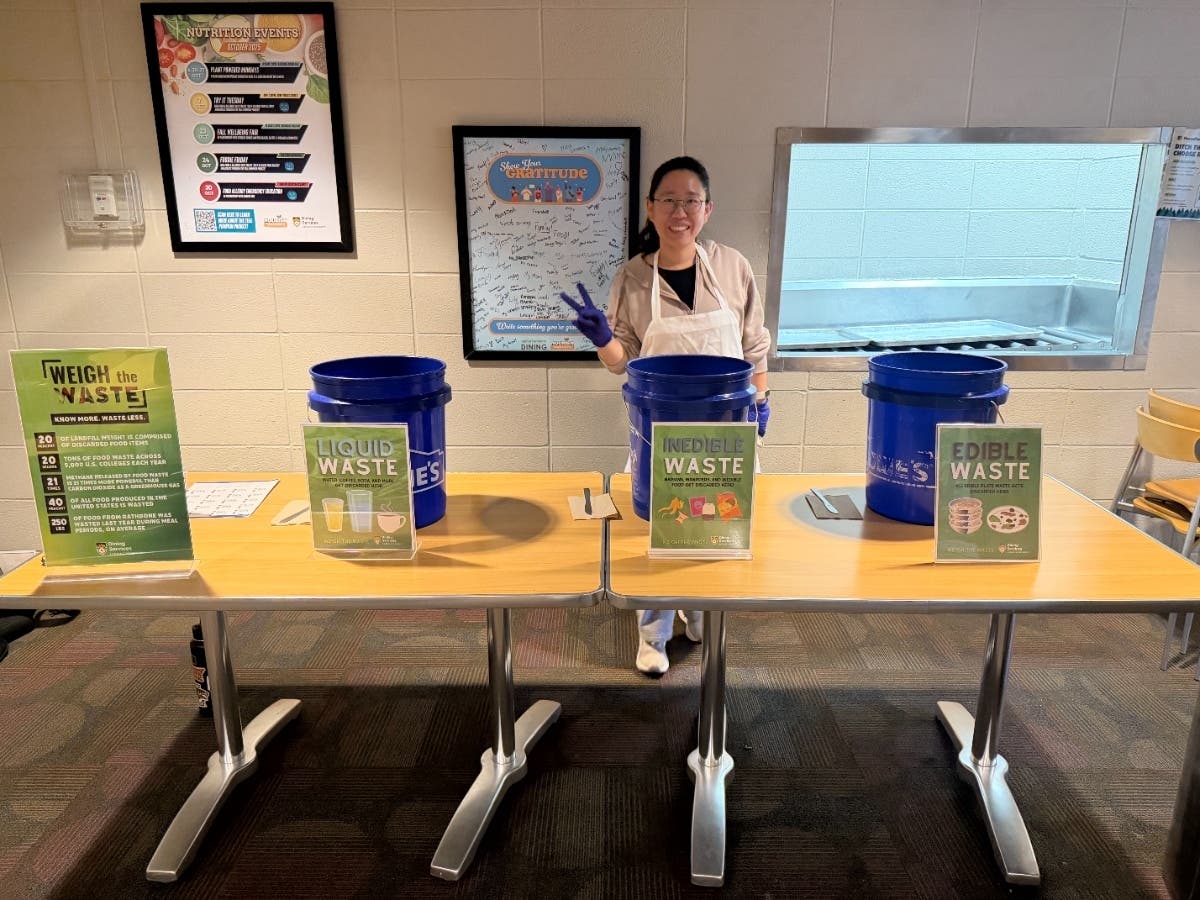
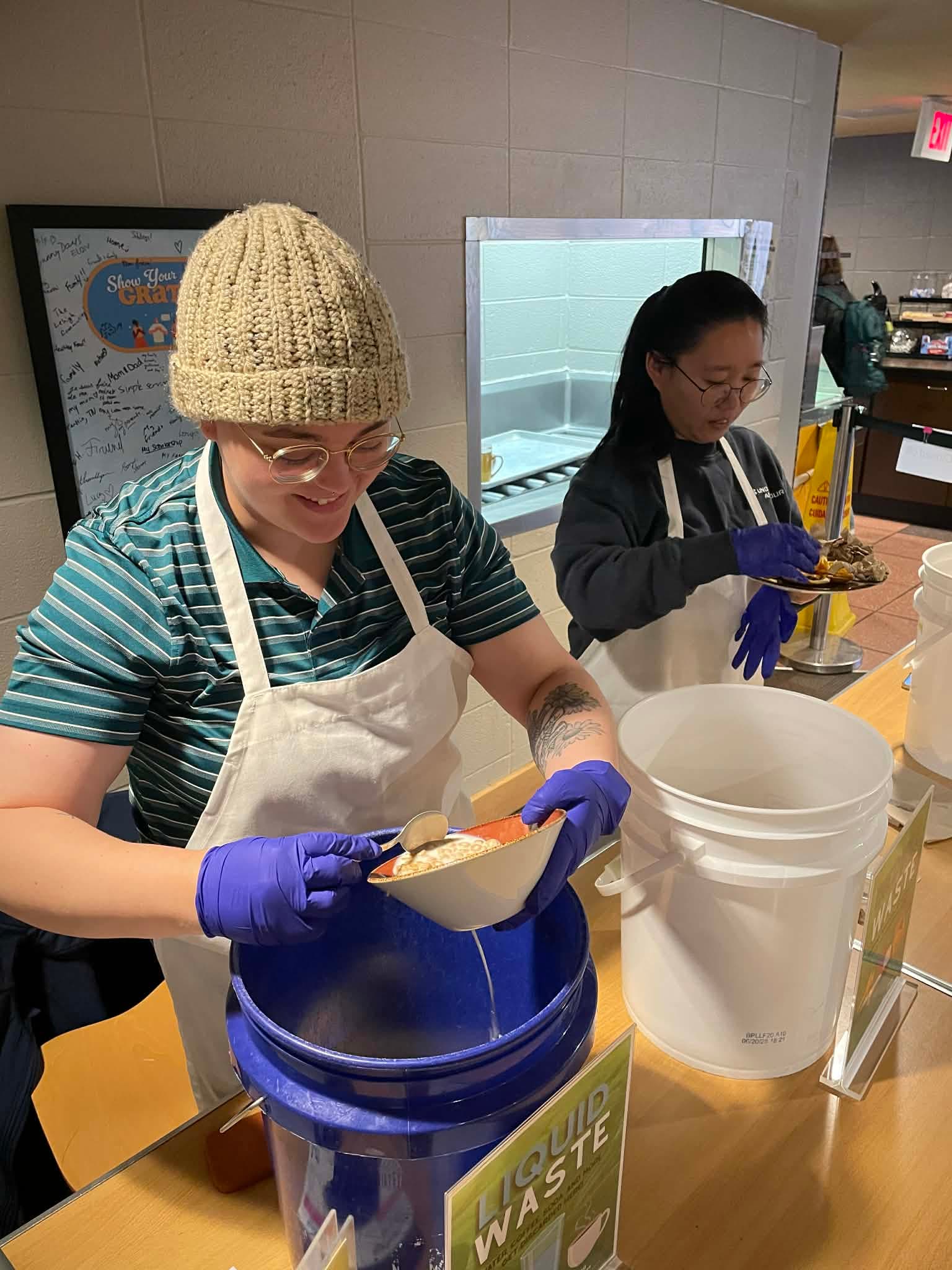
Alongside Leanpath data, Dining Services continues to host Weigh the Waste events to better understand both consumer and operational waste. Safe, unused food is redirected through the Food Recovery Network, ensuring surplus meals support the community rather than going to waste.
The data gathered through these efforts challenged some assumptions.
“During our Weigh the Waste events, it became clear that most students actually have little to no plate waste,” said Dorsey. “The majority of waste came from a small percentage of diners who were leaving entire burgers, quesadillas, or slices of pizza.”
That insight shifted the focus toward education rather than limitation.
“We want students to know they can always come back for more food if they’re still hungry,” Dorsey said. “Taking less the first time and returning if you need to makes a real difference.”
Reuse is another area where student input is shaping next steps. Dining Services is working to increase awareness and participation in ReusePass, the university’s reusable container program supported by Topanga.
To understand barriers, Dining Services conducted a student survey last semester.
“By far, the most common response was that students want more return bins,” Dorsey said. “We also heard that return confirmations would make the system feel more reliable.”
In response, Dining Services is actively working to add more ReusePass return locations across campus and plans to implement return confirmations in the near future—changes driven directly by student feedback.
“When students tell us what would make something easier to use, that’s where we focus,” Dorsey said. “It’s not about guessing.”
Sustainability efforts extend beyond dining operations. Dining Services is strengthening its partnership with Lehigh’s Office of Sustainability through regular participation at the Bethlehem Farmers’ Market, joint programming during Earth Month.
These collaborations help align dining initiatives with broader campus goals while creating opportunities for student involvement outside traditional dining spaces.
Student engagement remains central to the work. Events such as the Black History Month dinner at Rathbone and a planned Women’s History Month dinner are part of a broader effort to connect sustainability with culture, identity, and shared experience.
“I want sustainability to exist in the social space, not just the environmental one,” said Dorsey. “Dining is where people come together, and that matters.”
Moving Retail Dining Toward Better Materials
Behind the scenes, Dining Services continues to convert disposable items in retail locations—including the Clayton University Center, Hawk’s Nest, and campus coffee shops—to more responsible alternatives. This includes transitioning utensils, straws, to-go containers, and sauce cups to options that align with Lehigh’s sustainability commitments.
Through data transparency, student-driven improvements, and campus collaboration, Lehigh University Dining is taking a practical, accountable approach to sustainability.
This is a paid advertorial piece contributed by a Patch Community Partner, a local brand partner. To learn more, click here. The views expressed in this post are the author's own, and the information presented has not been verified by Patch.