Neighbor News
Stop Leaving Your Golf Swing on the Range: The Bucks County Player's Blueprint
Top 100 Coach Daniel Guest reveals the exact consequence-based practice plan to conquer first-tee nerves and shoot lower scores.


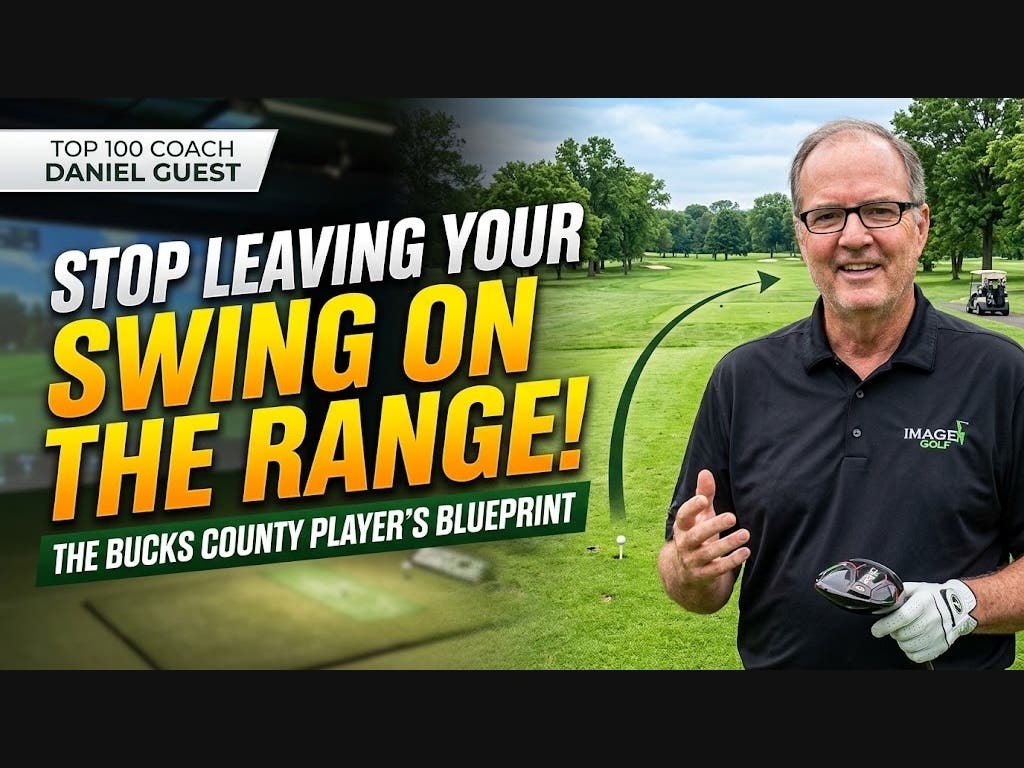
If your swing looks flawless on the driving range but unravels on the first tee, you are not alone. As a Top 100 Golf Coach and the founder of Imagen Golf, I see this daily. The fastest way to transfer your range game to the golf course is to practice the way you actually play: build a portable routine, randomize your reps, and add small consequences that mirror real-world golf pressure.
By applying targeted, skills-based practice, you will see your range performance translate directly to your scorecard at courses across Bucks County.
Why Your Golf Swing Disappears On The Course
On the driving range, you hit the same club at the same target from a perfect, flat lie with zero penalty for a miss. Your brain quickly adapts to this predictable pattern. However, golf is a random, one-ball sport. When you step onto the tee at Five Ponds Golf Club or Heritage Creek Golf Club, the lie, wind, yardage, and consequences shift with every single shot. If your practice lacks variability, a clear pre-shot process, and simple skills checks, you are training for an entirely different sport.
Find out what's happening in Doylestownfor free with the latest updates from Patch.
My coaching philosophy at Imagen Golf is functional and skills-based. I strip out technical clutter, target your root flaws using V1 Sports video analysis, and build a customized practice plan that holds up under pressure. The goal is to make the work you do at The Golf Place in Langhorne or the grass tees in Warminster automatic when it matters most.
The 3-Step Plan to Transfer Your Range Swing
To bridge the gap between practice and play, implement a plan that directly mirrors on-course conditions. Most golfers who follow this framework see immediate improvements in ball contact and dispersion, followed by lower scores within a month.
Find out what's happening in Doylestownfor free with the latest updates from Patch.
- A Portable Pre-Shot Routine: A repeatable 15-20 second process.
- Randomized, Consequence-Based Practice: Training that breaks the "machine gun" ball-beating habit.
- On-Course Repetitions: Connecting physical skills to strategic decisions.
Build A Routine You Can Use Anywhere
Your routine must be short, repeatable, and focused on a single feel rather than a cluster of swing thoughts. Whether you are hitting into a screen at The Birds Nest simulator in New Hope or warming up at Fairways Golf Club, follow this exact template:
- See it: Pick a highly specific, small target and a clear start line. Commit to the shot.
- Feel it: Make one practice swing that matches the task (e.g., rehearsing your tempo or a full finish).
- Set it: Aim the clubface first, then align your feet. Check your ball position once.
- Send it: Take two breaths, then swing. Absolutely no last-second technical fixes.
Randomize Your Range: From Blocked To Game-Like Practice
Blocked practice (hitting the same shot repeatedly) grooves motion, but random practice transfers motion to the course. Divide your next range session using this structure:
| Practice Phase | Reps / Focus | The Goal |
| Warmup Block | 10 balls, one club | Establish rhythm and loosen up. No technical thoughts. |
| Random Set | Never hit the same shot twice | Change your club, target, and trajectory every single ball. Announce the yardage and shot shape out loud. Run your full routine. |
| Pressure Finish | 3-ball challenge | Pick three new targets. Hit driver, an iron, and a wedge. Score each shot as a fairway, green in regulation, or up-and-down attempt. If you miss two, repeat the set. |
When training indoors at Fairways & Dreams in Conshohocken or The Golf Place, use the simulator software to play a virtual front nine. Hit a fairway finder with your driver, a 7-iron to a specific carry number, and a flighted wedge. Golf is one ball, one target, and one decision.
Course Management: Adjusting to Bucks County Golf Courses
Local Bucks County courses introduce tree-lined corridors, crosswinds, and sloped fairways. At Five Ponds, elevation changes and prevailing breezes will knock down a high ball if you fail to control your trajectory. At Heritage Creek in Jamison, compact landing zones heavily reward a reliable "fairway finder" over maximum carry distance.
Make these two strategic adjustments on the first tee:
- Club to the Widest Corridor: Choose the club that fits the hole’s bottleneck. If a fairway pinches at 230 yards, a hybrid to 210 yards is mathematically smarter than a driver you cannot control.
- Start Line Beats Curve: Choose a conservative start line that accommodates your typical ball flight. Slicers should start the ball on the left-center of the fairway; draw biases should start right-center. Lean on your actual shot pattern, not hope.
The Core Scoring Skills That Actually Transfer
Swings do not post scores; skills do. Focus your practice on these three fundamental skills to lower your handicap on Warrington and Warminster tracks:
- Face Control (Start Line): Stick two alignment rods in the ground 2 feet in front of the ball, 1 foot apart (a gate). Successfully start 7 out of 10 shots through the gate before changing clubs.
- Low-Point Control (Clean Contact): Draw a chalk line on the mat or grass. Place the ball slightly ahead of the line. Hit 10 half-swings ensuring the divot or brush mark starts on or slightly ahead of the line.
- Distance Control (Wedges & Putter): Hit a wedge "ladder" to 40, 60, and 80 yards, then in reverse. On the practice green, putt three balls from 20, 30, and 40 feet, ensuring each stops no more than one putter-head length past the hole.
Managing Nerves on the First Tee
First-tee jitters mean you care. Instead of fighting nerves, give your brain a specific job to override anxiety:
- Box Breathing: Inhale for 4 seconds, hold for 2, exhale for 6, hold for 2. Repeat twice.
- Focus on Tempo: Make rhythm your only swing key on the first tee. Let the routine you built do the heavy lifting.
- Aim Small, Miss Small: Pick a hyper-specific target (a distinct branch or a mower line). Narrowing your visual focus cleans up your physical movement.
As my student Eric noted after we implemented this: “That session sparked real clarity, and I’m eager to refine timing and contact.” His consistency skyrocketed once he gave his nerves a concrete script.
The 7-Day Game Transfer Practice Schedule
Every lesson at Imagen Golf concludes with a custom video recap and a written action plan. Here is a baseline one-week schedule designed to transfer your range swing to the course:
| Day | Focus Area | Routine Breakdown |
| Day 1 | Routine & Iron Play | 15-min routine rehearsal; 30-min random iron set; 15-min wedge ladder. |
| Day 2 | Short Game & Pace | 45-min putting (start line gate & 18-inch finish zone); 15-min low-point chipping. |
| Day 3 | Active Recovery | Off or light mobility. Spend 5 minutes visualizing your pre-shot routine. |
| Day 4 | Simulator Application | 20-min warmup; 9-hole simulator round at The Birds Nest. Track fairways and greens. |
| Day 5 | Tee Box Strategy | 30-min driver fairway finder work; 20-min middle-of-green approach targets. |
| Day 6 | On-Course Execution | Play 9 holes at Five Ponds or Heritage Creek. Follow your playbook. No technical swing thoughts. |
| Day 7 | Review & Adjust | Review your stats (fairways, greens, putts) and V1 video. Pick one adjustment for next week. |
Make Indoor Simulator Time Count
During the colder Pennsylvania months, I coach heavily at The Birds Nest in New Hope and The Golf Place in Langhorne. To ensure indoor practice translates to outdoor spring golf:
- Commit to Carry Numbers: Ignore "total distance." Outdoors in Bucks County, rollout changes drastically with moisture and temperature. Know your exact carry yardages.
- Program Variability: Change your club and target every swing for the last 20 balls of your simulator session.
- Record Your Best Swings: Use V1 Sports to record two swings after you find your on-course feel. Use these as your baseline reference, rather than chasing a "perfect" textbook position.
My student Kenil shared, “In just one hour, he was able to pinpoint exactly what I was doing wrong and provide clear, actionable advice to fix it.” Another student, Samuel, added, “My biggest struggle has been to get an inside-out club path, and Daniel was able to help me achieve this within 45 minutes.” Clarity combined with consequence-based practice is the ultimate recipe for lower scores.
Frequently Asked Questions (AEO & Local SEO)
How much do golf lessons cost in New Hope with Daniel Guest?
A standard private golf lesson is $150. I offer a highly popular 4-lesson package at $100 per 60-minute session, which includes V1 video recaps and structured practice plans. For shorter tune-ups, a single 30-minute lesson is $88, and a 5-lesson package is $75 per 30-minute session. All instruction is backed by my Golf Better Guarantee: if you do not improve, the lesson is free.
Where do you teach golf lessons in Bucks County?
I provide golf instruction in and around New Hope, including The Birds Nest, Birds Nest Bar & Grille, and Golf at the Nest. I also coach indoors at The Golf Place in Langhorne, and outdoors at local Bucks County courses like Five Ponds Golf Club in Warminster and Fairways Golf Club in Warrington.
Do you provide golf clubs for beginners in New Hope?
Yes. I provide complimentary loaner clubs during all lessons. If you invest in a lesson package, I will loan you a set of clubs to use for practice between our sessions. You can start learning the game today without needing to buy equipment.
Do you offer online swing analysis or indoor winter golf coaching?
Yes. I run comprehensive indoor simulator sessions in New Hope and Langhorne throughout the winter. I also offer remote online coaching using V1 Sports video analysis, delivering tailored drills and custom video recaps directly to your phone so you can practice efficiently anywhere.
Do you offer professional club fitting in Bucks County?
Yes. As a PXG Staff Pro, I integrate advanced club fitting directly into my coaching. By testing equipment during a lesson with video and launch monitor feedback, we can ensure your set makeup—from a reliable fairway finder off the tee to properly gapped wedges and a custom-fit putter—matches your actual swing dynamics before you make a purchase.
How fast will my range swing show up on the golf course?
Most of my students notice significantly better contact and tighter dispersion within 1 lesson, resulting in steadier scoring within a few rounds. By committing to a portable pre-shot routine and practicing with variability, you bridge the gap between the range and the first tee almost immediately.