Politics & Government
LETTER: Fidel Castro's Death Bittersweet for Local Cuban Woman
For local woman and Cuba native Cris Sullivan, the death of Fidel Castro marks a bittersweet moment.


The following letter to the editor was submitted by Matt Helfrich. To submit a letter to the editor at Patch, please email justin.heinze@patch.com.
Fidel Castro's recent death has brought our attention, if only temporary, to the island nation of Cuba and its Communist government. For most Americans, Castro's legacy has been the CIA's failed Bay of Bigs Invasion, the Cuban Missile Crisis, his friendship with Che and his signature cigars. Aside from an intense battle of diplomatic "chicken" between the US and the Soviet Union over nuclear missiles installed in Cuba in 1962, its Communist regime has never been a serious threat to the US and a screaming, patchy-bearded Castro has been more of a joke than a feared leader. Unfortunately, for the tens of thousands forced to live under Castro's oppressive regime or forced to separate from their families in order to escape Cuba for the US, Castro represents the true face of evil.
Cris Sullivan, a Doylestown resident who taught Spanish at Council Rock High School for over 18 years, was a first-hand witness to Castro's dark, autocratic regime. She was born in Cuba in 1946 and spent the first 15 and a half years of her life living under Fascist and Communist dictatorships in Cuba. Life under the Batista dictatorship in the early 50s was less than ideal, but it was tolerable. She had a happy childhood in a middle class family made possible by her father's work as an attorney.
Find out what's happening in Montgomeryville-Lansdalefor free with the latest updates from Patch.
This happy family life was threatened following the Communist revolution in 1959 that overthrew Batista and brought Fidel Castro to power in Cuba. Castro consolidated his power base over the next year and began to seize private industries and put them under control of the Communist government. State control over the Cuban economy dramatically reduced wages and consumer products became scarce. Cris vividly remembers waiting in line for an entire day simply to purchase a bag of sugar. In addition to the economic woes, Cris and her family were now living under a government that did not allow personal freedoms such as the freedoms of speech and religion. People who criticized the Castro government, especially during Fidel's first few years in power, were likely to find themselves in front of a firing squad.
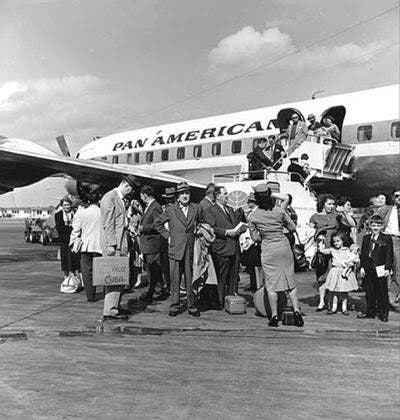
Realizing the harsh realities of life under a Communist regime and brutal dictator, Cris and her family desperately sought a way out of Cuba. In 1962, the US State Department, in partnership with the Catholic Church, initiated a secret program named "Operation Pedro Pan" to fly children under the age of 16 out of Cuba to the US. Despite the risk that they may never see each other again, her parents selflessly decided that Cris be flown out of Cuba separately while the opportunity presented itself. She arrived in Miami, FL in June 1962 and was temporarily interned in a transit camp.
Find out what's happening in Montgomeryville-Lansdalefor free with the latest updates from Patch.
Moving to the US without her parents was a frightening, lonely experience for Cris. And yet she was amazingly poised to accept this challenge and make the best of her opportunity in America. Cris was much like the Vriesa, a flower that can adjust to changes while maintaining its beauty and vibrance. She adapted to a new reality that no longer included her parents and required her to learn English as soon as possible.
After spending a few months in the transit camp in Miami, Cris was sponsored by two families in Peoria, Illinois who agreed to take care of her until she was 18. These families gave her much needed stability so she could continue her studies through high school and prepare for college, when she would be on her own again. Although lonely, Cris was determined to take full advantage of the opportunity her parents gave her. Gracefully adjusting to her new reality, she learned to speak, write, and understand English quickly. She defied the odds and excelled academically in high school only a few years after fleeing Cuba and the brutal Castro regime. Cris not only adapted to difficult changes that few children would ever experience, but used the situation to create a better life for herself in America.
Cris was on her own when she turned 18 and began college. Despite being alone again and responsible for paying for over half of her tuition on her own, her determination and inner strength helped her to excel in collage. She graduated from college and moved to Doylestown, PA with her husband Jim in the late 1970s. Cris taught Spanish at Council Rock High School for over 18 years, and continues to be actively involved in the community after she retired. Cris and Jim also raised two successful children - now adults - who never cease to make them proud.
Unfortunately, the pain and anger of being forced to flee Cuba and be separated from her parents cannot be forgotton. Cris moved on from this difficult experience to succeed in both work and life, but it will never change the fact that Castro's repressive regime was responsible for Cris and thousands of other Cuban children being separated from their families in order to escape a violent Communist government. In honor of brave individuals like Cris who left Cuba for freedom in the US, we can never forget the brutality and repression of Castro's dictatorship in Cuba.
Much like the Vriesa plant, Cris Sullivan weathered the challenges that life placed before her and continued to shine anyway. Her light shines bright for those seeking democracy and freedom, and her example illustrates the importance of vigilance, faith, and hope.
Matt Helfrich
Harleysville, PA
Image courtesy Matt Helfrich.
Get more local news delivered straight to your inbox. Sign up for free Patch newsletters and alerts.