Politics & Government
LETTER: Remembering Unsung Heroes On International Women's Day
"One of the bravest, most accomplished individuals in history is a woman that too few people know about."


The following letter to the editor was submitted to the Lansdale Patch by Matt Helfrich of Harleysville. To submit a letter to the editor, please email justin.heinze@patch.com.
March is Women's History Month and March 8th is International Women's Day. Frankly, I don't need a national day to realize the important role that women play in our world today and their significance in history. Women have proven time and time again that they are just as capable as men to make a difference in every aspect of life and modern day society - in government, business, science, religion, the arts, military, entertainment, and athletics. Reflecting on the importance of women in history reminds me of one of the bravest, most accomplished individuals in history that too few people know about - Zivia Lubetkin. A Jewish native of Poland, Lubetkin would become one of leaders of the Warsaw Ghetto Uprising in 1943, an event that signifies Jewish resistance to the Nazis and the Final Solution during World War II.
Zivia Lubetkin was born in Poland in 1914 just months before the start of World War I. During the interwar years, Poland was ruled by a series of military dictators who were intolerant of Judiasm. As a result, Zivia and the other 3 million Jews residing in Poland after 1930 had already experienced anti-Semitism before the Nazi invasion. Her response to discrimination wasn't to flee or hide, but rather to become politically active during a time when women were rarely accepted by any political organizations. She joined the Labor Zionist Movement during her teens and became an Executive member of the Zionist youth movement - Dror - in 1938. Her leadership in the Zionist movement laid the foundation for the establishment of the state of Israel and helped thousands of fellow Jews escape the discrimination and anti-semitism in Poland for a better life in Palestine in the 1930s.
Find out what's happening in Montgomeryville-Lansdalefor free with the latest updates from Patch.
After Nazi Germany and later the Soviet Union invaded Poland in September 1939, she made a tough and dangerous journey from the Soviet occupied part of the country to Warsaw to join their underground. At a time when being a Jew under Nazi occupation was akin to a death sentence, Zivia came back to Nazi-occupied Warsaw. This wasn't just a brave move by a woman for the time, but an amazingly courageous decision for any person in the face of brutal Nazi occupation forces determined to remove every Jew from the face of the earth.
Zivia not only demonstrated uncommon bravery, but was also one of the leading figures in the Jewish underground movement. In 1942, Lubetkin helped to create the first organization to begin planning an armed resistance against the Nazi occupation, the Jewish Combat League (ZOB). As one of the founders of the ZOB, she was asked to serve on the predominantly male-dominated Warsaw Jewish community's political council, the Jewish National Committee (ZKN). Her leadership skills, organizational abilities and courage were widely coveted by the ZOB and she was therefore given the immense responsibility of coordinating armed resistance between the various Jewish underground movements that existed in the Warsaw Ghetto from 1941 to 1943. It was during this time of coordinating the Ghetto Uprising that Zivia met her future husband, Yitzhak Zuckerman, who was overall commander of the ZOB. In addition to coordinating resistance against the Nazis, Zuckerman also entrusted Zivia to train other members of the Jewish underground how to fire a pistol, throw grenades and make Molotov cocktails.
After careful preparation, Lubetkin and Zuckerman began the first-known armed assault by the Jews against the Nazis, popularly known as the Warsaw Ghetto Uprising, beginning on April 19, 1943. Despite being outnumbered and outgunned from the outset, the Jewish uprising caught the Nazi forces by surprise and inflicted nearly 1,000 German casualties during the uprising. The Nazi leaders, who considered the Jews to be an inferior race, were amazed that the remaining Jews in the Warsaw Ghetto had chosen to fight, instead of being shipped off to Treblinka to be exterminated by gas. Although being considered "inferior", Zivia and the Jews were able to fight off the Nazis longer than the entire Polish army could in 1939. After depleting all of their ammunition and almost all of the food supplies, the uprising ended in a brutal fashion when the Nazis set the Warsaw Ghetto ablaze and forced the survivors to leap from 2nd and 3rd story windows. Thousands of Jews were killed during the uprising, and nearly 50,000 survivors were sent to Treblinka to be gassed. Zivia was one of only 34 fighters to survive the uprising and the war. After leading her group of surviving fighters through the sewers of Warsaw in the final days of the ghetto uprising (on May 10, 1943), she continued her resistance activities in the rest of Warsaw outside the ghetto. She took part in the Polish Warsaw Uprising in 1944, fighting with elements of the Polish resistance against the city's Nazi occupiers.
Find out what's happening in Montgomeryville-Lansdalefor free with the latest updates from Patch.
Following these harrowing experiences during World War II, Lubetkin continued to lend her leadership and bravery to help Eastern and Central European Jewish survivors cross borders en route to Palestine by illegal immigration channels. She herself immigrated to Palestine in 1946 and married Yitzhak Zuckerman, her former commander in the ZOB, who together fought with the Israeli Defense Forces against the surrounding Arab states to preserve the state of Israel that was founded in 1947. In 1961, Zivia was able to get revenge against one the major orchestrators of the Holocaust, Adolph Eichmann, when she testified against him during his trial for crimes against the Jewish people.
World War II and the Holocaust include a long list of heroes and villains that many of us are aware of today. However, little is known about women's contributions to the war effort or resisting the Nazi's Final Solution. Zivia Lubetkin's story epitomizes the fact that even in 1943, women could be as brave as men and lead others under the toughest conditions imaginable. During a time when women were customarily kept out of politics and certainly from the military, Zivia bravely defied a male-dominated society to lead the members of the Jewish ghetto in Warsaw into a military confrontation with the Nazis. Zivia Lubetkin is not only a hero to women, but a hero for all men and women to admire as a symbol of resistance against the deadliest regime in human history. Please don't forget Zivia Lubetkin.
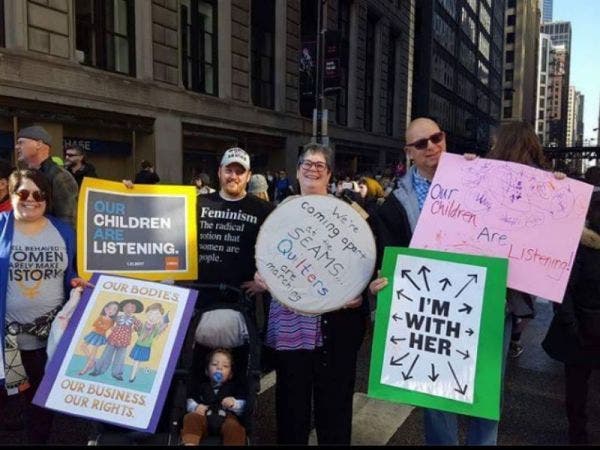
Photo courtesy of Emily Biegel
Get more local news delivered straight to your inbox. Sign up for free Patch newsletters and alerts.