Business & Tech
Farms Do No Harm: Volume VI – Shepherd’s Abiding Farm
Sometimes, education starts with the wooly ones, all in sheep-speak.
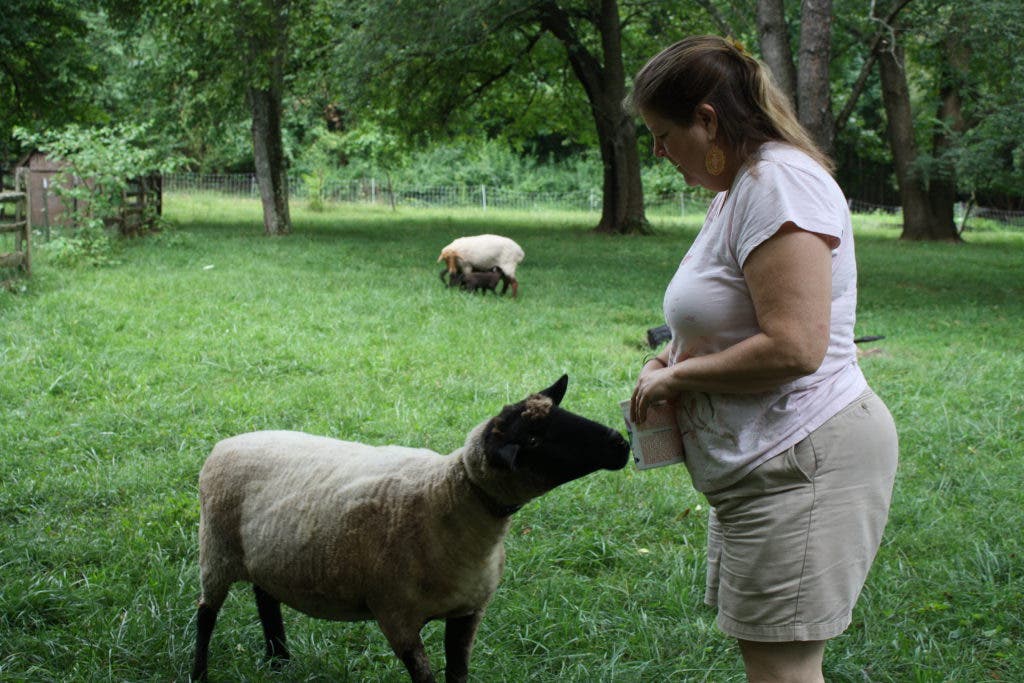


Six years ago, Anne Aycock stirred a childhood dream to life when she bought herself a small flock from Kimberton barber Michael Jugan who also happens to raise sheep, and so Shepherd’s Abiding Farm in Spring City began.
“Ever since I was young, I really wanted a farm,” Aycock said. “I particularly love how pastoral and peaceful they are.”
I started seeing them on television, in the grocery store and in books I was picking up,” Aycock said about sheep soon after she pondered about the possibility of them grazing throughout her backyard.
Find out what's happening in Limerick-Royersford-Spring Cityfor free with the latest updates from Patch.
Wondering if she should jump on the idea, the curious sheep sightings convinced her to go ahead with the task. Soon after, Aycock found herself loading sheep into the back of her Chevy Suburban.
Aycock’s sheep supply is small on her modest but lush three acres in a wooded stretch along Porters Mill Road, where she lives as an unexpected New York City transplant, finding affection for the country quite easily now.
Find out what's happening in Limerick-Royersford-Spring Cityfor free with the latest updates from Patch.
“Not only does he shear sheep, but he shears people,” Aycock said about Jugan who for years and even today has mentored and educated her about the ins and outs of raising sheep and tending to their needs.
Aycock works as a substitute teacher in the Owen J. Roberts School District, where she is often asked to bring her sheep to educate classes about the value and necessity of them in connection with human history.
“Much of the world’s civilization is related to textiles, evolved from domestication of sheep,” Aycock said. “I like teaching children about livestock and where our food comes from.”
Her main sheep are Holly, a Tunis breed, and Maria, a black-faced Suffolk breed. A few babies tromp their little limbs around the pastures, too.
With her great respect for sheep, Aycock is certain to use as many parts of the sheep as possible, as she raises them for selling the meat, has their wool sheered once a year and vends sheepskin.
In schools, she teaches children how to spin, knit and weave with the wool she extracts from her flock, illustrating valuable skills which they’re usually ecstatic to learn.
“Tunis give the best flavored meat with lamb and are fast growers,” Aycock said. “They can be bred all year round, which isn’t true of all sheep.”
A curious detail about them is that once sheared, they sometimes don’t recognize each other and get into fights until they can figure out who is the main sheep in the hierarchy of the flock.
“Maria is the queen,” Aycock said. “Older generations find her fascinating because it all reminds them of their childhoods when farming was a more regular way of life.”
About five to 10 pounds of wool are generally sheared off of a sheep when they lose their warm winter plush supply of their usual outer coat.
“In the fall, they start to race each other,” Aycock said. “My sheep are happier in winter. The snow even freezes on their backs.”
Lambing is one of Aycock’s favorite parts about having a family of sheep in her backyard, once she brings in rams temporarily for breeding.
“It’s so exciting and gratifying,” Aycock said about the lambing, bringing the babies into the world right out in the pasture. “It’s almost like having a baby yourself.”
But overall, she appreciates that her chosen pursuit constantly reminds her of how so many different levels of life on earth are entwined.
“It makes you hyper-aware of nature,” Aycock said about the gift of being around sheep every day. “We depend on animals for our survival, so it’s the circle of life, in essence.”