Health & Fitness
PA Zika Virus Cases Nearly Double In Just One Month As New Dangers Arise
The number of Pennsylvania Zika virus cases have nearly doubled in just one month as new dangers associated with the disease have arisen.


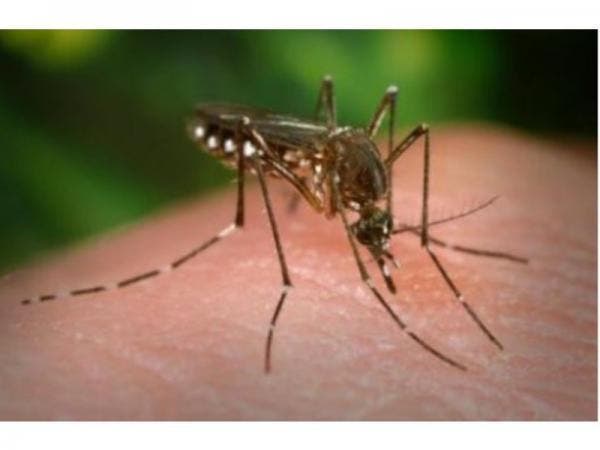
The number of Pennsylvania Zika virus cases have nearly doubled in just one month as new dangers associated with the disease have arisen.
There are now 44 confirmed cases of the virus in Pennsylvania, according to the Pennsylvania Department of Health. The cases are travel related, except for one identified as being transmitted during laboratory testing, according to the CDC.
The CDC actually identified 39 cases in Pennsylvania, up from up from the 23 reported last month by the Centers for Disease Control and Prevention. The CDC advised, however, that the state number is probably more accurate because it's more up-to-date.
Find out what's happening in Newtownfor free with the latest updates from Patch.
What's causing additional concern for health officials is that Utah resident was infected after caring for an elderly man who died from a Zika infection in July.
The Centers for Disease Control and Prevention says it's studying the matter because the mysterious case may or may not have been caused by known methods of the virus's transmission.
Find out what's happening in Newtownfor free with the latest updates from Patch.
“The new case in Utah is a surprise, showing that we still have more to learn about Zika,” Erin Staples, a CDC epidemiologist, said in a release. “Fortunately, the patient recovered quickly, and from what we have seen with more than 1,300 travel-associated cases of Zika in the continental United States and Hawaii, non-sexual spread from one person to another does not appear to be common.”
The Pennsylvania cases were not broken down by region or county. Click here to view the full map of cases in the United States that was updated by the CDC last wqeek.
The CDC has confirmed that the virus is responsible for causing severe defects in unborn children, including microcephaly, which leaves babies with abnormally small heads and often with brains that do not develop properly.
In total there are 1,306 confirmed cases of the Zika virus in the United States, according to the CDC.
Zika is a mosquito-borne illness that is characterized by a fever, rash and joint pain. While the illness typically resolves within a week, some severe cases may require hospitalization. Aside from mosquitoes, Zika can be spread through sexual contact in some cases, the CDC notes.
Meanwhile, authorities are scrambling to prevent the spread of the disease in the United States. Zika is spread by a specific type of mosquito — the Aedes aegypti mosquito. There is currently no vaccine for the virus.
Aedes aegypti mosquitoes were once thought to be a threat to only the southern areas of the United States. But the CDC maps shows the possibility of that mosquitoes species reaching as far as New York City, New Jersey and Pennsylvania this year.
Last month, a baby was born with Zika-related birth defects at a New Jersey hospital. The baby's mother was infected with the disease while in Honduras early in her pregnancy.
The CDC offers these tips to prevent the spread of the disease:
- Wear long-sleeved shirts and long pants.
- Stay in places with air conditioning and window and door screens to keep mosquitoes outside.
- Take steps to control mosquitoes inside and outside your home.
- Sleep under a mosquito bed net if you are overseas or outside and are not able to protect yourself from mosquito bites.
- Use Environmental Protection Agency (EPA)-registered insect repellents with one of the following active ingredients: DEET, picaridin, IR3535, oil of lemon eucalyptus, or para-menthane-diol.
- To prevent the spread of sexually-transmitted Zika, condoms should be used properly. "We do not know how long the virus can stay in the semen of men who have had Zika, and how long the virus can be spread through sex," the CDC says.
Get more local news delivered straight to your inbox. Sign up for free Patch newsletters and alerts.