Community Corner
Invasive Spotted Lanternfly Found At Churchville Nature Center
The pest, which originated in Asia, can be harmful to Pennsylvania's timber, grape and hops industries, as well as to other plants.


NORTHAMPTON, PA — The invasive spotted lanternfly, an unwanted bug that can cause extensive damage to crops and other plants and trees, has been discovered in Bucks County.
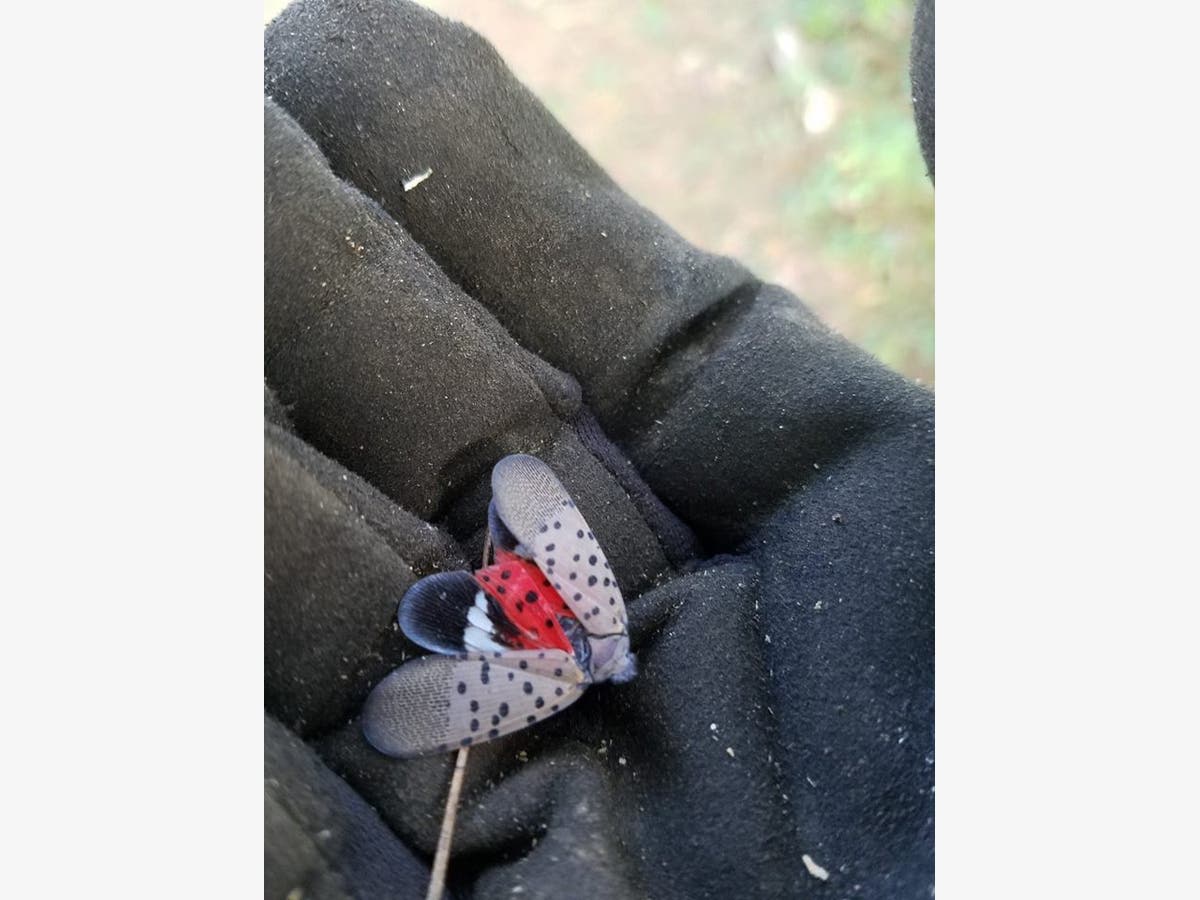
Officials at Churchville Nature Center in Northampton shared a photo of one of the colorful but dangerous insects on its Facebook page on Thursday.
"We are sad to report that we have had our first sighting of the spotted lanternfly on our property today," the post reads. "If it is new to you, this invasive plant hopper is threatening the forests of the northeast as well as the lumber and agricultural industries. Please keep an eye out for the insect."
Find out what's happening in Northamptonfor free with the latest updates from Patch.
According to the Pennsylvania Department of Agriculture, the spotted lanternfly is native to China, India and Vietnam. It was introduced to Korea, where it became a major pest, and has spread from there. They say the bug "has the potential to greatly impact the grape, hops and logging industries" and that early detection is important in preventing harm.
On Friday, Bucks County was under a quarantine for the spotted lanternfly, according to the state agriculture department. The quarantine restricts movements of materials that could spread the pest.
Find out what's happening in Northamptonfor free with the latest updates from Patch.
Nymph and adult spotted lanternflies cause extensive damage when they feed, sucking sap from stems and leaves and causing plants to ooze and weep. Not only does the plant die but the fermented odor caused by the feeding, along with the fluid excreted by the insects themselves, promotes mold growth and draws even more insects, according to the U.S. Department of Agriculture.
What To Do
Officials are urging anyone who sees a spotted lanternfly, or their eggs, to report it to the Pennsylvania Department of Agriculture or the Penn State Extension. Killing and collecting specimens is recommended, both to verify sightings and to remove the individual before it reproduces.
An adult is about one inch long and a half-inch wide at rest. The forewing is gray with black spots and the wings tips are reticulated black blocks outlined in gray. The hind wings have contrasting patches of red and black with a white band.
The legs and head are black and the abdomen is yellow with broad black bands. At immature stages, the bugs are black with white spots and develop red patches as they grow.
Newly laid egg masses have a gray, mud-like covering which can take on a dry cracked appearance over time., the agriculture department says. Old egg masses appear as rows of 30-50 brownish seed-like deposits in 4-7 columns on a tree trunk, roughly an inch long.
If you see egg masses, the agriculture department urges you to scrape them off, double bag them and throw them away. You can also place the eggs into alcohol or hand sanitizer to kill them. You're asked to report all destroyed egg masses on the department's website.
Specimens at any life stage can be turned in to the Pennsylvania Department of Agriculture’s Entomology lab for verification. Submit samples with the Entomology Program Sample Submission Form. A photograph of any life stage, including egg masses, can be submitted to Badbug@pa.gov.
Photo courtesy Churchville Nature Center
Get more local news delivered straight to your inbox. Sign up for free Patch newsletters and alerts.