Health & Fitness
$1M grant fuels URI efforts to stem opioid crisis in rural areas
'Community First Responders program' to educate public, provide naloxone and other resources to combat crisis

Professors, students and health professionals from the University of
Rhode Island aim to stem the ongoing opioid crisis in rural communities
around the state, thanks to a $1 million grant from the federal
Substance Abuse and Mental Health Services Administration.
The “Community First Responders Program” seeks to educate rural
communities about substance use disorder and opioid misuse, and provide
resources to those communities to help address the opioid crisis,
according to College of Pharmacy Clinical Associate Professor Anita
Jacobson, the lead on the project, who is working with College of
Nursing Professor Diane Martins and College of Environment and Life
Sciences Professor Deborah Sheely.
The program involves outreach to rural communities, building upon
connections URI Cooperative Extension has established through volunteer
programs like the Master Gardener Program and Watershed Watch.
University representatives will visit rural community events such as the
Washington County Fair and 4-H meetings, teaching members of the
community to recognize the signs of overdose and how to respond —
including calling 911, administering naloxone and performing CPR. They
will also distribute naloxone kits to combat an overdose, allowing
members of the community to be true first responders.
Find out what's happening in Narragansett-South Kingstownfor free with the latest updates from Patch.
“This is an opportunity to reach rural communities, where there is
not always as much outreach regarding overdose and addiction as in more
urban areas. But there is overdose risk in these communities,” Jacobson
said. “We want to be a referral source and help people find the
treatment and recovery they need.”
University representatives will distribute and teach residents how to
use the nasal spray naloxone for victims displaying the signs of an
overdose — including loss of consciousness, lack of response to stimuli,
slow, shallow breathing and bluish skin, especially around the mouth
and fingernails. They will also provide testing strips to check for
fentanyl — one of the strongest opioids, which is sometimes illicitly
added to other substances — as well as HIV/hepatitis testing, materials
for referral to recovery programs, and information on methadone,
buprenorphine and naltrexone treatments.
Find out what's happening in Narragansett-South Kingstownfor free with the latest updates from Patch.
The program also includes education to reduce the stigma associated
with substance use disorder. “People are often exposed to opioids for
legitimate medical reasons, and go on to develop a dependence,” Jacobson
said, noting that anyone prescribed opioids should also have naloxone
on hand. “Mistakes can happen. Maybe you take some Benadryl to help you
sleep and that combination is too much, causing an accidental breathing
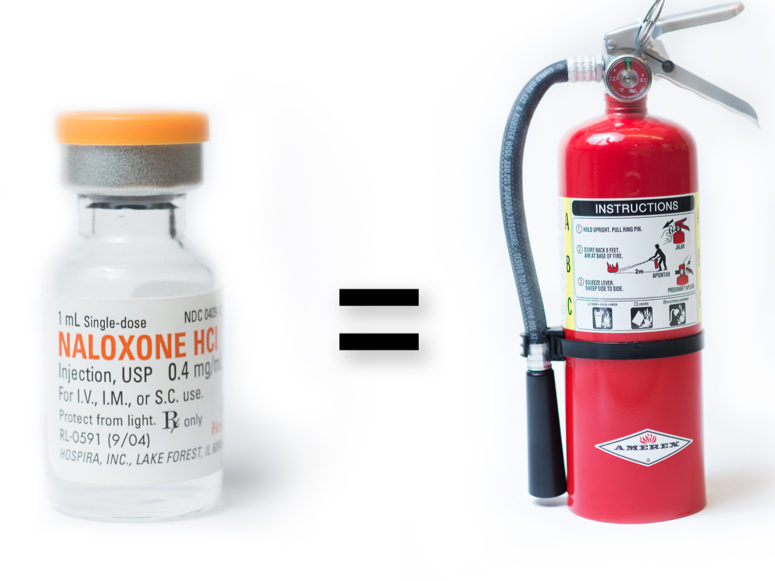
emergency. You have a fire extinguisher in your house just in case a
fire breaks out. Same with naloxone. Seconds really count, so you want
to have it there.”
Throughout the two-year project, faculty, staff members and
volunteers will complete opioid misuse and substance use disorder
training, and share information at dozens of public events. The Rhode to
Health mobile health unit will be deployed to some events, providing
resources for substance use disorder education and counseling, as well
as HIV/Hepatitis C screenings.
“We want to have as many people in the community as possible to be
community first responders,” Jacobson said. “If people are educated
about this and know how to recognize an overdose and how to recognize if
someone is caught in the cycle of substance use disorder, we can save
lives.”