Community Corner
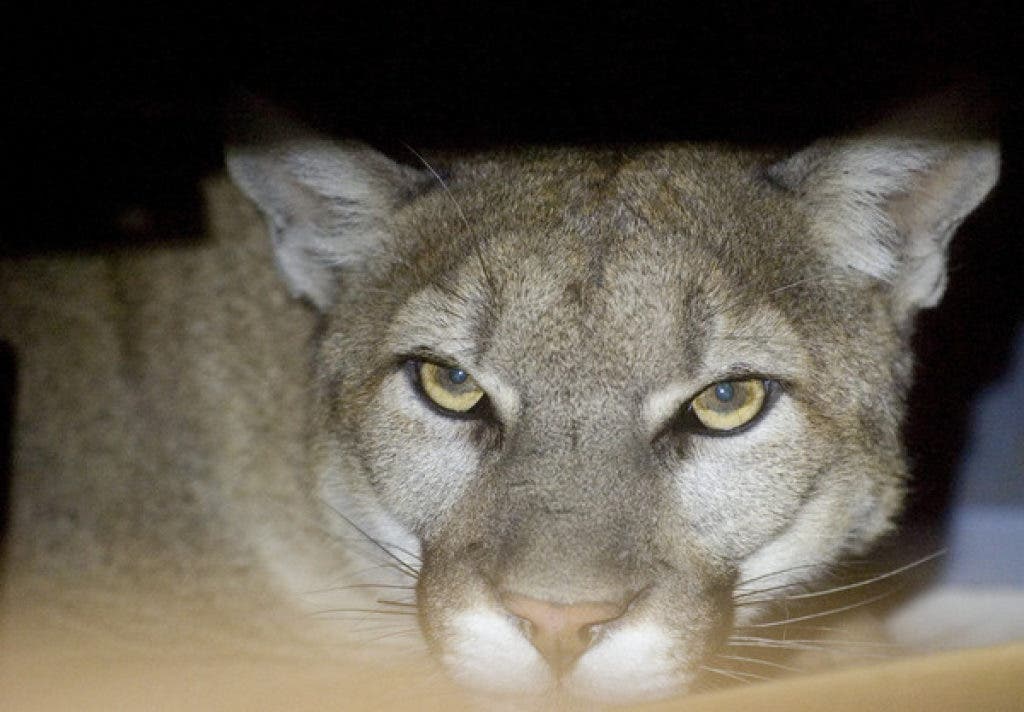
Did You Say Mountain Lion?
Parent's Council members had a wild time talking up animal encounter safety tips.
of Wakefield once again hosted the weekly meeting of the Parent’s Council.What topic did the council tackle this week?
Animals Domestic and Wild
What should you do when you encounter a strange animal, whether it be domestic or wild? What do you tell your children? What animals will you likely encounter?
Find out what's happening in Narragansett-South Kingstownfor free with the latest updates from Patch.
It truly was a humorous discussion, with a long list of animals ranging from your average gray squirrel, (lovers of peanut butter), to the DEM eluding .
The Best Advice is the Simplest Advice
Find out what's happening in Narragansett-South Kingstownfor free with the latest updates from Patch.
- Never approach an animal that you do not know.
Children are curious in nature and many will approach furry, cuddly creatures without fear of retaliation. Teach them at a young age to respect animals. Animals are instinctive in nature and can easily become engaged in defensive posture. A loud noise, a quick move or close proximity to babies and food supply are just a few triggers for animals of all shapes and sizes.
Recognize Aggressive & Defensive Behavior
Domestic and wild animals exhibit some of the same behaviors when it comes to aggression. Recognizing the signs of aggression is an important and easy lesson for children of learning age.
- Ears back or laid against the head
- Hair standing on edge
- Growling and hissing
- Crouching in a lunge position
- Baring of teeth
- Circling or pacing
- Pawing at the ground
- Tail erect
Do Not Run
In most instances, it is unwise to run away. Running or flight will trigger animal prey instincts. Running can be synonymous with victim. Most animals, wild and domestic can outrun a human.
Do Not Make Eye Contact
If you encounter a strange animal, do not make direct eye contact. This may be seen as a form of aggression and cause the animal to attack. By all means, keep an eye on the animal and if possible, retreat by moving sideways away from the animal.
Do Not Turn Your Back
If you are moving away from the animal, do so slowly, without turning your back to the animal. Turning away places the animal in a position of authority and leaves you without knowledge of the animal’s whereabouts.
Know Your Surroundings
Educate yourself and then your children with regards to the wildlife in your area. If you are travelling and plan on being outdoors, do your research. Knowledge of who and what you may encounter can save your life.
Large Cats
Mountain lion and large cats are found in many rural areas and cover a large area of ground in a short period of time. Hikers often encounter large cats in rocky mountain areas just off trails.
A recent Matunuck area sighting prompted many Patch readers to inquire as to large cat and mountain lion encounters.
- Contrary to encounters with other animals, maintain eye contact with a lion.
- Do not allow children to run or walk ahead of you on trails. If you encounter a mountain lion, pick up small children and instruct them not to scream. A shrieking child sounds different to an aggressive cat than a yelling adult.
- If you encounter a mountain lion, stay on your feet. Do not bend down or run.
- Throw rocks, sticks and objects that can be reached without bending.
- If the lion attacks, protect your face and head.
- Make yourself look bigger. If you have a jacket, open it.
- Speak loudly.
- Be aggressive and fight back if attacked. It may save your life.
Mountain lion encounter tips compiled from multiple sources, including the following:
Mountain Lion Foundation. http://www.mountainlion.org/facts_safety.asp
Defenders of Wildlife. http://www.defenders.org/wildlife_and_habitat/wildlife/mountain_lion.php
City of San Jose. http://www.sanjoseca.gov/district10/mtnln_cyte_safety.asp.
Arizona Game and Fish Department. http://www.azgfd.gov/w_c/mtn_lion_tips.shtml