Crime & Safety
Skunk that Attacked Person Near Roy Carpenter's Was Rabid, DEM Says
The skunk attacked a person on Sunday and officials are concerned there might be people or animals who have had unreported contact.


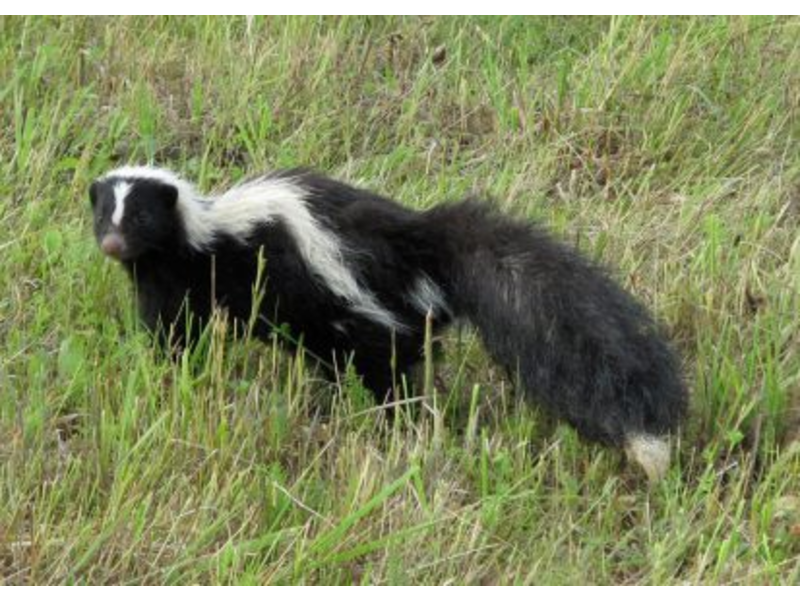
A skunk that attacked a person near Roy Carpenter’s Beach on Sunday in South Kingstown and was subsequently captured and euthanized was infected with rabies, the state Department of Environmental Management confirmed Wednesday.
DEM spokeswoman Gail Mastrati said that the skink was tested at the State Health Laboratory where it was confirmed that the animal was positive for the rabies virus.
Residents of the area are being advised of the infection and “all known exposed people have been evaluated and are undergoing treatment,” Mastrati said.
Find out what's happening in Narragansett-South Kingstownfor free with the latest updates from Patch.
But, “the concern is that other people or pets may have had contact with this animal, but have not come forward to be evaluated for risk.”
From the DEM:
Find out what's happening in Narragansett-South Kingstownfor free with the latest updates from Patch.
Anyone who may have had any physical contact with a skunk or any wild animal in the Roy Carpenter’s Beach area of South Kingstown should call RI DOH immediately at 401-222-2577.
Anyone who has a pet that may have had contact with a skunk or any wild animal in this area should contact South Kingstown Animal Control at 401-783-3321.
DEM and RI DOH remind all Rhode Islanders that rabies is a serious public health issue. Once symptoms appear, rabies is fatal in people and in animals. Rabies treatment is available for people who may have been exposed to rabies, but it must be started as soon as possible after exposure. All dogs, cats and ferrets are required by state law to have current vaccination against rabies.
Vaccination of pets prevents them from contracting rabies and prevents people from becoming exposed to rabies through their pets.
RI DOH and DEM make the following recommendations:
- Make sure all dogs, cats, and ferrets are up to date on rabies vaccination. It is the law.
- Avoid all contact with and do not feed stray or free-roaming domestic animals.
- Avoid all contact with and do not feed wild animals.
- Do not feed your animals outdoors, as this will attract other animals. This is especially dangerous when feeding large numbers of free-roaming cats.
- Protect your pets by always maintaining control; walk dogs on a leash or let them play in a fenced yard, and do not let pets wander unsupervised.
- Report all animal bites to your city/town’s animal control officer.
- Securely cover all garbage cans so wild animals cannot scavenge for food.
Photo: File Photo
Get more local news delivered straight to your inbox. Sign up for free Patch newsletters and alerts.