Community Corner
NK Free Library Lands Grant for Water-Filtering Rain Garden
The plan is to install the garden to filter rainwater that enters Academy Cove and ultimately, Wickford Harbor.


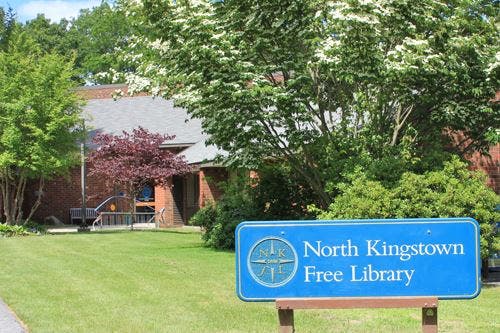
A plan for a rain garden at the North Kingstown Free Library to treat stormwater before it enters Academy Cove got a funding boost by the Narragansett Bay Estuary Program and the New England Interstate Water Pollution Control Commission.
The two organizations announced $65,000 in grants to eight projects that will “protect and restore water quality in the Narragansett Bay watershed,” according to a release.
“The Narragansett Bay Estuary Program is very pleased to lend its support to help protect and restore the water quality in Narragansett Bay,” said Judith Swift, chair of Estuary Program’s Management Committee. “It takes many partners, including municipalities and nonprofit organizations through the Narragansett Bay watershed, in Rhode Island and Massachusetts, to continue to advance the critical mission of watershed restoration and protection.”
Find out what's happening in North Kingstownfor free with the latest updates from Patch.
The waters of Academy Cove eventually enter Wickford Harbor and the harbor is “impaired by a lack of dissolved oxygen that threatens aquatic life,” officials said. “The project includes the rain garden, a pervious path, educational signage, and brochures. The project will be accomplished using volunteers and staff from the Town of North Kingstown.”
“The Narragansett Bay Estuary Program’s protection and restoration grants will provide many environmental and social benefits to the watershed,” said Ron Poltak, NEIWPCC’s executive director. “As host of the Program, we look forward to advancing the important work of the diverse partners in the watershed.”
Find out what's happening in North Kingstownfor free with the latest updates from Patch.
The projects funding this year are summarized below:
Clean Ocean Access was awarded a grant to increase public access to the shoreline of Aquidneck Island to promote, preserve, and ensure recreational uses along the coastline, such as for fishing, boating, swimming, surfing, and walking. They will work in Newport, Middletown, and Portsmouth to protect and monitor the rights-of-way and provide proper signage for the access points. The goal is to use Clean Ocean Access volunteers to provide monitoring twice a month to connect people to and promote stewardship of our shoreline resources.
Hopedale, Massachusetts is working to solve water quality issues in Hopedale Pond that have closed Hopedale Beach for swimming the past several years. The Town of Hopedale’s Park Commission is designing solutions to remedy pollution coming from stormwater outfalls into the Pond. The goal is to design a green infrastructure stormwater project and identify any illicit dischargers into the system. Hopedale plans to form a steering committee and invite its neighbor, the Town of Milford, to help guide this project.
North Kingstown, Rhode Island plans to build a rain garden at the North Kingstown Free Library to treat stormwater before it enters Academy Cove, and ultimately Wickford Harbor. The Harbor is impaired by a lack of dissolved oxygen that threatens aquatic life. The project includes the rain garden, a pervious path, educational signage, and brochures. The project will be accomplished using volunteers and staff from the Town of North Kingstown.
Save The Bay was awarded funding for two projects. The first is a public education and awareness project focusing on the water quality and water supplies for the 67,000 residents of Aquidneck Island. Save the Bay’s communications staff will develop content for Bay Friendly Living, a publication for residents and businesses on Aquidneck Island. The second project involves a partnership with Rhode Island’s Coastal Resources Management Council to have volunteers and interns conduct site visits to the 221 State- designated shoreline rights-of-way. The goal is to document the sites and current conditions to examine whether public access needs to be restored or improved. This will help identify sites for the State’s Adopt- An-Access program.
Pawtuxet River Authority was also awarded funding for two projects. The first is their fish passage project which is designed to build upon the 2011 Pawtuxet Falls dam removal and assess whether fish passage can be created to encourage spawning in Cranberry Pond in Warwick and Blackamore Pond in Cranston. They will examine fish habitat and stream flow conditions at each pond and assess the feasibility of removing barriers and restoring fish passage. The second grant allows for the purchase of a utility trailer to transport equipment for river clean-ups and debris removals at recreation sites along the Pawtuxet River.
Woonasquatucket River Watershed Council will develop an educational program with a focus on stormwater discharges to restore the urban sections of the Woonasquatucket River and Narragansett Bay. The project will include a public school curriculum, Trout in the Classroom, for 4th graders, public art with North Providence High School designing storm drain paintings and murals, and youth leadership development for high school students in science education at the Met School in Providence.
The Narragansett Bay Estuary Program’s grant program was guided by a Grant Subcommittee made up of representatives from the Massachusetts Office of Coastal Zone Management, Rhode Island Department of Environmental Management’s Office of Water Resources, Massachusetts Department of Fish and Game’s Division of Ecological Restoration, Rhode Island Department of Administration’s Division of Planning, NEIWPCC, and EPA.
On a related matter, EPA New England recently awarded a 2015 Environmental Merit Award to staff at the Narragansett Bay Estuary Program and NEIWPCC. In announcing the award, EPA praised the honorees for their “dedicated and efficient collaboration to launch EPA’s new coastal watershed program, which promotes an ecosystem approach to protecting and restoring the coastal watersheds in southeast New England.” “This program and their work led to 12 projects getting funded and $1.5 million spent on improving environmental and water quality conditions in Southeast New England.”
Get more local news delivered straight to your inbox. Sign up for free Patch newsletters and alerts.