
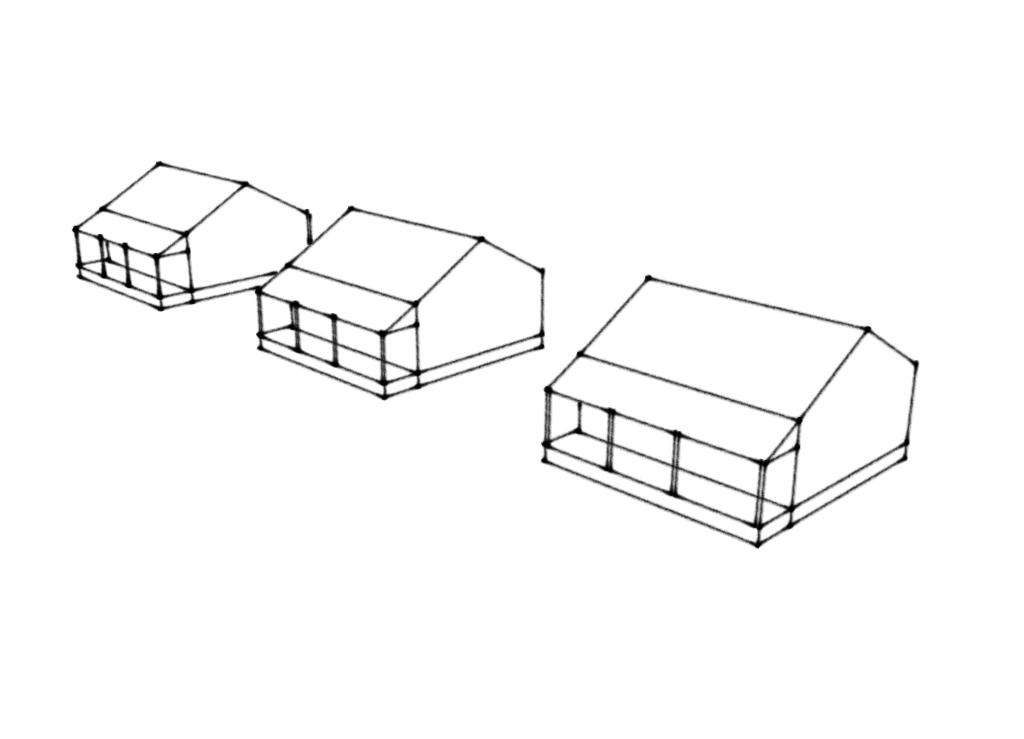


The Mill Village Pattern was created from very practical needs. The mill needed housing for its employees. What we ended up with is so practical that it is genius, but it has seemingly been the hardest pattern to continue.
Why should we try to copy those small, old houses? Its not the houses themselves that I’m trying to stress, but the way that the houses are organized holds all the value and can greatly strengthen community.
Find out what's happening in Lexingtonfor free with the latest updates from Patch.
First, the Mill Hill’s positioning is an important concept. Most of these houses are located directly between the Mill and downtown. This location grants you walkable access to work and commerce so you didn’t have to drive anywhere to sustain your livelihood. There are no garages on these houses because they didn’t need cars.
Find out what's happening in Lexingtonfor free with the latest updates from Patch.
Even if the mill workers did need cars, (and eventually they did get them) the way the roads are organized mitigates traffic. If all of Lexington’s community development for the last 30 years was built like this additive grid of through roads, instead of subdivisions with branching and dividing streets dead ended with cul-de-sacs, traffic would not be an issue today. Our lack of through roads is the source of our traffic woes.
Zooming in a little further, the organization of the lots is another aspect to take notice of. Much like the Main Street pattern, the lots are narrow along the street and stretch back. This allows for a happy medium between street access and lot size, letting you fit more houses on the street with big back yards than if using square lots.
Next think about the house placement on the lot. By building closely to the street and minimizing the front yard, the space of the street is strengthened, and the proximity between front porches allows for neighborly social interactions without ever leaving the house. The sense of community and the increase in the number of eyes watching the street works as a strong crime deterrent. The front porch once again becomes the cultural center, and brings people together.
If a developer were to cut down the lot size in half, they could double the number of properties, double their turnaround, and strengthen the density, walkability, and community all at the same time. It seems like it would be common sense to build this way, but we have lost this logic.
The amazing thing about this mill village district is that it was conceptualized as a fully integrated addition to the Lexington built environment instead of a secluded subdivision. Future developments need to reject this idea of total privacy and value strengthening community. It takes a village to raise a child.
I’ve been following a controversial story about plans for a future 500-home subdivision on Barr Pond, just outside the Town limits. If developed correctly with the patterns like the Mill Village, incorporating mixed-use property, and the 12-Mile greenway system, this new community could be a good thing. If that is not the case and we will be getting an unsustainable boilerplate subdivision, we need to fight this development tooth and nail so that Lexington doesn’t fall deeper into irreversible suburban sprawl. Lexington deserves better than that.
Lets build a better Lexington.