Politics & Government
Bill Could Up Mandatory School Attendance Age
House bill proposes raising high school dropout age to 18. Greenville County officials not yet taking a position on legislation.

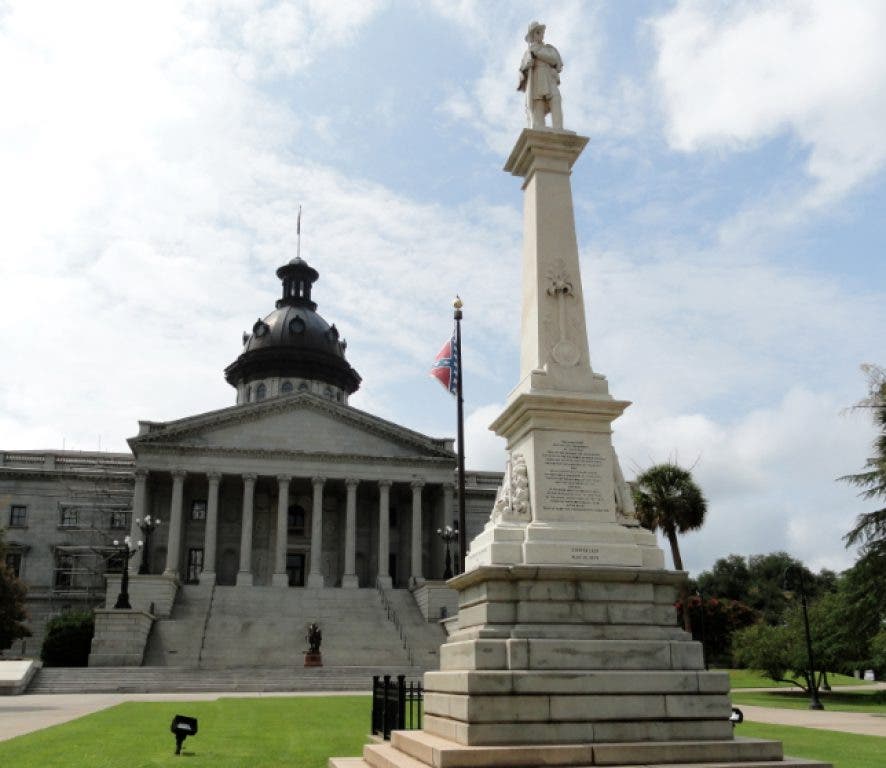
More than one in four South Carolina students fail to graduate high school on-time, but some state legislators introduced a bill that could keep potential dropouts in school longer.
House Bill 4727 would increase the compulsory age for high school attendance to 18 years old. Current South Carolina law allows students to drop out at age 17 without parental permission.
“Everything we can do to encourage attendance is a positive thing,” said Rep. James Smith (D-Richland), one of the bill's sponsors. “My first and foremost interests are in making sure we have the very best educational opportunities for all students.”
Find out what's happening in Greer-Taylorsfor free with the latest updates from Patch.
In Greenville County, district officials are taking a "wait and see" attitude.
"We have not taken a position on this proposed legislation," said Oby Lyles, communications director for the Greenville County School District, speaking on behalf of Superintendent Phinnize Fisher. "Before taking a position, we research the proposal and examine the positives and negatives."
Find out what's happening in Greer-Taylorsfor free with the latest updates from Patch.
The issue of school age requirements came to the fore in January when President Barack Obama encouraged states to introduce legislation mandating school attendance for children 18 years of age and younger.
Obama repeated his suggestion during a meeting with governors on Monday.
“Twenty-one states have laws where you either have to graduate from high school or stay in school until you’re at least 18,” Obama said. “That means 29 states don’t.
“Let’s send a message to our students that you graduate from high school at a minimum.”
States neighboring South Carolina, including North Carolina, Georgia and Tennessee, have compulsory attendance until students are 16 or 17. States that require attendance until 18 includes Virginia, California, New Hampshire and Texas.
Smith said students who graduated would see the dividends it paid.
“We want to encourage students to stay in school,” Smith said. “The unemployment rate from dropouts to high school graduates to college graduates decreases precipitously.”
Smith said that increasing high school graduation rates could lead to more money for smaller class sizes and early childhood education, both initiatives Smith also supports.
But Smith said he didn’t expect the bill to make it out of the House of Representatives this year, despite positive feedback from school districts.
“I don’t expect it to pass,” Smith said. “I don’t know that there is even a plan for the committee to take it up.”
Most of the bill’s 16 sponsors are Democrats, but some Republicans, including Gov. Nikki Haley, have called Obama’s push for mandatory schooling until age 18, too idealistic.
“We can’t have government go pick them up and bring them to school,” . “What we can do and what we want to do is South Carolina is give them options.”
Haley suggested GED programs and technical schools as possible other options.
Sen. Thomas Alexander (R-Seneca) said he would support similar legislation, though he would like a deeper examination of the benefit the extra year could provide.
“We have different ages for different things,” Alexander said. “I believe that the students would be helped to stay in school until 18.”
In some school districts, including Richland Two, the elimination of occupational programs like cabinetmaking have caused concerns about available avenues for students who prefer vocational training to traditional schooling.
Still, board members said legislators should find a way to keep students in school without trying to take the role of parents.
"Young adults, younger than 18, will have a harder time finding gainful employment and will negatively affect them for the rest of their life," board member James Manning said. "In my opinion this [would be] a positive change for the state of S.C."
Dropouts, on average, earned $300,000 less during their lifetime than high school graduates, according to the Wall Street Journal, and dropouts represent about $320 billion in lost earning potential every year.
A New York Times article from January also cited lower social costs for high school graduates because they were less likely to take public money for health care or unemployment benefits and more likely to stay out of jail.
With increased earnings potential and decreased likelihood of relying on social welfare, proponents of compulsory education say the one year age difference could add $90 billion a year to the American economy.
Smith said that completing one's education was important in itself, but that he saw the bill as a small step to improving the economy and South Carolina's workforce.
“In dealing specifically with dropouts, they’ve found it’s very, very tough to get back into a position where they can make a living wage,” Smith said. “I know this is not a silver bullet, but this is a parcel of a larger effort that’s got to be made.”
Get more local news delivered straight to your inbox. Sign up for free Patch newsletters and alerts.