Politics & Government
Port Arthur's 'Two-Story Pile Of Toxic Debris' Closed
Still, one environmental activist said, concerns remain about the long-term effects of living next to it.

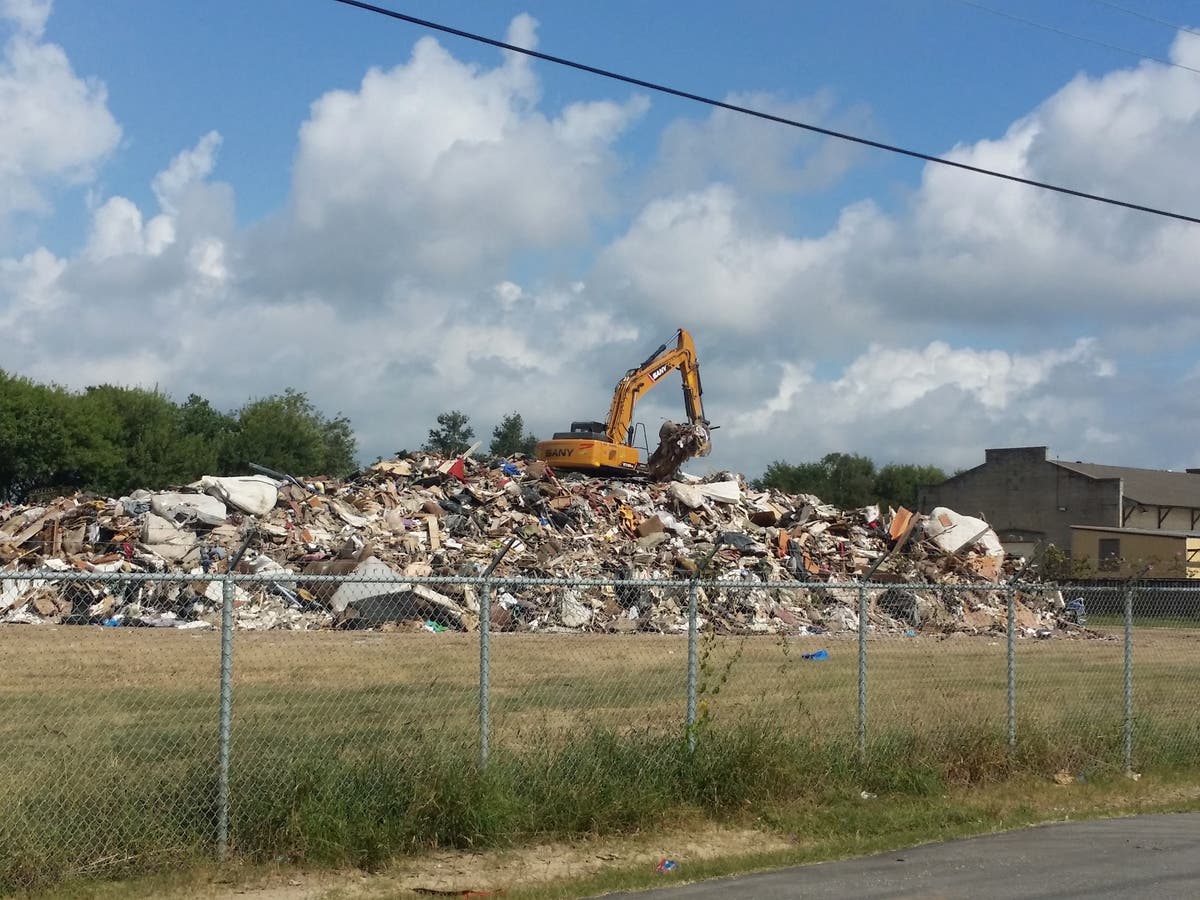
PORT ARTHUR, TX — A temporary "two-story pile of toxic debris" in Port Arthur, Texas, that was used to sort moldy detritus from Harvey-flooded buildings was shuttered following a weeks-long campaign by the neighborhood's predominantly older black homeowners, who complained of possible health risks. Residents and activists celebrated the site's closure Sunday as contractors finished their first sweep of soiled furniture and appliances left curbside in the Gulf Coast city, about 80 miles east of Houston.
More than 12,000 structures were damaged by floodwaters, including roughly 80 percent of local homes. The neighborhood of the dump site was spared from storm damage, but not from a tower of soaked trash.
Lone Star Legal Aid attorney Amy Dinn in a letter to Mayor Derrick Freeman in September asked for the site to be moved away from people's homes.
Find out what's happening in Across Texasfor free with the latest updates from Patch.
"Residents were being told, 'don't go near it, don't breathe it, it's off-loading gases and sulfite.' So they still have to look at it, smell it, get the particulate matter and dust from it. It was compounding the harm to this particular neighborhood, and we thought that was unfair," Dinn said.
Air and soil tests showed the site was safe, according to city spokeswoman Risa Carpenter. The area was permitted by the state environmental commission and is the site of the city's former water treatment plant.
Find out what's happening in Across Texasfor free with the latest updates from Patch.
Carpenter said the dumping site was closed because it was no longer needed, not because of citizens' concerns.
"Whatever they say is cool with me as long as it's gone," said Port Arthur environmental activist Hilton Kelley, who organized a human blockade to try to prevent dump trucks from entering the site.
Still, Kelley said, concerns remain about the long-term effects of "living next to a two-story pile of toxic debris."
Carpenter said the city's remaining storm debris will be collected and disposed of by the end of the year.
Photo credit: Jesse Wright/The News via AP