Health & Fitness
5 Things Americans Should Know About The Coronavirus Vaccine
As the FDA ponders approval of vaccines reported to be effective in fighting the coronavirus, questions remain about availability, priority.


As the Food and Drug Administration prepares to convene Thursday to consider approving a highly anticipated coronavirus vaccine co-developed by Pfizer and German partner BioNTech, a host of unanswered questions remain about how quickly that vaccine and others will be ready for widespread distribution.
FDA officials on Tuesday unveiled positive reviews of the vaccine, which is expected to be released to hospitals across the country beginning in mid-December once it is approved. Yet, whether that timetable is accurate and what it means for Americans willing to be vaccinated will be determined by how quickly the FDA announces a final decision.
“They need to take as much time as they need to feel comfortable,” Pfizer CEO Albert Bourla said of the FDA’s timeline, according to the Associated Press. “It’s very important for the trust of the vaccine from the people.”
Find out what's happening in Across Americafor free with the latest updates from Patch.
In its documentation, the FDA characterized the Pfizer vaccine as "strongly protective."
As the approval process begins, here are five things to know about vaccine.
Find out what's happening in Across Americafor free with the latest updates from Patch.
1. A large number of Americans could have access to vaccinations by spring: At the White House’s Vaccine Summit on Tuesday, President Donald Trump said as many as 100 million doses (enough for 50 million doses) are expected to be released by spring, The Associated Press reported. At the Operation Warp Speed Summit event, which was hosted by Trump, Vice President Mike Pence and top health officials, Trump characterized the timeliness of the vaccine’s expected approval as a “miracle.”
"Every American who wants the vaccine will be able to get the vaccine, and we think by spring we're going to be in a position nobody would have believed possible just a few months ago," Trump said.
2. Experts insist vaccinated people still need to wear face coverings: Although tests show vaccines are effective in fighting the coronavirus, experts believe that those who receive the vaccine can still spread the virus. The New York Times recently reported that even once vaccinated, it's possible for someone to still become infected although they don't develop symptoms. That means that if they stop wearing a mask and come into close contact with those who haven’t yet been vaccinated, they could unknowingly infect the others.
"A lot of people are thinking that once they get vaccinated, they’re not going to have to wear masks anymore,” said Michal Tal, an immunologist at Stanford University told the Times. “It’s really going to be critical for them to know if they have to keep wearing masks, because they could still be contagious.”
Experts said in the Times report that as with most infections, the coronavirus enters the body through the nose, where the virus rapidly multiplies — which, the Times reported , “jolts” the body to begin to produce antibodies. Those antibodies, experts told the Times, are often enough to keep a vaccinated person from becoming ill. However, the report stated, although the vaccinated person may be protected, not wearing a mask or ignoring social distancing guidelines may allow that person to become an unwitting spreader of the virus.
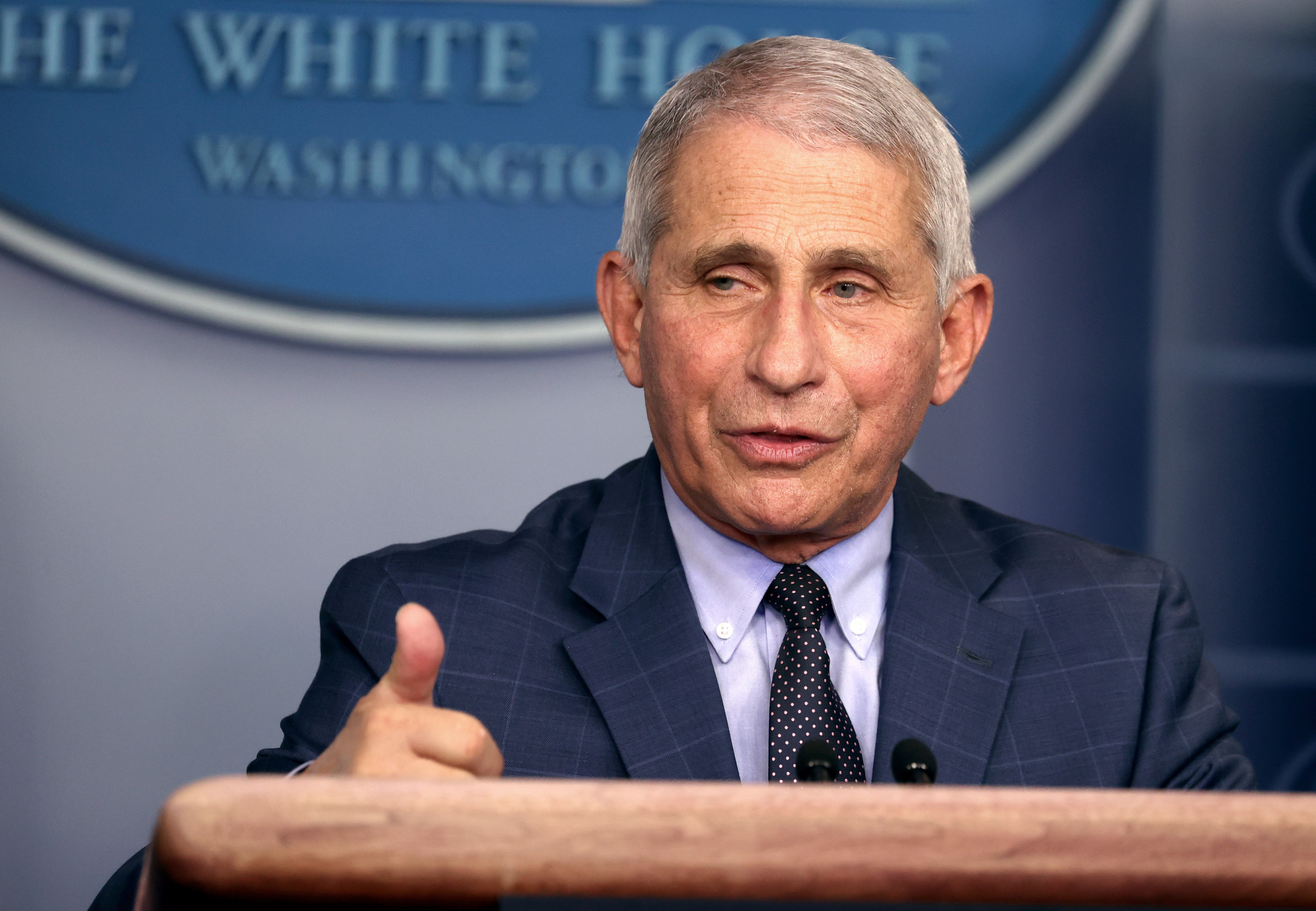
3. Widespread vaccinations among Americans could spell the end of the coronavirus in the country: In an interview with CBS News, Dr. Anthony Fauci — the nation's foremost medical expert on the coronavirus — said that if 75-85 percent of Americans receive the vaccine, the country could be done dealing with COVID-19 by the end of 2021. Fauci said the country has the ability to "crush" the pandemic if Americans are willing to be vaccinated. But he also said that until the vast majority of residents become vaccinated, the measures the country has been following since the spring — including the wearing of masks, social distancing and other safety measures such as hand-washing — will still be needed.
President-elect Joe Biden recently announced that he will ask Americans to wear masks for 100 days, which be believes could go a long way to reduce the virus's spread. Recent spikes in positive cases and hospitalizations have led mayors and governors across the country to tighten restrictions again. Biden's recommendation stops short of a national mask mandate; but he said that at a time when more than 287,000 Americans have died from the coronavirus, his plea for Americans to wear masks will be part of his inaugural address to the country on Jan. 20.
"Just 100 days to mask — not forever, just 100 days." Biden said in an interview with CNN. "And I think we'll see a significant reduction" in the virus.
In the same interview, Biden said he would publicly become inoculated as a sign of confidence in the vaccine as it becomes available.
"People have lost faith in the ability of the vaccine to work," Biden said, adding that "it matters what a president and the vice president do."
4. Once the vaccine is approved by the FDA, health experts and other public officials are confident it will be effective: Vaccinations began taking place in Great Britain on Monday. That came after former Presidents Barack Obama, George W. Bush and Bill Clinton said they would be willing to receive the vaccine once it is ready in the United States. Their declaration comes at a time when only about 50 percent of Americans have stated they would be willing to receive the vaccine once it is ready. “I promise you that when it’s been made for people who are less at risk, I will be taking it,” Obama said in a recent radio interview. “I may end up taking it on TV or having it filmed, just so that people know that I trust this science and what I don’t trust is getting COVID.”
Fauci has said he believes the vaccine will be widely effective in fighting the coronavirus, with reports stating that vaccines could be anywhere between 70 and 95 percent effective. Pfizer officials recently stated their vaccine is effective in treating mild to very severe cases of the coronavirus.
Fauci told CBS News this week that he would be among those willing to take the vaccine publicly. “When the FDA, with their career scientists, say it is safe and effective, I will take it myself when my time comes, and I will recommend it to all people ... because I would feel comfortable taking it,” Fauci said.
5. Even after the vaccine becomes available, there could still be a lengthy wait for the average American: While Trump trumpeted the time frame for coronavirus vaccines to gain FDA approval, health experts have said there is a definite priority list of who will be among the first to become vaccinated. The Centers for Disease Control and Prevention recommended earlier this month that Stage 1 of distribution for the vaccine will be primarily for health care professionals, first responders and residents of long-term health care centers. Since the pandemic began, outbreaks of COVID-19 have been most commonly seen in nursing homes and other similar facilities. Meanwhile, health care professionals who work on the front lines of treating COVID-19 patients have remained at the top of the list of those who will be vaccinated first.
According to the CDC, health care personnel are defined as paid and unpaid people serving in health care settings who have the potential for direct or indirect exposure to patients or infectious materials. Long-term care facility residents, meanwhile, are defined as adults who reside in facilities that provide a variety of services, including medical and personal care, to persons who are unable to live independently.
According to ABC News, the remainder of the rollout could look something like this:
- Stage 2 — People with medical conditions and older adults in dense settings (10 percent of the population)
- Stage 3 — Essential workers, teachers, people in prisons, shelters (30-35 percent of the population)
- Stage 4 — Young adults and children (40-45 percent of the population)
- Stage 5 — All remaining residents (5-15 percent of the population)
Meanwhile, The New York Times has published a database that allows Americans to plug in their age, location and occupation to determine where they fall in line for the vaccine. How accurate that tool is remains unclear, as many who have used it received results that show they are in line behind about 280 million others.
Get more local news delivered straight to your inbox. Sign up for free Patch newsletters and alerts.