Community Corner
Night Could Become Day Under Plans To Put Data Farms In Space
Two proposals that could permanently change nighttime skies have been fast-tracked before the FCC, with little time for public comments.


The simple summertime pleasure of gazing at the moon or looking for shooting stars could become a thing of the past under a pair of proposals fast-tracked before the Federal Communications Commission that would essentially turn nighttime into day.
Since prehistoric times, humans have looked to the stars to guide them in travel, navigation and their own understanding of their place in the universe. The 21st-century advent of artificial intelligence, and the technology’s energy needs, could affect the planet’s natural darkness in dramatic and, some fear, irreversible ways.
Moving water and energy-gobbling AI data centers from the land to space would alleviate some of the pressure on resources and boost the clean energy supply. Reflected sunlight, which one of the applications would accomplish, could aid in everything from food production to search and rescue operations.
Find out what's happening in Across Americafor free with the latest updates from Patch.
Data centers, driven by AI expansion, consume massive amounts of energy, with with U.S. facilities using approximately 4.4 percent of the country’s electricity generation. Globally, they account for 2 percent to 3 percent of electricity usage. This demand is projected to double or triple by 2028, with AI servers driving most of this growth, according
Critics say eliminating the night sky has irreversible consequences for wildlife and ecosystems that depend on natural cycles of light and dark. Astronomers warn of catastrophic astronomical consequences of the amount of clutter the applications would create.
Find out what's happening in Across Americafor free with the latest updates from Patch.
The two applications come as light pollution is rapidly diminishing the night sky, with global visibility of stars decreasing by 7 percent to 10 percent annually between 2011 and 2022, according to the IUCN.
The issue is most severe in major urban areas but it is also significantly degrading skies in suburban and rural areas across the United States, Europe and Asia.
Here are five things to know:
What Are The Proposals?
Start-up Reflect Orbital wants to create “sunlight on demand” with thousands of large, mirrored satellites to redirect sunlight back to Earth after dark to extend daylight for solar farms. Light could also be sold to cities to illuminate streetlights, providing three times more light than a full moon and rival daylight.
A proposal by Elon Musk’s SpaceX would launch a constellation of 1 million orbiting satellites to harness the sun to power AI data farms in space.
Both proposals have been fast-tracked. The public comment periods close Friday, March 6, on the SpaceX application and on Monday, March 9, for Reflect Orbital’s proposal.
What Are Critics Saying?
There are currently about 14,500 active satellites in low Earth orbit. The SpaceX request, if approved, would increase that figure by nearly 70 times, according to DarkSky International, a nonprofit that works globally to reduce light pollution and protect night skies.
“Once deployment begins at that scale, potentially involving thousands of launches each year, the effects on the night sky, orbital congestion, and the broader environment would be extraordinarily difficult to reverse,” DarkSky said on its website. “Proposals of this magnitude warrant rigorous scrutiny, transparency, and meaningful public input before any approval is considered.”
Of the Reflect Orbital project, DarkSky said, “Such illumination would introduce an entirely new source of artificial light at night, with far-reaching consequences, including disruption to wildlife and ecosystems that depend on natural cycles of light and dark, as well as serious public safety concerns.”
DarkSky acknowledged the important role satellite technology plays in modern life, but said it opposes “unchecked expansion without oversight and full environmental review, particularly when technologies pose real and lasting risks to the global nighttime environment.”
DarkSky urged the FCC to close regulatory gaps allowing satellite deployments without an environmental review, and said both proposals should be rejected in their current form until adequate testing and review are completed.
China Is Already There
The government of China launched a test last June of its Three-Body Computing Constellation to assess the capabilities of an in-orbit data processing center.
“They’re kind of quite specific about the fact that it’s not so much they’re putting data centers in space because that’s a better place for data centers to be. It’s because there is a need for data centers and AI to be in space to work on space-based data,” Russell Hills, a spacecraft systems engineer, told IFLScience a few months ago.
Other proposals to move data centers to space include one by Washington-based Starcloud. Former Google CEO Eric Schmidt reportedly acquired Relativity Space specifically to facilitate orbital data centers. Europe is also exploring space-based data centers, though their projections for power and launch costs, which are based on the not-yet-deployed Starship, may be optimistic, IFLScience reported.
Weak international rules let launching countries regulate satellites. Most U.S. satellite launches in the United States are made by the FCC, which bases its decisions on factors such as radio-frequency interference, and the FCC has largely exempted satellites from the National Environmental Policy Act.
The FCC has proposed strengthening the exemptions, including Amazon. Bipartisan Senate legislation would further speed up new satellite approvals.
This Is An Ongoing Fight

DarkSky International isn’t alone in its concerns about the growing number of satellites orbiting Earth. Nearly 15,000 satellites currently orbit Earth, with more than 12,000 active and operational.
A broad coalition of professional astronomy bodies, scientific research initiatives, international policy groups, and grassroots dark-sky advocates has a long history of opposing massive satellite constellations that could damage the natural and scientific value of the night sky.
In addition to the concerns for living things if the natural darkness of the planet is eliminated, astronomers warn that the more objects there are in space, the greater the chance these objects, which travel several kilometers per second, will hit each other or even risk setting off a chain event known as the Kessler Syndrome, IFLScience reported.
The Kessler Syndrome is a theoretical scenario, proposed by NASA scientist Donald Kessler in 1978, where the density of debris in low Earth orbit becomes so high that collisions cause a chain reaction, creating more debris and rendering space unusable. This cascade of debris makes future satellite operations impossible.
‘We’ve Lost Something Fundamental’
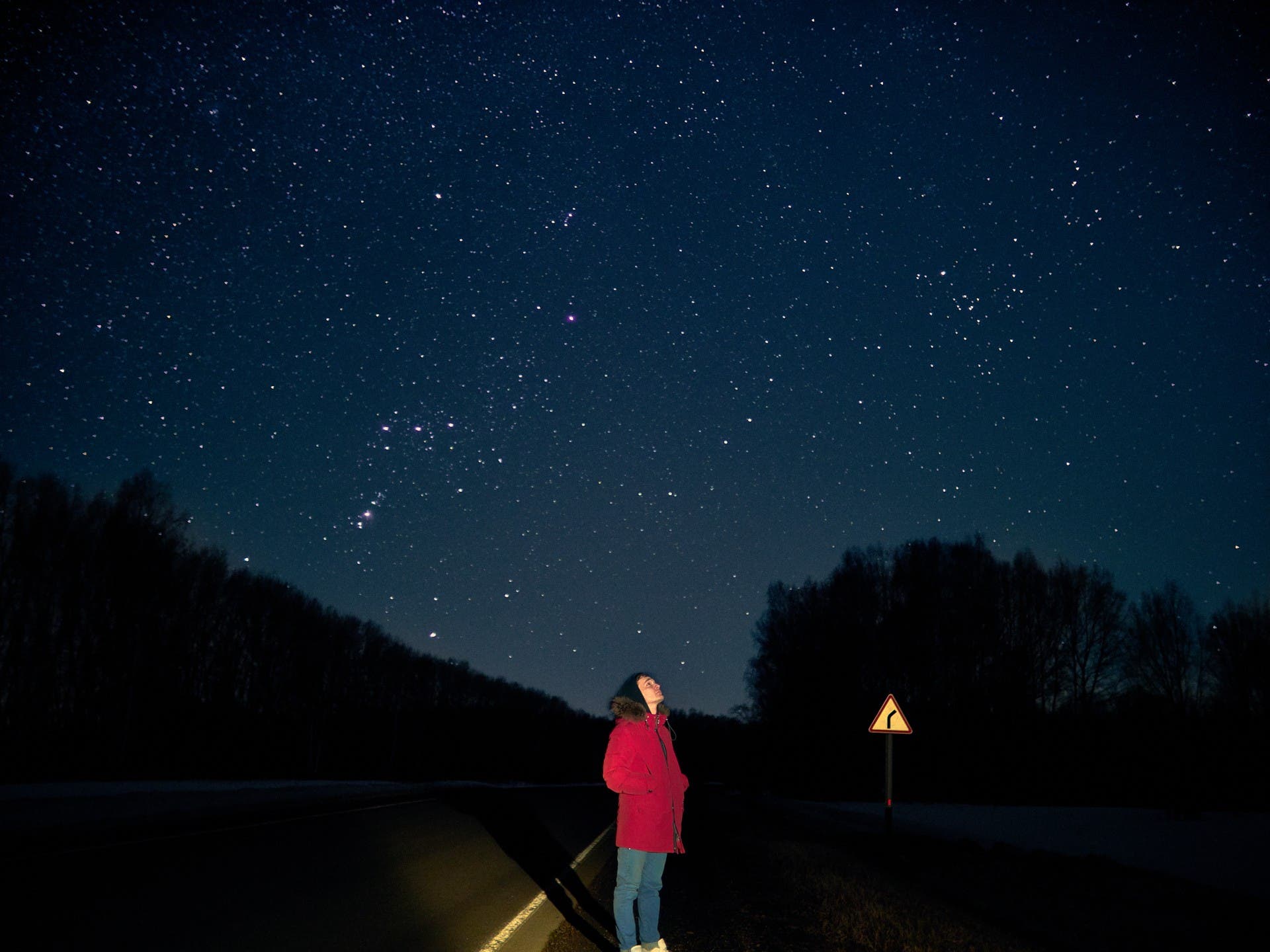
Ruskin Hartley, who heads DarkSky International, told The Washington Post that orbiting data farms could effectively end traditions that have “been part of the human experience for as long as we’ve been humans.”
“I’m kind of bummed out watching all of these satellites in the night sky while stargazing,” someone posted a few days ago, starting a conversation on Reddit.
In response, another person called the proliferation of satellites in space just one more “sign of civilization and loss of magic in the natural world.”
“I agree with that take. Not enough to nuke the satellites; they're far too useful, but it is a bit sad that a thing we once had is now gone,” the user said.
“I live with a low-grade grief/anguish over this and have for as long as I can remember,” someone else said, recalling a time that could be lost forever if the proposals move forward and are implemented
“When you looked up, the night sky wasn’t this washed-out light-infested haze,” the Reddit user said. “It was rendered in hypervision — the stars were so innumerable and bright as to make your eyes hum. The meteors were multi-colored slashes cleaving the night. …
“We’ve lost something fundamental, and most of us don’t even realize it’s gone. We had it, Eden and all, and we’ve squandered it. We lost.”
What do you think about this? Are you concerned about the increasing number of satellites in space? Join the conversation in the comments below.
Also On Patch
Get more local news delivered straight to your inbox. Sign up for free Patch newsletters and alerts.