Community Corner
Nothing Tells An Ex ‘You Stink’ Quite Like This: Weird News & Oddities
A man runs seven marathons on seven continents over seven days; a seabird flies thousands of miles from home, and scientists don't know why.


It’s weird to name a cockroach or some other undesirable species after an ex in a modern-day take on the Victorian Era’s salty “vinegar Valentine” cards that shocked, mocked, and offended.
What may be weirder still is the Maryland Zoo’s take on how to tell an ex he or she stinks: a “Dollars for Dung” fundraiser that lets people name a pile of poop in honor of someone they’d like to tell to, well, eat it.
Now, zoo officials aren’t following the lions, elephants, rhinos and other species around and collecting their daily constitutionals for a gift shop display. (The mind wanders to strange places while imagining what that would look like.)
Find out what's happening in Across Americafor free with the latest updates from Patch.
There are no actual piles of dung to be flung, but if you play, you’ll get a PDF certificate with a blank for the ex’s name, and that can be hurled. The imaginary poop piles are priced at $5, $10, $15 and $20. The zoo said the proceeds will support its animal care and conservation work.

7 Marathons, 7 Continents, 7 Days
This story is odd in the most wonderful sense of the word, and just considering a similar feat can cause sympathetic jet lag.
Find out what's happening in Across Americafor free with the latest updates from Patch.
A New Jersey man just ran seven marathons on seven continents in seven days.
“It wasn’t easy. I’m not gonna say it was easy,” Anthony Simonetti, 32, of Hazlet, told Patch after completing the challenge on Feb. 6. “But I will say, I was one of the very few people who truly enjoyed every moment.”
For a guy who thought of himself as more of a baseball player than a track and field athlete in high school, taking on the epic endurance feat may seem like an odd choice. His motivation was compelling: He ran for sick kids at St. Jude’s Children’s Research Hospital.
“A child at 2 years old could be blindsided with cancer and be on chemo in a hospital. They don’t plan on this. I go through 168 hours of intensity, but I know the end is in sight one way or another. These kids don’t know that. These parents don’t know that,” Simonetti said.
- Exclusively on Patch: Why He Ran Marathons On 7 Continents Over 7 Days

‘Vagrant Bird’ Is Far From Home
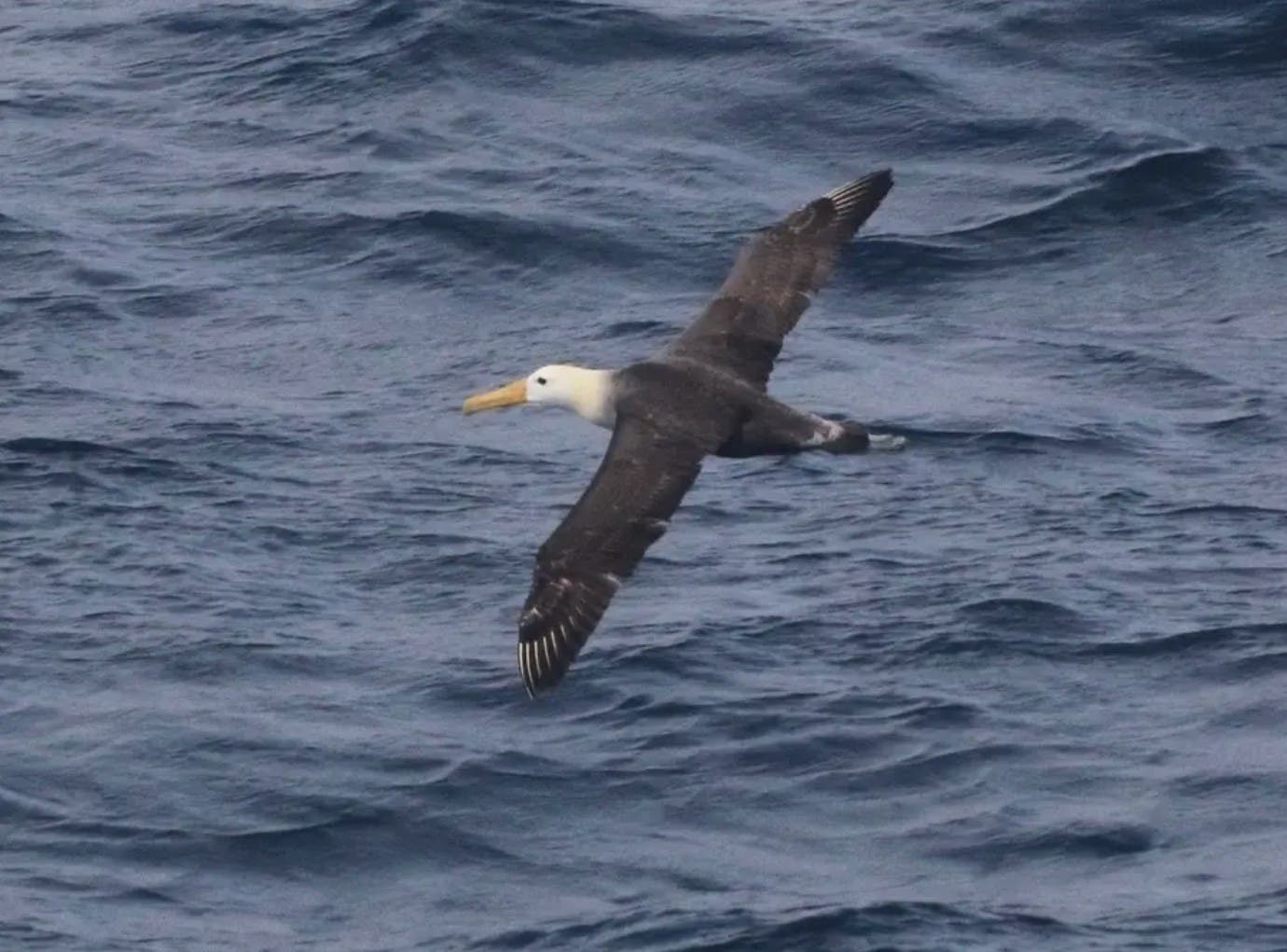
“I can’t even believe what I saw. I’m still in shock,” marine ornithologist Tammy Russell wrote on Facebook after she and other scientists on a research vessel off the central California coast spotted a waved albatross, marking just the second recorded sighting of the bird north of Central America.
The yellow-billed bird with black button eyes, which can have an 8-foot wingspan and spends much of its life airborne over the ocean, also came with a mystery. Researchers wonder how and why a species that breeds in the Galapagos Islands — roughly 3,000 miles away — ventured so far north to Point Piedras Blancas, roughly midway between San Francisco and Los Angeles.
The adult bird “doesn’t seem to be in a hurry to get back south,” said Russell, noting the same bird apparently was spotted in October off the Northern California coast.
“It likely didn’t breed last season because adults lay their eggs in spring, and the chicks leave the nests by January,” Russell said in an email. “Perhaps it went wandering on its year off and will soon return to the Galapagos to be reunited with its mate for the next season?”
Russell added, “Who knows how long it will stay around or if it will ever return? But that’s why these sightings are so special.”
One Very Lucky Dog
Sydney, a 10-year-old Jack Russell Terrier, was outside doing her business one night last month when she was attacked by a pair of coyotes in her family’s back yard in unincorporated Mokena, Illinois.
When she heard what sounded like distress in Sydney’s bark, Jessica Dabski rushed outside and saw the dog’s predicament.
Unfazed by a human in their midst, the coyotes stood their ground. “It was surprising how bold they appeared in that moment, and our focus was on getting Sydney safely back inside,” Dabski told Patch.
When Dabski’s fiancé heard the commotion and came outside, the coyotes bolted.
Sydney had two deep puncture wounds near her neck and required emergency surgery. One of the wounds could have been fatal if Dabski hadn’t responded to Sydney’s urgent bark, the vet said.
Her recovery was unexpectedly complicated, requiring continued veterinary care, additional treatment, and close monitoring. She has recovered now, and Dabski wants others to know the dangers coyotes pose to pets.
It’s important to “remain vigilant and avoid letting pets outside unattended, even in areas that feel quiet or familiar,” Dabski said.
“Since the attack, we’ve also observed coyotes during the daytime, which reinforced how important it is to keep pets within sight at all times,” she said. “Taking a few extra precautions can make a meaningful difference in keeping your pets safe."
Coyotes are typically shy around humans but are more active during their mating season, January through March.
- Exclusively on Patch: Mokena Dog Lucky To Be Alive After Attacked By Pair Of Coyotes, Owner Says

Don’t Eat These Mushrooms
Three people have died, three have required liver transplants and dozens of other Californians have been poisoned after eating “death cap” mushrooms during an unusual “super bloom” of one of the most poisonous mushrooms in the world.
California health officials said 39 poisonings from the mushrooms have been reported since Nov. 18, and many who sought medical attention suffered from rapidly evolving acute liver injury and liver failure. Several patients, ranging from 19 months to 67 years old, have been admitted to an intensive care unit.
In a typical year, there are between two and five death cap poisonings, said Dr. Craig Smollin, medical director for the San Francisco Division of the California Poison Control System.
“The main thing this year is just the magnitude, the number of people ingesting this mushroom,” Smollin said. “Having almost 40 is very unusual.”
Because death caps are easily confused with safe-to-eat, lookalike mushrooms, foraging and eating any wild mushroom should be avoided during the “high-risk season” when they are abundant, the California Department of Public Health advised.

Get more local news delivered straight to your inbox. Sign up for free Patch newsletters and alerts.