Crime & Safety
Texas Church Shooting: FBI’s Battle To Understand Active Shooters
"We study them all," says FBI agent Sandra Flint. "We learn from them all and work to be better prepared to stop future incidents."


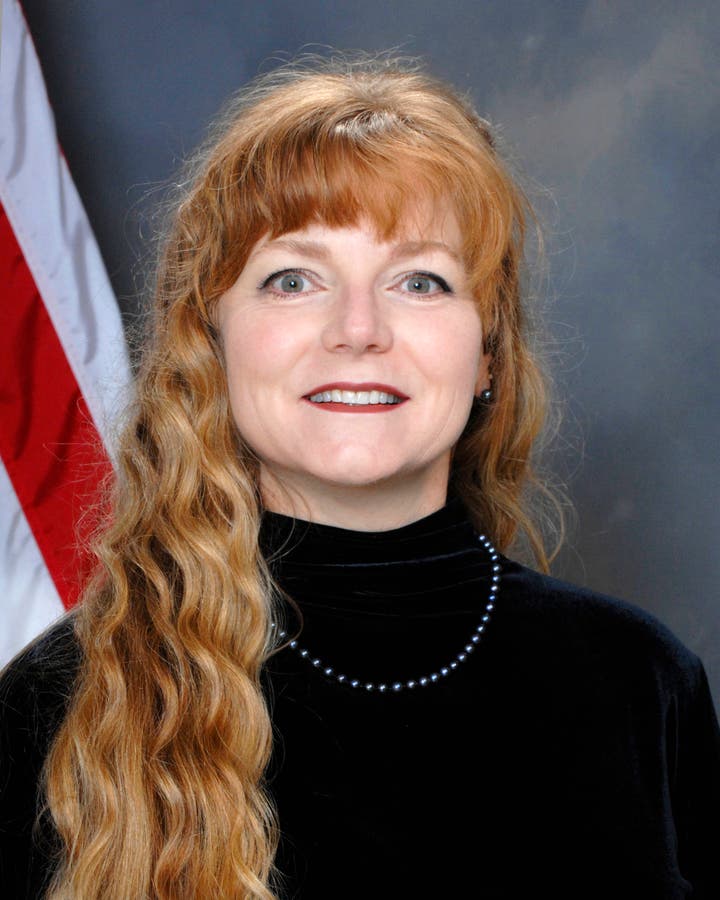
For Sandra Flint and her colleagues in the FBI, the massacre of 26 people at a Sutherland Springs, Texas, church Sunday is more than yet another tragedy. It is an opportunity for them to learn about active shooters, and why they do what they do: More important, it is an opportunity to hopefully pick up on something that will help them prevent another shooting.
“We study them all,” Flint says. “We learn from them all and work to be better prepared to stop future incidents."
There has been, unfortunately, no shortage of learning opportunities. The FBI says that from 2000-2003, there were 22 active shooter incidents involving mass casualties, and that number continues to rise. In each of the last three years, there were 20 mass shootings.
Find out what's happening in Across Americafor free with the latest updates from Patch.
Flint, a 26-year veteran of the FBI who works out of the Portland Field Office where she has served as their primary crisis management coordinator since shortly after the Sept. 11, 2001, terrorist attacks, points to how many incidents have led to changes in how law enforcement approaches mass shootings.
When two teens went on a shooting spree at Columbine High School in Littleton, Colorado, on April 20, 1999, killing 13 and wounding more than 20 others, law enforcement officers "followed what was then standard procedure, they established perimeters,” Flint says. “They then moved in slow and methodically. Afterward, it became clear that was no longer the right approach.
Find out what's happening in Across Americafor free with the latest updates from Patch.
“Active shooters are moving very fast, looking to injure as many people as possible as quickly as possible. There is not time to establish perimeters and move slowly, methodically.”
The FBI’s analysis of mass shootings between 2000 and 2012 found the average incident lasted 12 minutes.
The massacre in Las Vegas last month that left 58 dead and hundreds injured lasted about 10 minutes from the first shot to the last. The shooting in Sutherland Springs lasted about five minutes and left 26 dead and another 20 injured.
“Now the mission is to move in as quickly as possible,” Flint says. “Move rapidly, don’t stop for the victims, they will be helped by the next wave or wave after that.
“The goal is to keep moving and eliminate the threat.”
With each incident, the lessons are applied for what has become an inevitable "next time."
The 2012 Aurora Theater shooting that left 12 dead led to more firefighters and police officers cross-training to be able to help each in situations.
The shooting at 2002 Los Angeles International Airport, where a lone terrorist opened fie at an airline ticketing counter, killing two and injuring four others, many agencies were involved in the investigation, which Flint says led to better communication among all of them.
“It also led to a better understanding of the importance of building partnerships with businesses and organizations,” she says. “An active shooting in area where there are businesses or something like a church not only affects the victims, it has a real-world economic impact on people.
“In the case of the LAX shooting, it affected everyone with a connection to the terminal from the airlines that flew out of there to the businesses located there.”
As a result, she says, the bureau – when doing education and outreach – emphasizes the need to have a plan and to make sure law enforcement agencies are aware of it.
“These are things that happen,” Flint says. "They happen in malls, in airports, in movie theaters, in schools. We’re not trying to scare people, make them paranoid.
“We just want to make sure that people know their surroundings, know what options they have.”
Then there was the massacre at Sandy Hook Elementary School in Newtown, Connecticut, on Dec. 14, 2012, where 20 of the 26 victims were 6- and 7-year-old children.
“It brought home the the importance of people being trained in first aid, not just putting on a Band-Aid and everyday things, but knowing how to help,” she says. “People need to know that it’s okay to help, to be able to stop someone’s bleeding.
“It’s so important that people not only have the tools to help at their disposal but to know that it’s okay to use them.”
Flint says the key is making sure that, most important, “people don’t freeze" in the moment.
“We tell people to run, hide, or fight. But it’s not necessarily in that order," she says. "They need to know the situation and understand sometimes, there’s nowhere to run, so they should look to hide. Sometimes there’s nowhere to hide so they have to fight. The important thing is that people need to do what they can to save their life.”
Flint says that’s why education and outreach is so important to the bureau.
“We want people to know what they can do,” she says. “We want them to know what to look for, to try and prevent these things from happening. Threat assessment is so important.”
Each situation is different and each shooter is different, Flint says, but the FBI looks for common denominators such as similarities in backgrounds, situations and motives. Investigators look at how the shooters acquired their weapons, reckless behavior and violence toward family members to help draw a general composite of an active shooter.
There are no hard and fast rules, though.
The one thing that Flint says is a certainty is that she and others at the FBI want to stop the carnage. She speaks not only as an FBI agent, but as someone with a personal connection to the tragedy of mass shootings.
First, there was Sandy Hook. Her brother and sister-in-law and their two kids live in Newtown, The kids were teens at the time and at different schools, but "it gave me a very strong sense of what family and friends go through when there is a situation like that,” she says.
“It’s one thing to approach it as a FBI agent, it’s another to be able to know what loved ones are going through.”
Then there was the shooting at Umpqua Community College in Roseburg, Oregon, where nine were killed and eight others injured.
“I’ve become close with one of the victims,” says Flint. “And what strikes me is just how well she is doing.
“Human nature is amazing.”
Also See: Pence Blames Texas Shooting On Gunman, Air Force
Photo of Sandra Flint courtesy the FBI
Get more local news delivered straight to your inbox. Sign up for free Patch newsletters and alerts.

![Taking Your Dog Everywhere Can Cross A Line Even Animal Lovers Draw [The Question]](https://patch.com/img/cdn20/shutterstock/790386/20261023/092028/styles/patch_image/public/shutterstock-2847904315___23090759374.jpg)