Community Corner
The Art Of Saying ‘No’ When Neighbors Want To Use Your Swimming Pool: Block Talk
A backyard pool can turn into a neighborhood free-for-all fast when one friendly invitation becomes an assumed free pass.


A backyard pool can make you the most popular person in the neighborhood on hot summer days.
But one neighborly “yes” can quickly become an open invitation — with kids, friends and parents; a trail of borrowed towels; and a steady drip-drip-drip of requests to swim. For Block Talk, Patch’s exclusive neighborhood etiquette column, we asked readers how to kindly but firmly tell neighborhood kids, or anyone else, that the pool is closed.
The issue that disrupted neighborhood harmony was a swimming pool, but many respondents to our informal survey said their advice applies to any other time a neighbor takes advantage of another’s goodwill and hospitality.
Find out what's happening in Across Americafor free with the latest updates from Patch.
‘They Stole Our Summer’
“You can tell a lot about a person by how much friendlier they become when you have a pool,” said Gary, an Evanston (Illinois) Patch reader.
Gary and his wife, Cheryl, know all about unwanted pool guests. It started simply enough, with what Gary thought was a one-and-done get-together around their in-ground pool.
Find out what's happening in Across Americafor free with the latest updates from Patch.
It wasn’t the kids with no sense of boundaries. It was their parents. And complicating what became near-weekly drop-ins by these neighbors, their professional lives were closely intertwined.
“They showed up nearly every weekend, without an invitation, just assuming we'd all hang out and have a party on the patio,” Gary said. “They were work friends, not best friends. We did have some fun summer days, but they completely misread it. They were always around.”
And they weren’t about to let their reluctant hosts’ plans cut into their pool time.
“If we said, ‘Well, we have things going on,’ they’d just say they’d clean up after themselves, or if we had chores around our property, they’d say, ‘We’ll be quiet. You won’t even know we’re here,’” Gary continued.
“They weren’t obnoxious guests. They just wouldn’t stay away. They stole our summer,” he said.
They moved over the winter, and now Gary and Cheryl aren’t sure how far to go in making their new neighbors feel welcome.
“We’d like to invite them and a few close neighbors for a cookout, and it would be awkward if we gathered near the pool but didn’t invite them to swim. But we’re not letting this happen again,” Gary said.
Be Kind, Yet Direct
The best way to do that, whether the pool crashers are children or adults, is to say “no” often and emphatically, most readers said.
“Taking advantage of your neighbor for swimming privileges is tacky,” said Becca, a Leesburg, Virginia, Patch reader. “I’d tell them it’s been fun having them over, but these things need to be planned. Being kind, yet direct, is always the way to go.”
“You need to tell them the truth,” said Patch reader Jewell, who advised saying something like this to kids who assume the pool and amenities are open:
“I feel like you took advantage of my kindness, and for that reason, I will not let you swim in the pool. When you tell your parents, please tell them that they can call me so I can explain the same thing to them. Take care and enjoy the rest of your summer.”
“Tell them that, unfortunately, you have things to do and since you are unable to watch everyone, you cannot allow them to use the pool,” said JE in Pennsylvania, who reads
Montgomeryville-Lansdale Patch, Doylestown Patch, and Hatboro-Horsham Patch. “At the same time, let them know it’s a safety issue.”
Also, JE said, “Before you say yes, tell the kid you need to speak to their parents — every time. Also, kids need to respect when they are told no, even if they were allowed to swim before. Finally, one must ask before they bring any friends with them.”’
‘Kids Don’t Like Hearing No’
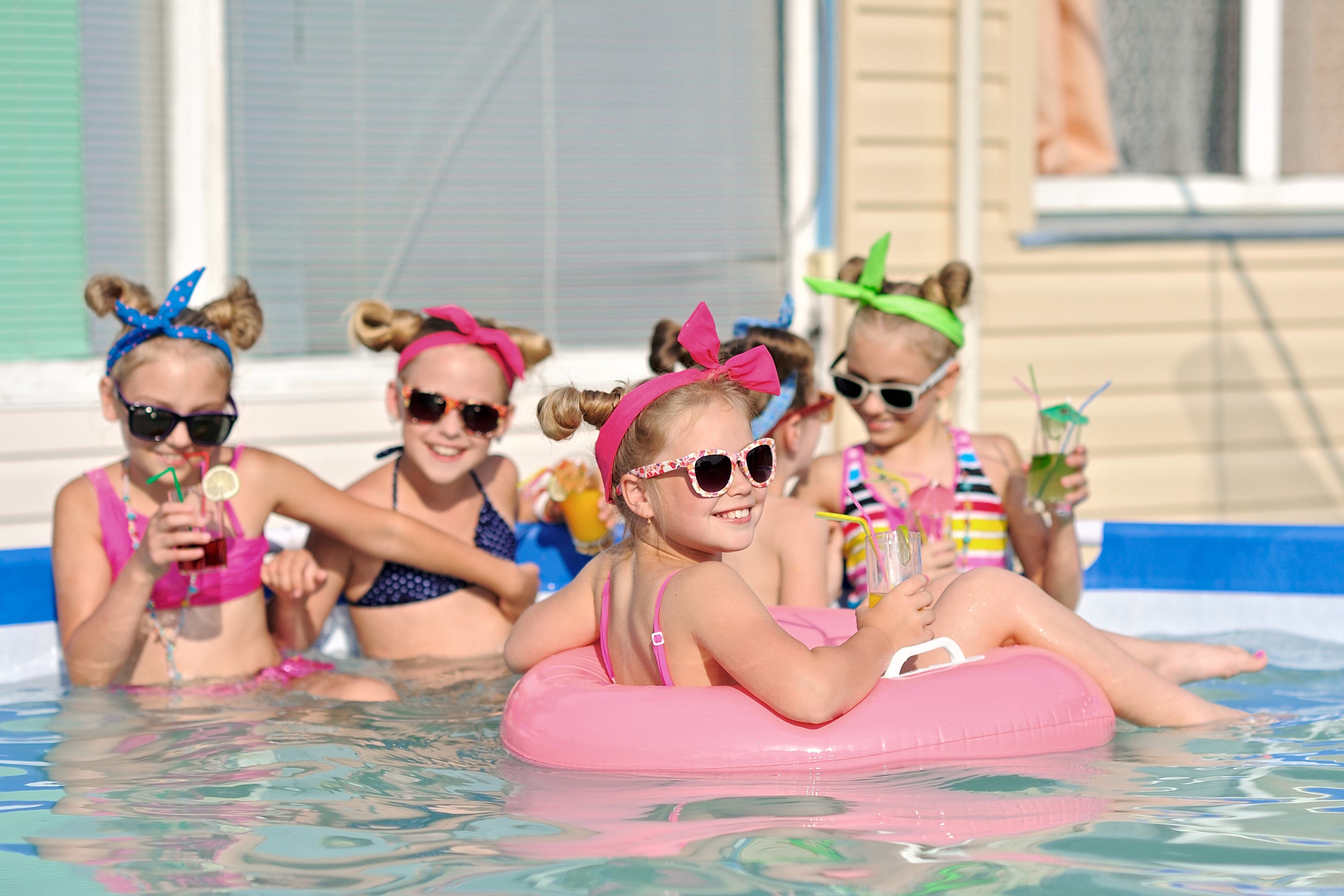
“‘No’ is all you should have to say,” a Doylestown (Pennsylvania) Patch reader said.
Another Pennsylvania Patch reader, Mel, went further.
“How about ‘my pool is off limits’ or ‘you can’t use my pool’? You don’t owe them explanations or apologies,” Mel said.
“Just keep saying ‘not today’ over and over; they will finally get the message,” said Homewood (Illinois) Patch reader Kim, who added, “I wouldn’t have said yes in the first place because you are liable if something happened to them.”
“Politely tell them no,” said Toms River (New Jersey) Patch reader Donna. “If they can’t take no for an answer, shut your door. Kids don’t like hearing the word ‘no’ for an answer, but you just made your pool a community pool the second time you let the child plus his friends use it.”
Donna has a pool and said it’s “a huge responsibility plus a huge liability if something were to happen.”
“What if one of them drowns?” a Wilmington (Massachusetts) Patch reader said. “Setting boundaries in life is important to do.”
With summer pool season just getting started, “set boundaries now,” said Wayne (New Jersey) Patch reader Deb.
“They are welcome only when you invite them. Uninvited? No. Set time limits and your rules in advance and not after a problem arises,” Deb said. “If your pool becomes the neighborhood watering hole, they may come over when you’re not home. That’s a big liability for you.”
Liability Issues Are Real
Liability is where neighborly generosity runs into a hard stop.
Pool owners can face responsibility for injuries or drownings, even when children show up uninvited. Pools are often considered attractive nuisances, and homeowners are expected to take reasonable precautions to keep people out, such as fences, locks and covers, and provide supervision when guests are invited.
“It’s simple. Explain that you are not insured for anyone other than you and your family to use the pool,” said Collingswood (New Jersey) Patch reader Morgan.
“That way, it doesn’t appear that you just don’t want them, even if that is the case, and to be quite honest, it could end up a financial nightmare if someone got hurt in your pool,” Morgan said.
“Speak to the parents directly, in person. Explain to them that if something ever happened to their child on your property, you would be held liable and that you are not willing to take that risk (sorry, not sorry),” said Laura, an East Brunswick (New Jersey) Patch reader.
“Just say you’re sorry, but you can’t have the responsibility for the kids and you’d rather not,” said Manalapan (New Jersey) Patch reader E, who added, “Their parents should know better than to ask.”
‘Temptation To Be Sneaky’
Woodstock-Towne Lake (Georgia) Patch reader Denna suggested sending pool crashers home with a short, polite, preprinted note explaining why the pool is not available. The note, ideally reviewed by an attorney, should be easy to read and limited to a few bullet points spelling out the homeowner’s expenses, legal responsibilities, liability concerns, supervision requirements and the lack of lifeguarding. It could also point families to nearby parks, playgrounds and public aquatic centers.
“One’s home is not typically a public or privately owned play park,” Denna said.
“I would tell them that I did a nice favor those other times, but this is not a public pool, so they will need to find another place to swim from now on,” said Crofton (Maryland) Patch reader CB, who added a few words of caution:
“If you don’t already have a lock on your gate and cameras in your back yard, you will need to get them because the temptation to be sneaky will probably be very strong,” CB said. “If they trespass, you should warn them that they have to leave immediately or you will call the police because they have not been invited.”
Guest Code Of Conduct
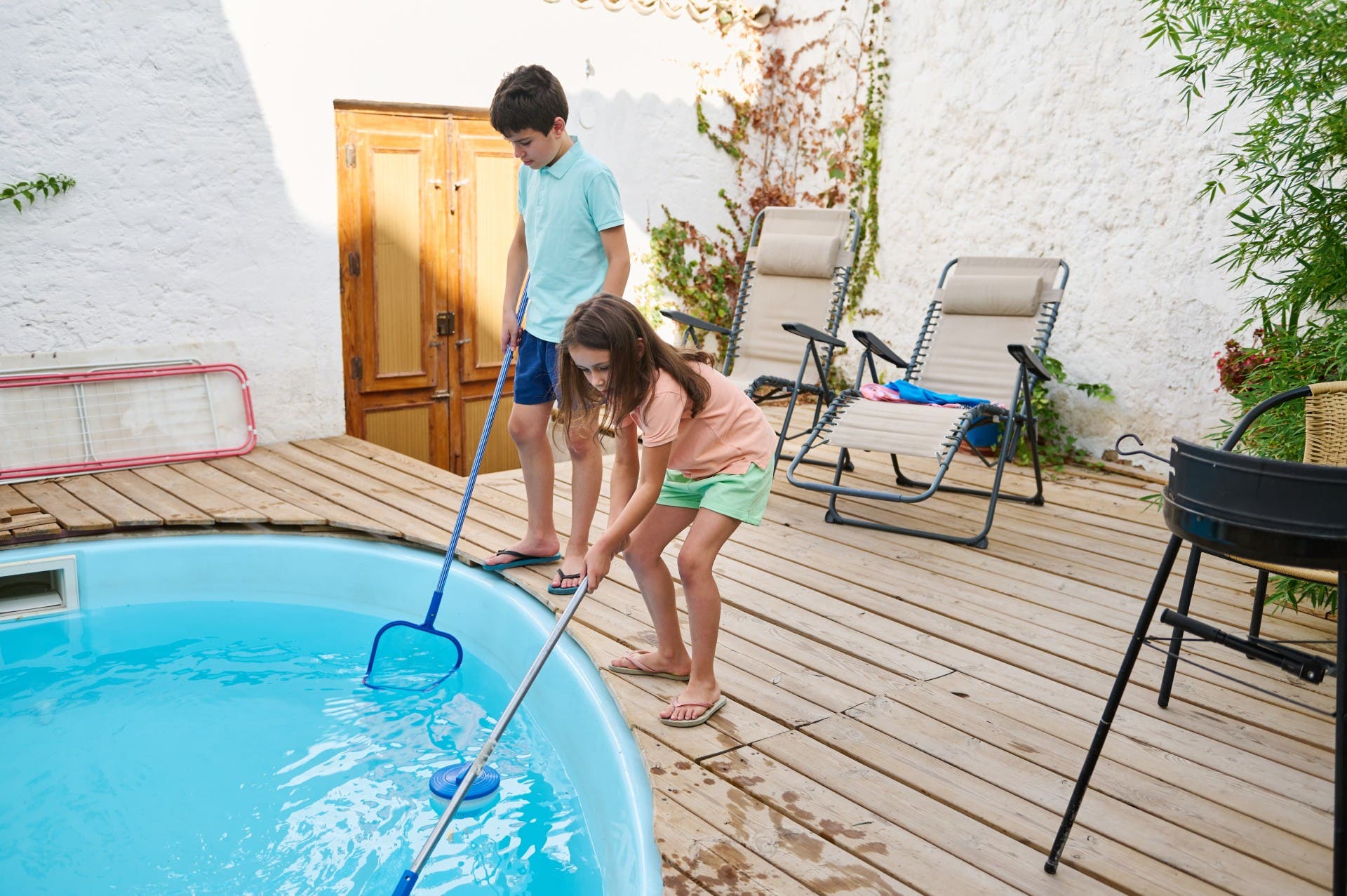
Kids who are extended the hospitality of a neighbor’s pool should assume some of the responsibility for their own fun, Greenwich (Connecticut) Patch reader Ashley said.
“Always bring your own towels, goggles, and bathing suit. Always ask about what pool toys or floats they allow before just jumping in with your own toys from home,” she said. “Some pool owners are very particular, and it’s polite to ask and not offend or panic the owner.”
Geneva (Illinois) Patch reader Lars said guests should always offer to shower before diving into someone else’s pool, just as they would at a public pool.
“Even if they decline, they should keep their head out of the water if their hair is loaded with hair care product,” Lars said. “When leaving the pool area, make sure it is in better shape than when you entered it.”
‘Pee Behind The Pool’
Joliet (Illinois) Patch reader Velma lets her neighbors’ kids swim as long as their parents come along if they can’t swim or are using floaties. Once invited, kids and their parents shouldn’t assume the courtesy was a pool pass for the season. If Velma wants guests in her pool, she’ll text their parents. Every time.
She also wants them to bring their own bottled water.
“I’m not giving out water bottles to have one sip from a bottle, or kids refusing to drink it after it’s not cold anymore,” Velma said. “I also have a spot for boys to pee behind the pool. Girls, go home (they live next door). I stay by the poolside and don’t want kids wandering inside around my house.”
Sarasota (Florida) Patch reader Linda is right there with Velma.
“No, you cannot come in and use my bathroom,” she said. “No, snacks are not allowed in or near the pool. No, glass containers cannot be used in or near the pool.”
But she shuts the “open invitation” idea down in a hurry.
She might say, “I’m sorry, but my insurance company said my rates go up if swimmers are not family members. Non-family swimmers make it a public pool, and I can’t afford that.” Or, “I feel like I have to watch (babysit) swimmers for their safety, and I don't have the time.”
Duluth (Georgia) Patch reader Tracy had a backyard pool for about 35 years.
“My kids knew there was no swimming unless there was an adult home,” Tracy said. “Then, the kids I did allow signed a liability waiver by their parents.”
“That’s why we didn’t get an above-ground pool,” said Hilda, an Oak Park-River Forest (Illinois) Patch reader. “Unless there are other pools around, it’s a problem.”
‘Become Oddly Unavailable’
Some readers suggested more subtle or even specious measures if the message the pool’s closed doesn’t sink in.
“Put up a ‘no trespassing’ sign,” said Miss B, a Madison (Connecticut) Patch reader.
“I would become oddly unavailable,” said Ashley, the Greenwich Patch reader. “Say you don’t plan on being home much longer, so it’s not a good day. Mention you have errands to run or that you have an appointment without saying any specific times.”
“Tell the intruders that several users of the pool have developed fungus on their toes and you cannot allow them to be infected,” said Nanny, a Waterford (Connecticut) Patch reader.
About Block Talk
Block Talk is a regular Patch feature offering real-world advice from readers on how to resolve everyday neighborhood problems. If you have a neighborhood etiquette question or problem you'd like for us to consider, email beth.dalbey@patch.com with Block Talk as the subject line.
Catch Up On Block Talk
Get more local news delivered straight to your inbox. Sign up for free Patch newsletters and alerts.


![Is Trick-Or-Treating Becoming A Zombie? [Block Talk]](https://patch.com/img/cdn20/shutterstock/790386/20261009/104846/styles/patch_image/public/shutterstock-70173520___09104608634.jpg)