Politics & Government
Trump Wants Offshore Drilling Expanded
He will direct the Interior secretary to review restrictions and stop the Commerce secretary from approving marine monuments and sanctuaries


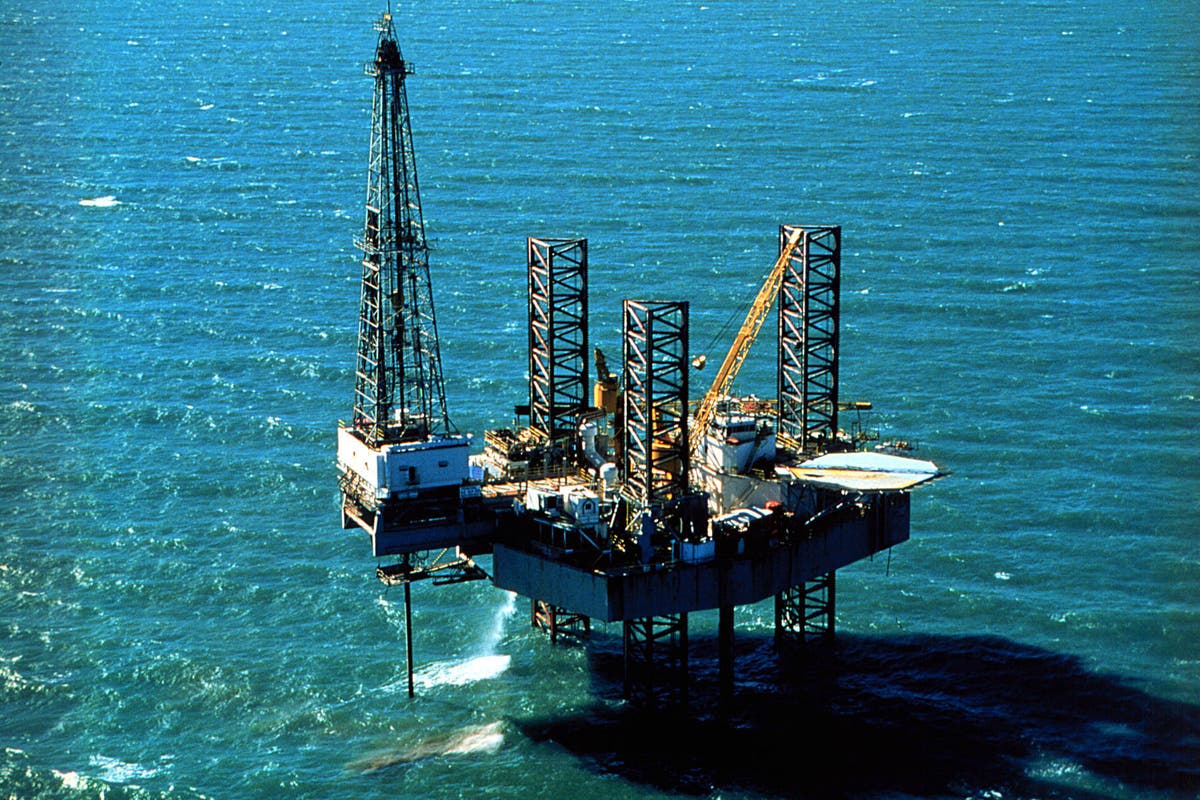
Fewer marine sanctuaries. More drilling offshore for oil and natural gas. More royalties pouring into the federal treasury. Those are three of the results that may come from an executive order President Trump will sign Friday, according to Interior Secretary Ryan Zinke.
The order, called the "America-First Offshore Energy Strategy," directs Zinke to review the five-year plan put in place by President Obama that bans drilling in parts of the Pacific, Atlantic and Arctic oceans.
It also instructs Commerce Secretary Wilbur Ross to refrain from designating or expanding marine monuments and sanctuaries and to review all those that have been named over the past 10 years.
Find out what's happening in White Housefor free with the latest updates from Patch.
The goal is to expand offshore drilling for natural gas and oil.
"This will cement our nation's position as a global leader and foster energy security for the benefit of the American people," Zinke said.
Find out what's happening in White Housefor free with the latest updates from Patch.
"Ninety-four percent of the outer-continental shelf is off limits for possible development of any type," he said.
That has resulted in a drop of $15 billion in revenue from offshore leasing since 2008. Zinke conceded that some of that is due to a drop in the price of oil, "but not all of it," he said.
Zinke has said he believes there should be an increase in offshore drilling in federally controlled waters to bring more royalties into federal coffers. While the money would be designated for the Treasury, he has said he would like to see the money used for national parks maintenance.
The order is expected to generate a lot of opposition, especially along the Atlantic coast.
Before leaving office, Obama created one of the world's largest marine sanctuaries off the coast of Massachusetts, protecting marine life and preventing drilling and related activities. The more than 130-mile area is the Atlantic's only marine monument.
More than 100 communities up and down the East Coast have passed resolutions against offshore drilling.
There is also the issue of whether Trump has the legal authority to overturn a ban on drilling. When Obama issued the ban, officials made it clear that he did so under a law that had no provision to overturn the ban.
Zinke was not bothered by that, telling reporters that whatever the president decides, "I'm sure we'll have the legal authority to complete it."
At the same time, he tried to assure people that the administration would not change "stringent environmental safeguards already in place."
Zinke, who cited his training as a geologist, also told reporters that the administration is aware of the country's reputation as an environmental leader.
"I've spent a lot of time in the Middle East, and it is better to produce energy here under reasonable regulations than have it be produced overseas with no regulations," he said. "Environmentally, I can tell you we have the highest standards in the world."
Even if the administration does decide to remove the ban on drilling — and it survives the expected court challenges — it's not clear how quickly companies will rush in. With the price of oil cheap and the cost of drilling and exploration high, particularly in the Arctic, some companies may wait.
Zinke was asked if the administration has been approached by any companies about drilling in the Arctic.
"No," he said.
The president will sign the executive order the day before thousands are expected in Washington, D.C., for the People's Climate March to protest administration policies.
File photo: Handout via Hulton Archive/Getty Images
Get more local news delivered straight to your inbox. Sign up for free Patch newsletters and alerts.