Sports
High School Coaches Welcome New Practice Rule
High School athletes and coaches will have 31 days per year to work together out of season.
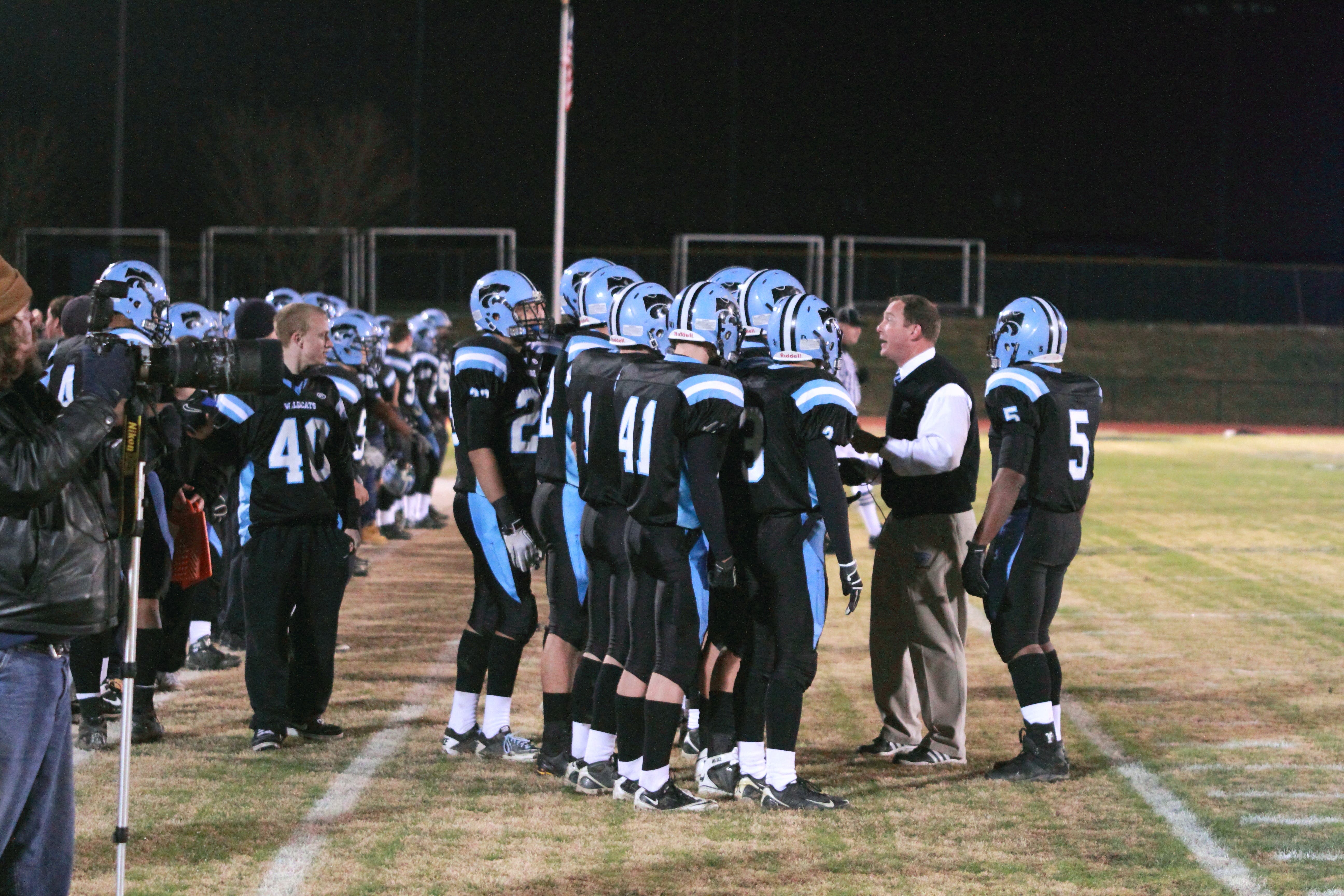

The Northern Region recently approved a more-restrictive addendum to a fairly liberal rule enacted by the Virginia High School League regarding out-of-season contact between coaches and players.
” Aside from those periods, which are typically the first 10 days following a just-completed season, Virginia high school athletes will have access to their coaches for small group or individual instructional workouts.
The VHSL’s document continued with the proposition that “schools, districts and/ or regions may impose more restrictive guidelines.”
Find out what's happening in Centrevillefor free with the latest updates from Patch.
The Northern Region’s three-page, color-coded document says, basically, that during the school year, out-of-season athletes may receive 24 days of access to coaches for special instruction that’s to be focused on skills and fundamentals. Baseball coaches can teach pitchers how to throw curveballs and basketball coaches can work with athletes on free throws, for example, but cannot go over the playbook. In the summer, all sports will be allowed seven extra access days.
Also, the Northern Region’s document says none of these extra practice sessions are mandatory and cannot serve as tryouts or be a condition of making a team.
Find out what's happening in Centrevillefor free with the latest updates from Patch.
Chuck Welch, ’s baseball coach, who is also involved in the school’s athletic administration, said the first-year rule will probably need to be refined in the future, but it should help to “even things out” between schools in different parts of the state that were working under different guidelines, especially those concerning summer teams.
The document goes into great detail explaining when, and with what frequency, local high school coaches can work with their players outside of their primary competition season. There are four colors: blue signifies “in-season;” red signifies a “dead period;” green means non-team-related instruction is allowed; and yellow days are reserved for conditioning only.
For example, from Aug. 1-10, winter and spring sports will be in a “dead period,” while fall sports are in a yellow period which allows for conditioning until Aug. 8, signaling the first day of fall practice.
Beginning on Aug. 11 and stretching until Oct. 30, winter and spring sports will be in a yellow and green period, which means conditioning plus 12 days of instruction are allowed. During that period, fall sports will be “in season.”
Mike Pflugrath, South County’s director of student activities, said the rules were put in place so athletes could seek extra help from coaches in the same way students seek enrichment from teachers. He also noted that multi-sport athletes shouldn't feel pressure to attend these practice sessions when they are "in-season" for another sport.
's director of student activities Jimmy Sanabria said the new rule will pay off if “our kids who were good have gotten better, and those kids who were average have gotten good.”
Sanabria's colleague, football coach Chris Haddock, also said he thinks the rule should reduce the need for schools need to fundraise so much in order to send athletes to so-called "team camps" over the summer.
Fred Priester, who helms Oakton’s annually strong girls’ basketball team, said the chance for athletes to pursue individual coaching within the school might impact his own freelance business – coaching shooting.
“One reason people pay me to come in and teach shooting is because their coaches (couldn't) do it,” he said.
Priester’s not the only coach whose finances might be affected.
Alex Harris, who runs Evolution Basketball Training, a private gym based in Merrifield, says he’s glad athletes will have increased access to their coaches, but he doesn’t foresee it hurting his business, since 31 days out of the year isn’t much time.
Harris said he always thought the public schools in this area were hurting their players by restricting their access to coaches. Private schools, like his alma mater Gonzaga, saw it differently.
“I worked with my coaches year round, that’s why I became as successful as I was,” Harris said.
In the state’s other regions and districts, athletic and school administrators have worked on delineating similar in-season and offseason rules. In the neighboring Northwest Region, for example, Freedom High School will follow a policy that allows 40 days of practice throughout the year enacted by Loudoun County’s nine Class AA Division 2 schools, while Stone Bridge will follow its Liberty District colleagues and adhere to the Northern Region’s policy.