Arts & Entertainment
Cappies Review Of 'Pippin' Performance At W.T. Woodson HS
A student review of the recent "Pippin" performed at W.T. Woodson High School in Fairfax.

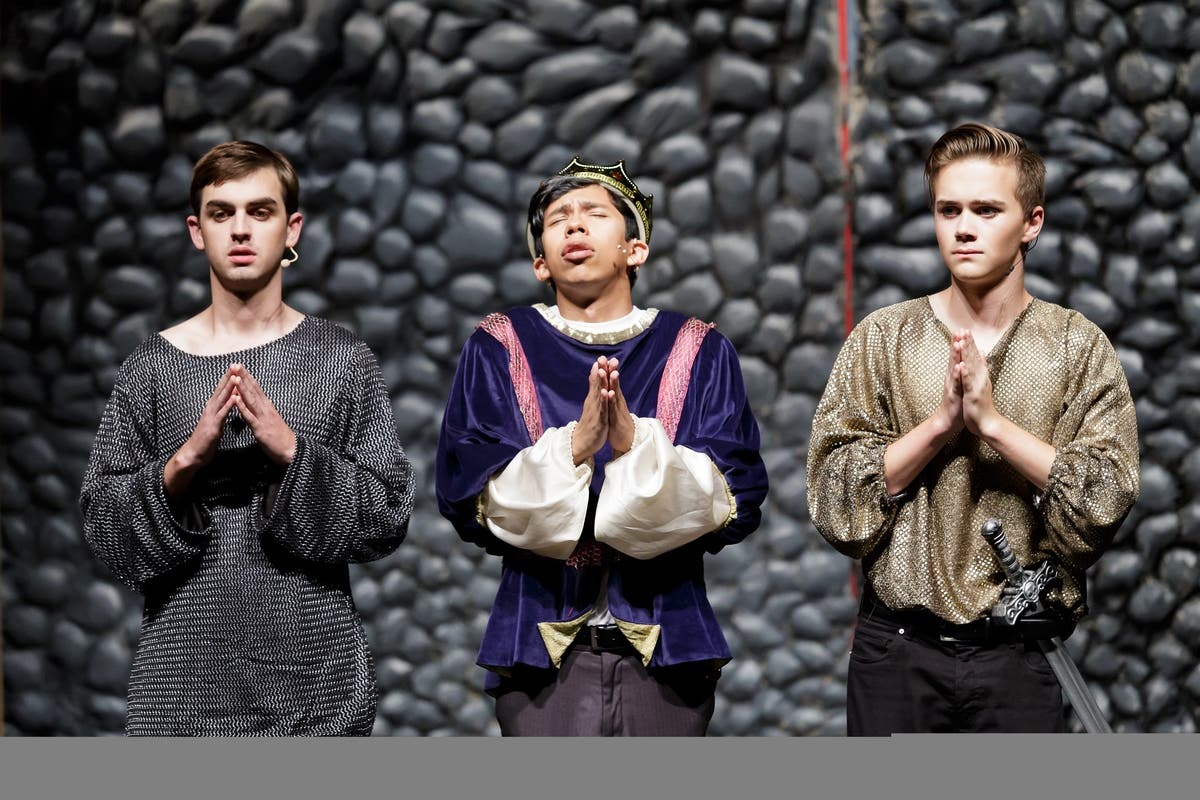
FAIRFAX CITY, VA - From The Cappies: What's going to happen in the end? In the world of Pippin, there's only one thing to be sure of: there's nothing to be sure of. Delightfully strange and uncommonly engaging, Pippin is a story of one young man wanting nothing more than an extraordinary life. With music and lyrics by the incomparable Stephen Schwartz and a book by Roger Hirson, the show was originally directed by Bob Fosse on Broadway, where it ran from 1972 to 1977. In 2013, Pippin had its long-awaited Broadway revival. Today, Pippin is being shown at W.T. Woodson High School in Fairfax, Virginia, with a cast and crew dedicated to telling a beautiful story and, of course, living extraordinary lives.
This extraordinariness was displayed in the technical pieces of W.T. Woodson's show through the use of lighting and stage properties. By placing Pippin in the Golden Age of Hollywood, the story was altered slightly, and W.T. Woodson succeeded marvelously in altering their designs along with it. Executed by Nathan Cain, Kelly Ward, Jacob O'Brien, and Sarah Hasson, the production's lighting included a cyclorama with glowing colors used to enhance setting and character. Tricks such as silhouetting of dancers in order to highlight Pippin's presence onstage and association of certain colors with specific characters showed off the students' skill for their craft, as well as an understanding and appreciation of the text. W.T. Woodson's stage properties, designed by Anush Abddurazakova, Haley Cole, and Annie Vonasek, were equally impressive. In order to keep with the theme of the Golden Age of Hollywood, handmade cameras flanked the proscenium, adding another element to the multilayered world of Pippin. Standout stage properties also included the weapons, such as spears and clubs, used by the soldiers in their multiple scenes; having these props unified the ensemble and was incredibly important to the plot. Overall, the technical aspects of W.T. Woodson's Pippin were uniquely executed, and they aided the show as a whole by aiding the actors onstage.
In the same way the technical pieces of a show are necessary to support the performers, actors must treat each performance like it is the most important show of their lives in order to allow the tech to succeed. The lead actors in W.T. Woodson's production superseded these expectations - namely, Jack Hopewell as Pippin and Karlee Skaggs as Catherine. Despite malfunctions with his microphone in the first act, Hopewell was unfazed onstage and truly lived within the reality of the show, providing the audience with genuine reactions, energetic physicality, and impressive vocal control. Karlee Skaggs' character, Catherine, was only present in Act Two, but from the moment she entered to the moment the cast finished bowing, she filled the space with energy, authenticity, and incomprehensible dedication. Though her character was only present for a short period of time, Skaggs provided an impressive arc through the back-to-back scenes and songs she performed. She swiftly and charmingly won the hearts of not only Pippin, but the entire audience as well.
Find out what's happening in Fairfax Cityfor free with the latest updates from Patch.
Pippin is, to say the least, a strange show, full of unexpected twists and turns that can easily overpower technical design and performers alike. W.T. Woodson took this bull by the horns and, through aspects such as lighting, stage properties, and exemplary lead performers, smiled in the face of slight adversities to put on a strange yet entertaining show. Even after the cast had bowed and the audience stood to leave, each spectator was undoubtedly still wondering one thing: what's going to happen in the end?
Photo courtesy of Pam Hardin