Politics & Government
Fairfax City Council Passes Updated Noise Ordinance
Fairfax City Council unanimously approved updates to its noise ordinance, including new rules for amplified sound and penalties.


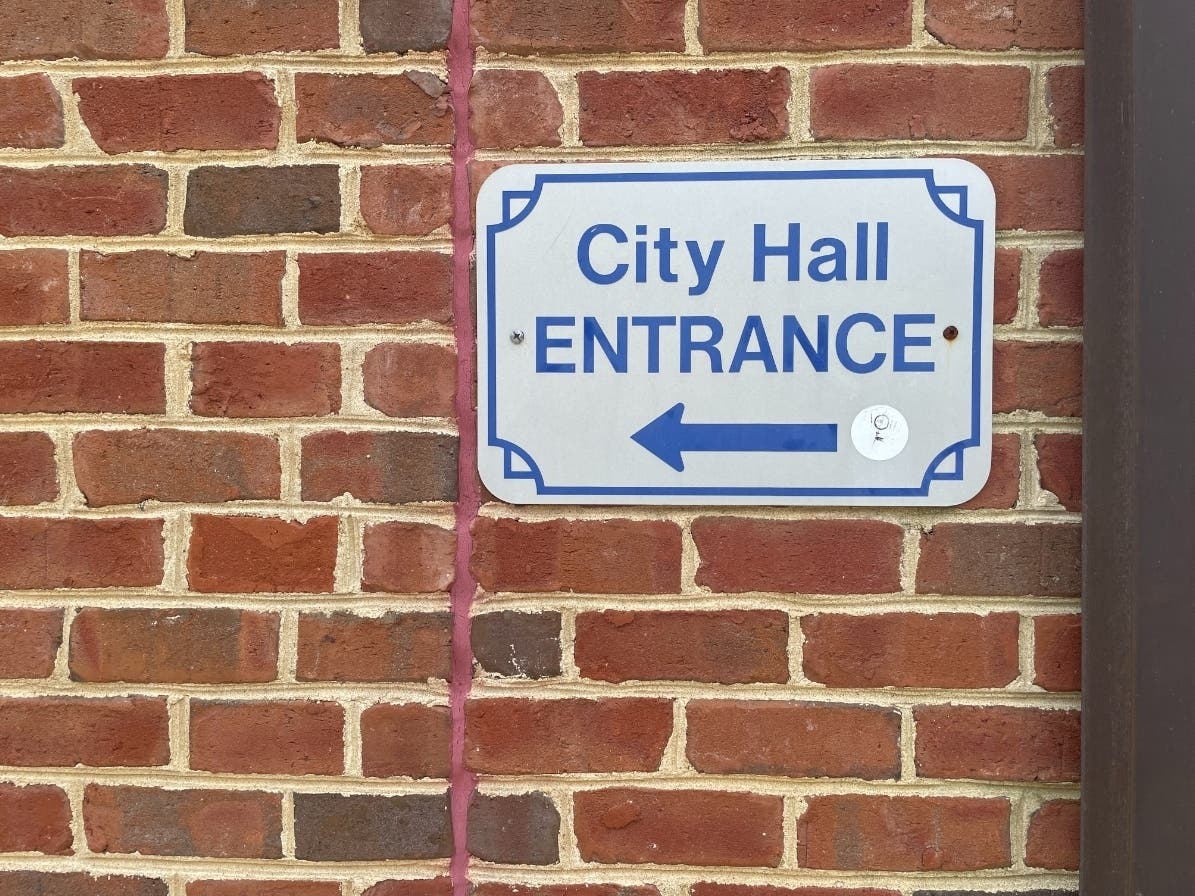
FAIRFAX CITY, VA — The Fairfax City Council unanimously approved an updated noise ordinance Tuesday night, revising how the city regulates loud, disturbing and unnecessary noise.
The ordinance amends Chapter 38 of the City Code and is intended to modernize the city’s noise rules, clarify enforcement and address recurring concerns such as amplified music, barking dogs, vehicle loading and unloading, construction noise and trash collection.
The vote followed a public hearing that was first opened March 24 and continued to May 12 before returning to council Tuesday. Council members Rachel McQuillen, Billy Bates, Tom Peterson, Stacy Hall, Anthony Amos and Stacey Hardy-Chandler voted in favor of the ordinance.
Find out what's happening in Fairfax Cityfor free with the latest updates from Patch.
City Attorney Brian Lubkeman told council the proposal was not prompted by a widespread noise problem in Fairfax City, but by the need to update older rules and make them clearer.
“We certainly don’t have a problem in the city of Fairfax that’s anything out of the ordinary compared to what other jurisdictions deal with,” Lubkeman said. “I would argue we may actually have a better situation.”
Find out what's happening in Fairfax Cityfor free with the latest updates from Patch.
The city’s current noise rules were last amended in January 2010, according to the staff report. The new ordinance updates definitions, consolidates noise provisions into Chapter 38 and places administration of the rules under the city manager, while recognizing that enforcement will continue across city departments, including police, zoning and code administration.
One of the biggest changes involves amplified sound, including music, speakers and similar equipment. Under the ordinance, amplified noise will be prohibited between 9 p.m. and 8 a.m. if it is plainly audible and discernible inside another person’s residence with doors and windows closed, or if it can be heard 50 feet or more from the source.
Lubkeman said amplified sound had been one of the city’s main areas of concern. An earlier version of the ordinance would have applied a broader all-day restriction, but staff returned to a time-based standard after additional review.
“As we examined it further, we realized that there are some issues, and the primary issue is there’s all sorts of different types of housing stock, all sorts of different types of construction quality, and all types of different sensitivities among residents,” Lubkeman said.
The ordinance also sets maximum sound levels by zoning district. In residential districts, the limit is 60 decibels during the day and 55 decibels at night. In commercial districts, the limit is 65 decibels during the day and 60 decibels at night. In industrial districts, the limit is 72 decibels during the day and 65 decibels at night, except that nighttime noise measured in a residential district is limited to 60 decibels.
Also See ...
- 2 Warehouses To Replace 10 Fuel Tanks At Fairfax City Depot
- Fairfax City Planners Review Updated Chain Bridge Road Redevelopment Plan
- Katherine Johnson Students Urge Fairfax City To Think Greener On Redevelopment
The ordinance defines daytime differently by day of week: 7 a.m. to 8 p.m. weekdays and 9 a.m. to 7 p.m. Saturdays, Sundays and holidays. Everything outside those windows is nighttime.
The ordinance includes updated rules for animal noise, loading and unloading, construction, vehicle noise, trash collection and other activities. Loading and unloading noise that is plainly audible and discernible inside a residence with doors and windows closed will be prohibited between 9 p.m. and 7 a.m. Trash, refuse, yard waste and recycling collection remains prohibited before 7 a.m. or after 7 p.m.; the ordinance also prohibits emptying dumpsters before 8 a.m. or after 7 p.m.”
The ordinance includes both civil and criminal enforcement options. Civil penalties may be up to $250 for a first violation and up to $500 for a second or subsequent violation arising from similar facts and circumstances. Criminal penalties are also available, but Lubkeman told council they are expected to be used only in unusual cases.
“We hope that we almost never have to use the criminal route,” Lubkeman said. “It’s not favored. It’s not a way to achieve compliance, but in circumstances where we just can’t get compliance, at least that’s a tool to have.”
The city may also seek injunctive relief for continuing violations, and the ordinance provides a process for affected residents to seek relief through a magistrate in certain cases after requesting or reasonably attempting to request that the noise be stopped.
Lubkeman said most enforcement is expected to continue through voluntary compliance, mediation and de-escalation.
“The starting point is it would be great if, and our police department does a wonderful job at this, especially in the evenings, they go out to the property, they try to de-escalate,” he said. “Citing people is a matter of last resort.”
Council members supported keeping the ordinance’s delayed effective date at July 15, rather than pushing it to Sept. 1. Lubkeman initially asked whether council would consider the later date to allow more time for public education, but several council members said residents had already waited through a lengthy public process.
McQuillen said she was not comfortable with delaying the ordinance further.
“I personally feel that our residents who have been waiting on this have been waiting and have been very patient,” McQuillen said.
Hardy-Chandler said she supported the July 15 timeline, while also encouraging residents to communicate with neighbors before hosting parties or other noisy events.
“There are a lot of things that we can do to prevent some of the things simply by neighborly behavior,” she said.
The ordinance attempts to balance ordinary activity with the need to respond to more serious problems, according to Bates.
“This involves trying to find a balance between not wanting to over-penalize what would otherwise be normal behavior, but also that we need to lend maybe a bit more teeth to what we have here for the cases where there really are egregious activities that detrimentally affect quality of life for their neighbors,” he said.
The ordinance includes exemptions for emergency work, police and fire vehicles, public transit systems, permitted fireworks displays, city-sponsored or partnered festivals and events, activities in city parks or city buildings when allowed, and community pools when open and operating in compliance with city conditions.
After the vote, Sutton Heights resident and HOA President Zach Burrows told council during general public comment that he remains concerned about possible overnight truck noise near Pickett Road. Burrows said nearby residents are concerned about the potential effect of trucks serving a planned development with warehouse space.
“What I was proposing was to potentially modify the routes around, so there could be some language added that would potentially have those two businesses take an alternative route,” Burrows said.
The council did not take action on Burrows’ comments Tuesday night.
Get more local news delivered straight to your inbox. Sign up for free Patch newsletters and alerts.