Politics & Government
Fairfax City Faces Major Spending Decisions As FY28 Budget Talks Begin
Fairfax City officials reviewed major capital projects, future borrowing, property taxes and employee costs during FY28 budget talks.


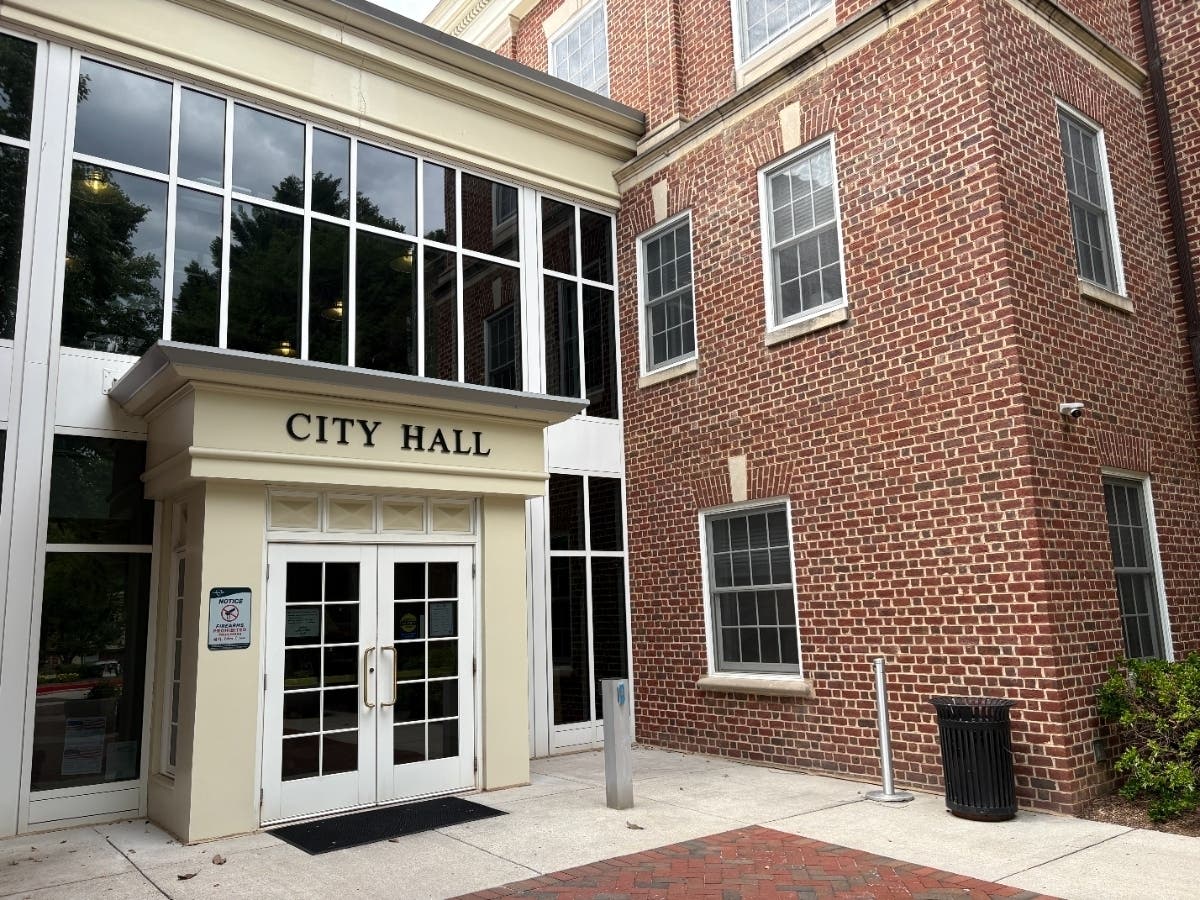
FAIRFAX CITY, VA — Fairfax City officials are weighing hundreds of millions of dollars in proposed capital improvements, including a $155 million Property Yard project, as the City Council begins developing a fiscal year 2028 budget that must balance infrastructure needs, employee costs and potential pressure on taxpayers.
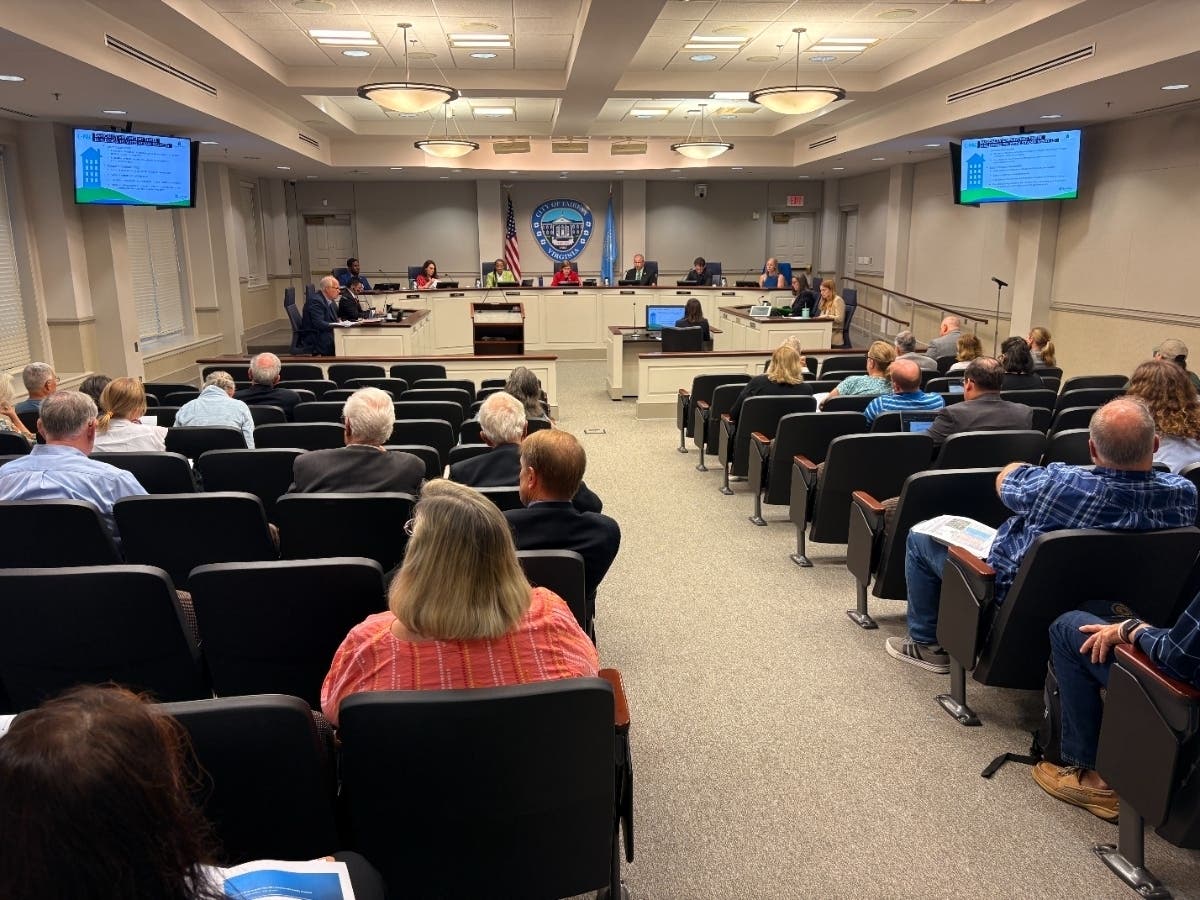
During Saturday's budget work session, council members reviewed preliminary revenue forecasts, existing debt obligations, major construction projects and economic development opportunities that could help expand the city's tax base.
The discussion highlighted the financial challenges facing the city as officials consider how to maintain existing services while paying for new facilities, school improvements and other long-term investments. No final spending decisions or tax rates were established during the work session.
Find out what's happening in Fairfax Cityfor free with the latest updates from Patch.
Major Capital Projects Could Increase Borrowing
Among the largest proposed investments is a $155 million Property Yard project, which would address facilities used to support city operations.
Other proposed projects identified in the city's capital improvement program include $16 million for Van Dyck Park improvements, $10.1 million for Katherine Johnson Middle School fields, $8.5 million for a police vehicle garage and $26.2 million for vehicle replacements over five years.
Find out what's happening in Fairfax Cityfor free with the latest updates from Patch.
Those projects are separate from several major investments already underway, including the $54.3 million Fire Station No. 3 project, the $56 million Willard-Sherwood Health and Community Center and approximately $220 million in school bond renovations.
The city's presentation also identified a preliminary $500 million estimate for future renovations at Katherine Johnson Middle School and Fairfax High School during the 2032-2037 period.
Chief Financial Officer J.C. Martinez told council members that the city has approximately $145 million in existing scheduled debt service obligations and is examining a planning scenario involving approximately $301 million in additional debt service associated with proposed capital projects.
The combined scenario would place substantial demands on future budgets, particularly during the early 2030s, when annual debt payments are projected to increase.
Martinez emphasized that the additional borrowing scenario does not represent approved debt issuances.
The projections also do not fully incorporate the FY 2028 budget or future school borrowing associated with the additional 1% local sales tax authorized by voters Nov. 3.
Under the assumptions presented, the city's projected debt service remained within its financial policy limits. However, the timing and scope of future projects could affect those calculations.
City Manager Dan Alexander said staff members are reviewing the size and scope of major capital projects before presenting additional options to council members.
The decisions will require officials to consider not only construction costs but also how future debt payments could affect the city's ability to provide services and meet other financial obligations.
Property Taxes And Economic Development
The city's real estate tax base is expected to continue growing, although at a slower pace than in some previous years.
Real Estate Assessment Director Sherman Lambert presented a preliminary forecast of approximately 2% assessment growth for calendar year 2027. He cautioned that the estimate could change as additional sales information becomes available.
Approximately 68% of the city's real estate tax base is residential, while commercial properties, including apartments, account for the remaining 32%.
Lambert said real estate transactions have declined approximately 39% compared with pre-pandemic levels, largely reflecting higher interest rates and reduced market activity.
However, the decline in transactions has not produced a corresponding drop in property values.
Councilmember Stacy Hall questioned what the slowdown meant for the city's economy and residents.
Lambert said available market data suggested property prices were generally holding steady or increasing modestly, although some homes were taking longer to sell.
Councilmember Tom Peterson emphasized that the city's property tax collections are based on assessed values rather than the number of homes sold.
Economic development also emerged as a potential strategy for strengthening city revenues without relying exclusively on higher tax rates.
Economic Development Director Colleen Kardasz said the city is preparing a study examining commercial property conditions, industry opportunities and potential strategies for attracting new businesses and redevelopment.
Councilmember Rachel McQuillen asked whether the study would consider incentives for developers and businesses.
Kardasz said incentives would likely be among the options evaluated, along with improvements to development processes and strategies for attracting commercial tenants. The study is expected to move forward during the first half of 2027.
Peterson also raised concerns about fragmented commercial property ownership, which can complicate redevelopment by requiring agreements among multiple property owners.
Kardasz acknowledged the challenge but said the city's relatively small size could also allow officials to work more closely with prospective businesses and developers.
The discussion included opportunities to attract companies supporting Northern Virginia's data center industry, even without locating data centers within the city.
Officials also identified George Mason University and the Fairfax County judicial complex as economic assets that could support future commercial activity.
City Finances Stable, But Employee Costs Remain A Concern
The city expects to close fiscal year 2026 with approximately $202.9 million in general fund revenues and expenditures, according to preliminary financial figures presented Saturday.
Both revenues and expenditures are approximately $4.2 million, or 2.1%, higher than originally budgeted.
Higher real estate tax collections, meals taxes, local sales taxes and ambulance transport fees helped offset additional spending, including employee health insurance and retirement expenses.
The city's estimated unassigned general fund balance is $36.1 million, representing 18.1% of expenditures. That exceeds the city's 15% minimum reserve requirement but remains below its 22% target.
Employee compensation and recruitment are expected to be important considerations in the upcoming budget.
Also See ...
- 7 Public Hearings On Fairfax City Council Agenda: Sidewalks, Housing, Zoning Changes
- Virginia’s 11th District Unofficial Election Results: Votes By Precinct
- Fairfax City Unofficial Election Results: Mayor And Council Votes By Precinct
Human resources officials reported 61 permanent employee departures during fiscal year 2026, including 42 resignations. Of those resignations, 35 involved employees with fewer than five years of service.
The city is also conducting a classification and compensation study covering approximately 260 positions to determine whether adjustments are needed to remain competitive with other employers.
Officials discussed recruitment challenges, particularly for some public works positions, and the potential financial effects of new state employment requirements.
Councilmember Anthony Amos asked how the city was preparing for potential collective bargaining requirements.
Alexander said such changes could create expenses beyond employee compensation, including additional legal, administrative and labor relations costs.
Residents Raise Concerns About Affordability
Council members also reviewed feedback from a Nov. 5 community budget engagement session.
Economic development and business support received the most selections among community priorities, followed by efficient and responsive government.
Taxes and affordability were among the concerns raised by participants.
When asked how the city should respond to rising costs, 13 of 20 respondents favored a combination of service adjustments and additional revenue.
Another 12 of 19 respondents preferred an approach combining efficiency improvements, service changes and revenue measures.
The results were based on a small, self-selected group of participants and were not presented as a representative survey of city residents.
McQuillen questioned whether the limited participation provided enough information to guide citywide budget decisions.
Officials discussed expanding opportunities for residents to provide feedback, potentially through an online Engage Fairfax survey.
The council also reviewed a proposal to expand real estate tax relief for elderly residents and residents with qualifying disabilities.
Under the proposal, the maximum qualifying household income would increase from $90,000 to $95,000, while the maximum combined net financial worth would rise from $440,000 to $465,000.
The income threshold for a full exemption would increase from $75,000 to $80,000.
The city approved 191 tax relief applications for tax year 2026, providing approximately $1.18 million in relief. The proposed changes are projected to increase the total to approximately $1.26 million in 2027.
The proposed ordinance is scheduled for introduction Nov. 10, with a public hearing and possible council action Dec. 8.
Budget Decisions Expected Next Spring
Saturday's meeting was intended to establish preliminary priorities and identify areas requiring additional financial analysis rather than make final budget decisions.
Council members discussed maintaining essential services, improving efficiency, managing future borrowing and encouraging economic development to support long-term revenue growth.
The city manager is scheduled to present the proposed FY 2028 budget Feb. 23, 2027, followed by council work sessions and public hearings.
The council is scheduled to adopt the budget and tax rates May 4, 2027.
The new fiscal year begins July 1, 2027.
Get more local news delivered straight to your inbox. Sign up for free Patch newsletters and alerts.