Neighbor News
Historic Garden Week in McLean
Tuesday, April 23, 2024, 10 a.m.-4 p.m., Ballantrae Farm Estate and Meadowlark Botanical Gardens, Hosted by the Garden Club of Fairfax
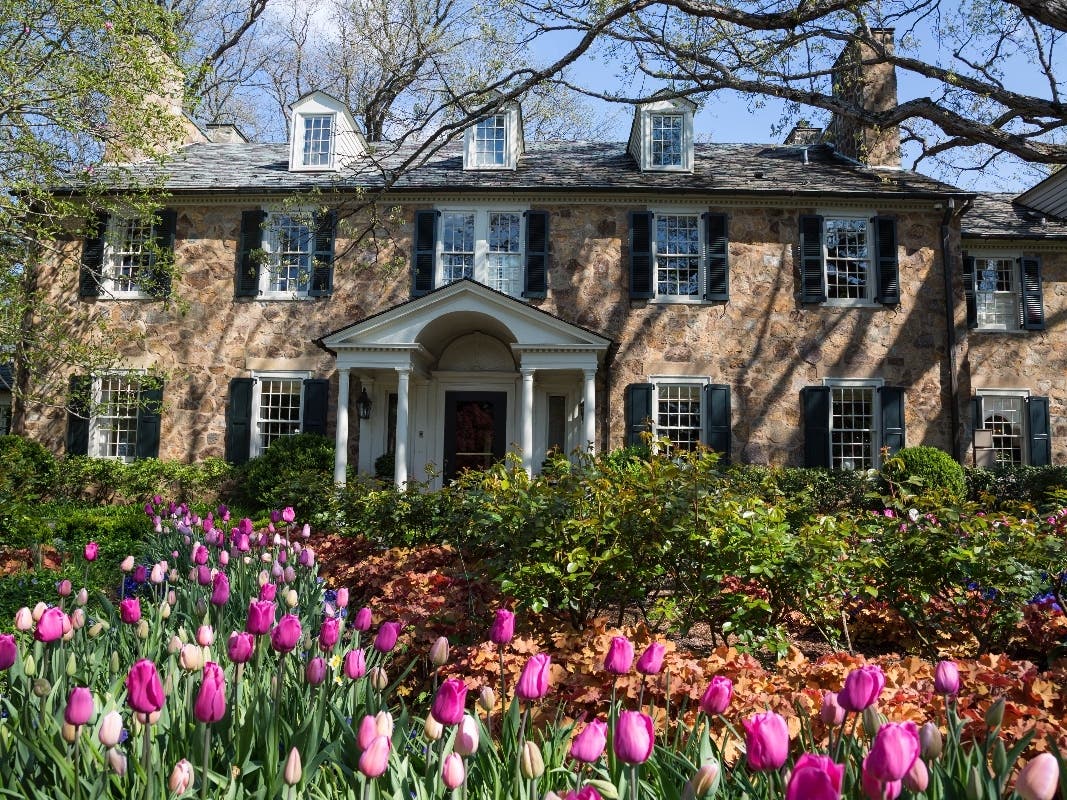


What a wonderful way to spend a spring day! The Garden Club of Virginia’s Historic Garden Week tour of stunning homes and gardens draws over 25,000 garden enthusiasts and tourists annually. This year’s McLean Tour, presented by The Garden Club of Fairfax, is set for Tuesday, April 23, 2024.
In 1910, the community surrounding the Great Falls & Old Dominion Railroad depot on Chain Bridge Road adopted McLean as their station’s name to honor one of the trolley’s founders, John R. McLean, publisher of The Washington Post. Today, McLean is known for its luxury houses and high-end shopping destinations; its residents include diplomats, business owners, and government officials. This walking tour showcases Ballantrae Farm—a 6.5-acre estate with a 1923 Colonial Revival manor house, a c. 1843 farmhouse and extensively landscaped grounds with areas for outdoor entertaining, a sunken tennis court, a hidden treehouse, and a walled kitchen garden. In the neighboring town of Vienna, Meadowlark Botanical Gardens boasts 95 acres with ornamental display gardens, a restored 18th-century farmhouse, and a Korean Bell Garden, among other collections. Visitors will enjoy three properties located approximately six miles from each other. Here’s a look at the properties included on the McLean Tour:
Ballantrae Farm Estate
Find out what's happening in Fairfax Cityfor free with the latest updates from Patch.
1288 Ballentrae Farm Drive, McLean, VA
Beyond the stacked stone gates, up a gentle hill and through an allée of alternating Yoshino and Kwanzan cherry trees stands the 1923 Georgian Revival estate house known as Ballantrae Farm. This sprawling three-story residence is constructed of fieldstone—some quarried from its 6-1/4-acre property, as well as from nearby Pimmit Run. Ballantrae boasts two-foot-thick walls, is adorned with a slate roof, and has an above-grade living area of 9,700 square feet, five bedrooms with ensuite bathrooms, and four fireplaces. At the entry, dappled light filters through the leaves of a 300-year-old White Oak tree and a pink-flowering Saucer Magnolia, which towers some 20 feet overhead. Blight-resistant ‘Little Missy’ boxwoods and floribunda rose 'Tequila' frame undulating front garden beds of muscari, ranunculus, and giant anemone, not to mention an extensive collection of tulips and narcissus, planted to bloom in succession. The muscular-looking Japanese maple, with its broadly spreading crown, anchors the circular driveway garden and is estimated to be several decades old. Visitors enter through the gracious foyer with Colonial Revival woodwork. Custom De Gournay wallpaper in the formal dining room references the estate’s meticulous gardens outdoors, and almost every other room on the ground floor grants access to the surrounding landscape. The original footprint of the Ballantrae house has not been altered in its 100-year-old history, but interior renovations keep the house updated to today’s very best living standards. Through the East Wing, a farm-style gourmet kitchen includes two large teak islands and high-end appliances. An acacia wood barn door disguises the wine cellar entry. The adjoining sunroom, used as the family room, has heated limestone floors and floor-to-ceiling windows overlooking the parterre garden, helmed by a yew hedge and hemmed in by a ‘Madame Alfred Carriere’ climbing rose. Steps away is the lower pool area, which incorporates a pavilion with a fireplace and bar, a copper hot tub, gas lanterns, and sitting areas naturally shaded by a pair of weeping hemlocks. In the West Wing, guests encounter the billiards room/gallery. Originally built as a breezeway or “hyphen,” today the space converts to a large dining area, seating 24, and leads to the Great Room, which features French doors that spill open to a stone patio carpeted with purple and white mazus in springtime. A lush side lawn leads to a hammock walk and what’s known on the estate as Boxwood Circle.
Find out what's happening in Fairfax Cityfor free with the latest updates from Patch.
Little Ballantrae
Follow the labyrinth of paved and stone walkways lined with perennial beds and discover Little Ballantrae, as the mid-19th century original farmhouse is affectionately named. Before Ballantrae’s construction, Little Ballantrae stood in its stead. Its owner, a Southern sympathizer, left the four-bedroom house and 63-acre farm to join the Confederate military. Union soldiers took possession of the farmhouse and land for a military encampment called Camp Griffin. Following the war, the property was seized, parceled, and auctioned under the U.S. Confiscation Act. It wasn’t until 1919 that Little Ballantrae was moved to its current location, overlooking the gentle bowling green. Nails, spikes and hand-hewn timbers—typical of the period—are still visible in the rafters and floor joists, and cast iron radiators heat the house with hot water. Today, the four-bedroom structure is the estate’s guest house—its 100-year-old Wisteria sinensis wrapping the porch, a permanent resident. Looking from Little Ballantrae’s screened porch across the lawn, guests can stroll through beds of hydrangeas, camellias, and forsythia to discover the koi pond. Further down, explore the sunken vegetable garden, where trellised blackberries ripen. Custom cold frames protect early- and late-season crops and hand-laid stone garden beds encase herbs and other edibles. For the enjoyment of all ages, there is a sunken tennis court surrounded by stacked stone walls, replete with an observation patio for afternoon refreshments. Across the soccer pitch, the youngest visitors will find a deluxe multi-platformed tree house hidden inside a soaring grove of spruce trees, proving this historic property has enchantments for dreamers of every age.
Meadowlark Botanical Gardens
9750 Meadowlark Gardens Court, Vienna
In 1980, economist Gardiner Means and historian Caroline Ware entrusted their 74-acre farm purchased in 1935 to the Northern Virginia Regional Park Authority (NVRPA) to “create a permanence in the land…a way by which the farm could remain a haven for trees, shrubs and flowers to preserve the bounty of the Virginia countryside.” NVRPA bought a contiguous 21-acre parcel and started planning a public garden. This 95-acre park includes sizeable ornamental display gardens, three native plant collections, paved walking trails, three lakes, four gazebos, a restored 18th-century farmhouse, a Korean Bell Garden, a variety of cherry trees, azalea, lilac and peony collections, irises, a hosta and fern garden, and children’s garden.
www.novaparks.com/parks/meadowlark-botanical-gardens
Tickets: Online and in advance tickets - $50 online and in advance and $60 online day of tour at www.vagardenweek.org
Ticket includes admission to two homes and the gardens at Ballantrae Farm Estate and to Meadowlark Gardens.
Questions? E-mail fairfax@vagardenweek.org. For more information on this tour or to see the Historic Garden Week statewide schedule of tours, go to www.vagardenweek.org.
Self-driving and Walking Tour: This tour requires much walking on uneven and grassy surfaces. Sensible shoes are strongly recommended. Private gardens are not wheelchair accessible. No strollers permitted.
Facilities and Parking: Facilities are located at Meadowlark Gardens. Park on one side of the street only in neighborhood.
Special Activities: At Ballantrae Estate flower arranging demonstrations, plein-air painting, and garden talks will take place throughout the day; historic reenactors will share stories of the area; and Bartlett Tree Experts will give away tree saplings.