Health & Fitness
The "Fountain of Youth" - First Step: Get More Oxygen!
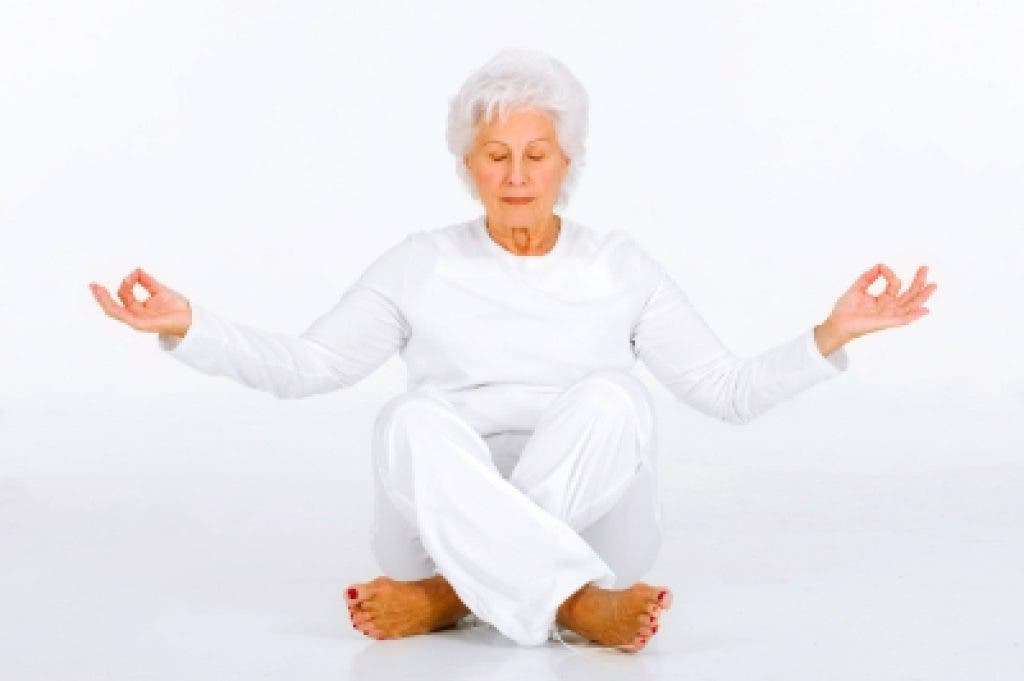
The first step in cultivating our personal "Fountain of Youth" is to get more oxygen into our bodies. We can do this by incorporating a simple form of pranayama (yogic extended breathing exercises).
We all want to live not only longer, but healthier. What's the point in living to 120 years if those latter years are characterized by poor health and a lack of vitality?
In this "Fountain of Youth" blog series, I'll be addressing all aspects of longevity. However, before we move towards exotica (Human Growth Hormones and telomere end protection) and esoterica (ranging from Taoist "sexual energy" practices to Western esoteric traditions), our first steps are to begin with those things that take the least amount of time, the least amount of money, and are least intrusive into our daily habits.
Stating this more positively, we want to first incorporate little tiny "micro-twitches" into our daily lifestyles that will both yield substantial benefits and still be easy to introduce and (most importantly) to maintain.
Find out what's happening in McLeanfor free with the latest updates from Patch.
The first step is the most obvious. We need to get more oxygen into our bodies. There are a lot of things that we can do once we get more oxygen (and there are also a lot of things our bodies will do automatically once they get increased oxygen flow), but we have to take this essential first step.
Thousands of years ago, yogis cultivated the art of - not so much deep breathing - but specialized breathing. They understood that vital life force energy, which they called prana, was intimately connected with our oxygen intake. Thus, they developed the practice of pranayama.
Find out what's happening in McLeanfor free with the latest updates from Patch.
The term pranayama is derived from two Sanskrit words. Prana means life force or vital energy, particularly the breath. The other term, āyāma, means "to lengthen or extend." Thus, when we do pranayama, we are literally seeking to not only extend our breathing cycle, but also to extend or lengthen our life-force.
Pranayama is, naturally, a complex subject. There are various kinds, and we should keep in mind that it was developed (along with its sister practice of hatha yoga, the exercises) to not just support and nurture the body, but to help bring about a state of God-realization. Thus, it was intended to support a meditation practice. (Meditation in itself has been proven healthy.)
Without asserting such a lofty goal, we can do a simplified form of pranayama; one that easily fits into our daily life. I like to "squeeze in" the "breath lengthening and extension" exercises (pun most deliberate) into those times when I predictably have just about a minute of time: waiting for the water to boil for tea, for the coffee to be done, or for the microwave to finish. Waiting for a traffic light to change works as well, as does waiting in line for a bank teller or cashier. In short, any time when there are just one or two minutes - not long enough to go do something else, but still "found time" - we have a chance to introduce a little "baby-level pranayama."
The easiest pranayama exercises involve two aspects:
- Extending the breathing cycle by holding the inhalation (just for a few counts) and pausing after exhalation (again, just for a few counts). So for example, we woudl breath in (1-2-3-4), hold (1-2-3-4), exhale (1-2-3-4), and pause (1-2-3-4).
- Breathing deeply - dropping our bellies, and releasing (dropping) our diaphragm(s), and filling the lowest portion of our lungs first, going up to the top. The yogis refer to this as "three-part breathing," meaning filling the lowest, then middle, then uppermost portions of our lungs.
Just doing this gives us a start on the most powerful life-extension practice that we can undertake. Of course, we can also do a little more:
- Go for a walk. (I'm going to do that as soon as I post this blog.) With the fabulous weather that we have now, walking gives us oxygenation, a bit of a cardio workout, and helps us clear our minds as well. The well-known author Julia Cameron recommends a daily "Artist's Walk" in her book, the Vein of Gold.
- Do pranayama to music. I particularly like the Gayatri Mantra by Rasa on their album Saffron Blue. (You can listen at: http://grooveshark.com/#!/s/Gayatri+Mantra/2hTgag?src=5). When they start the words (not just the "Oms", but the whole mantra, which they repeat seven times throughout the song), use the four "musical phrases" to do a couple of pranayama sequences. This makes an excellent break if we've been at the desk for too long.
- Speaking of the desk - we need to get up, stretch our arms out, and take a deep breath every so often. Our lifestyle - ranging from computers on our desks to laptops to smartphones - has us spending way too much time hunched over. We even have this posture when we drive our cars! This leads to pronation - curving our shoulders inwards and allowing our pectoral muscles to contract. Not healthy. Stretch more and live longer!
To your long life, health, and prosperity -
Alianna J. Maren, Ph.D.; author (under the nom de plume Alay'nya) of Unveiling: The Inner Journey (www.theunveilingjourney.com )