Business & Tech
High Grocery Prices Still Squeezing VA Families: What To Know
High grocery prices continue to squeeze family budgets across Virginia.


High grocery prices are still squeezing family budgets in Virginia.
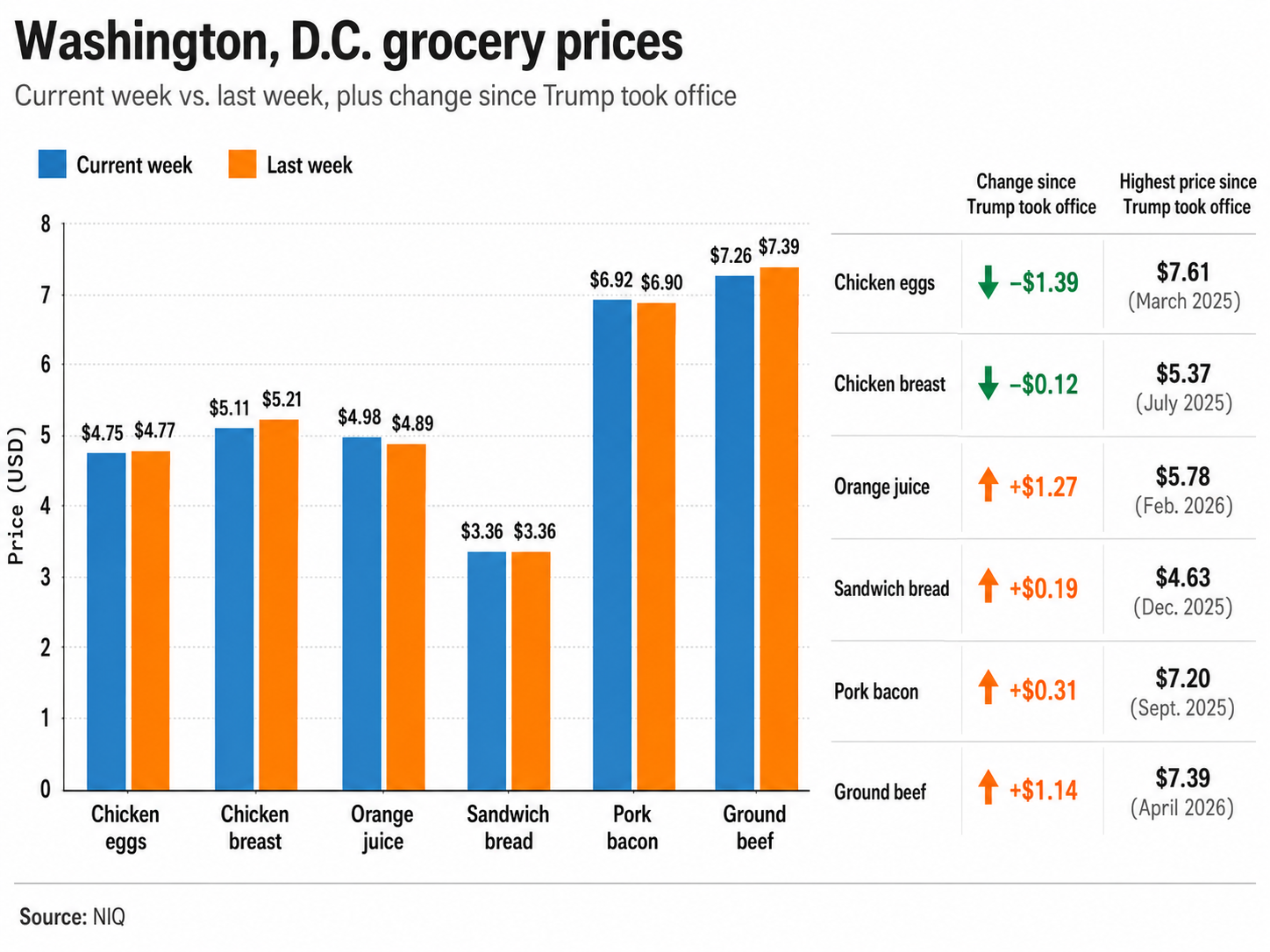
Of the six grocery items NBC News has tracked in a dozen metro areas since President Donald Trump took office in January 2025, only chicken eggs have gone down in price. The cost of eggs is down substantially, by 30.8 percent, as chicken supplies rebounded after bird flu pressure eased.
But at the same time, beef prices remained high because of a tight U.S. cattle supply after years of drought, high feed costs, and herd reductions. Unlike the egg supply, the beef supply can't be rebuilt quickly.
Find out what's happening in McLeanfor free with the latest updates from Patch.
Ground beef and orange juice costs have increased by double-digit percentages at 19.2 percent and 20.2 percent, respectively. Sandwich bread costs 4.7 percent more, and chicken breasts are up 1.6 percent in the 16 months since Trump’s inauguration.
Find out what's happening in McLeanfor free with the latest updates from Patch.
The “moderate” plan works out to about $1,380, up from $1,328, an increase of $52 a month.
The analysis of Labor Department inflation data by FRED, the Federal Reserve Bank of St. Louis’ economic data platform, shows grocery prices overall have increased 3.2 percent since January 2025.
Trump campaigned on bringing down grocery costs that were largely driven up by pandemic supply chain issues and Russia’s war on Ukraine. Food inflation has multiple causes, including tariffs that can ripple into grocery prices through fuel, fertilizer, cans, packaging and retail operating costs.
High grocery, gas and health insurance prices, along with other kitchen-table affordability issues, are expected to be a major theme in the Nov. 3 midterm elections.
Get more local news delivered straight to your inbox. Sign up for free Patch newsletters and alerts.